The first company to meet this goal was Antares Nuclear, which announced that it had achieved zero-power criticality with its Mark-0 reactor on June 4. On June 22, Valar Atomics became the second company to reach the milestone with its Ward 250 reactor.
Earlier today, the DOE announced that a third DOE-authorized reactor, Deployable Energy’s Unity, also has achieved criticality. This criticality, according to the DOE, marks its “fulfillment of a precedent-setting directive to reignite nuclear energy innovation in the United States.” This milestone, however, does come with one confusing asterisk: Deployable Energy is not part of the Reactor Pilot Program.
A quick clarification: The Reactor Pilot Program is an ostensibly one-shot effort created in direct response to EO 14301 that selected 10 companies that would be potentially eligible for DOE authorization of their respective projects. However, beyond these 10 companies, a broader group of FOAK nuclear developers demonstrated sustained demand for a route to develop and test their designs outside of conventional Nuclear Regulatory Commission pathways.
This demand was ultimately answered by the DOE with the formation of the Nuclear Energy Launch Pad—a program that essentially extends the opportunities of the Reactor Pilot Program to other companies. At the end of April, the DOE announced its first four selections for this new Launch Pad; Deployable was among the companies listed. So, while the letter of EO 14301 may not yet have been met, its spirit nonetheless has: three DOE-authorized advanced reactors have, as of this writing, reached criticality.
Deployable details: Deployable Energy is a Houston-based reactor developer with a sales pitch similar to many of its competitors currently pursuing DOE authorization: a small reactor designed for factory mass-manufacturing, enabling rapid deployment at scale across a variety of remote and behind-the-meter applications. Its Unity microreactor (interchangeably referred to as the Unity nuclear battery, or UNB) is a 1-MWe high-temperature, gas-cooled design. According to the NRC, the UNB “utilizes standard low-enriched uranium, uranium dioxide fuel, and an actively cooled helium primary loop during operation.” On the NRC side, thus far, the company has submitted a letter of intent to commence preapplication processes, a regulatory engagement plan, and several white papers.
In its LOI to the NRC, Deployable stated that it has “achieved significant commercial traction with over $10 billion in [LOIs] ranging from data centers to remote island community power.” There, the company added that it is working with multiple partners in Utah and Texas to potentially power data center facilities, research facilities, and remote resource extraction.
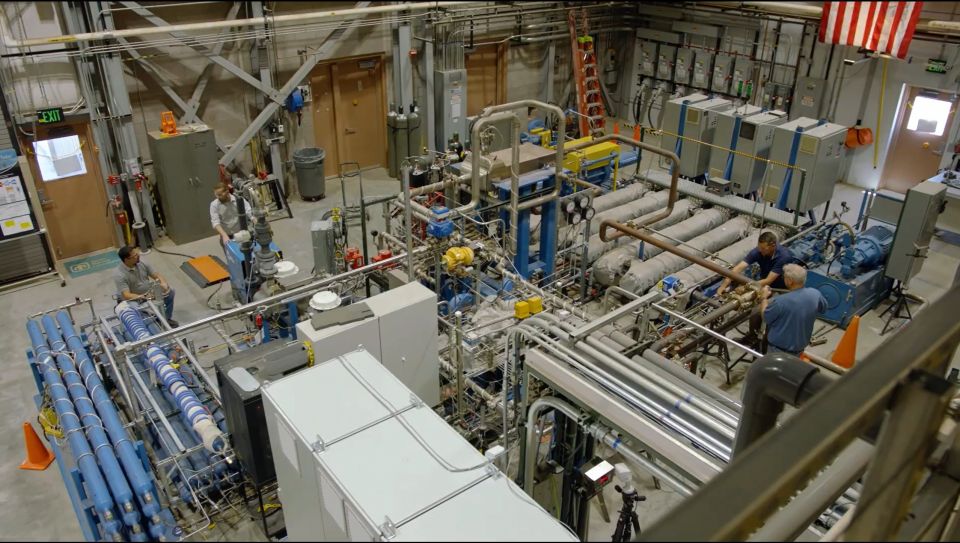
Back to the DOE: In its announcement of Unity’s zero-power fueled criticality demonstration, Deployable stated that the test had been conducted “at the National Reactor Innovation Center located at Idaho National Laboratory.” NRIC operates through several facilities at INL, and Deployable does not explicitly state which of these facilities housed Unity. Previously, the company said it anticipated the test to be conducted at the Materials and Fuels Complex.
The company highlighted that this milestone was reached in “record time,” with “roughly 150 days since project kick-off” to criticality. Looking to the future, Deployable said, “with initial criticality using a full-scale core load now achieved,” it will now enter “a phased testing program that includes further validating reactor physics, load following, inherent safety, and full-power operations.”