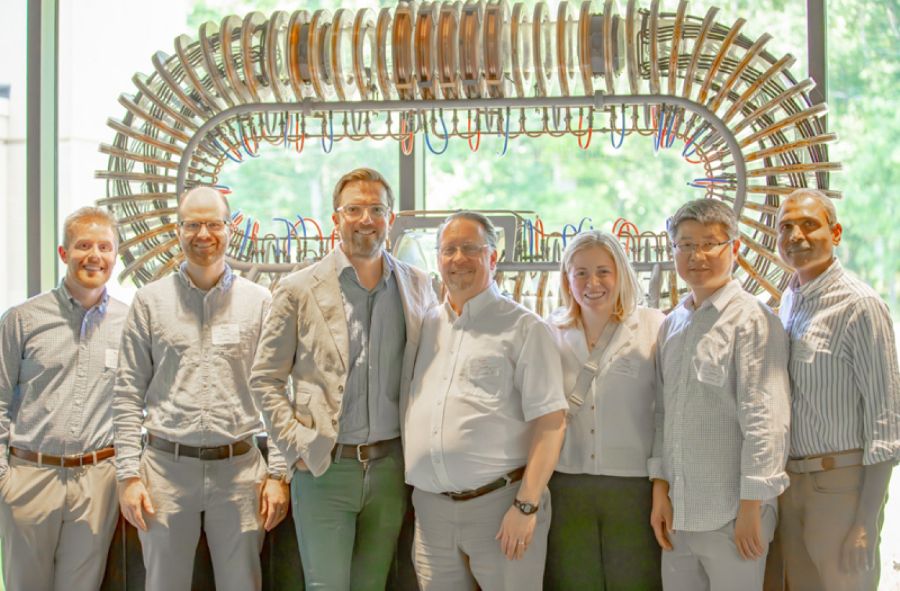
Breeder blankets are used in fusion machines to produce tritium fuel and capture heat that can be used to generate electricity. Engineering-scale breeder blanket prototypes with embedded lithium will be tested at the LIBRTI Facility to determine if they produce tritium when exposed to high-flux neutrons.
Researchers will use the experiments to consider how neutron flux, length of neutron exposure, temperature, gas types and flow rates, breeder material composition, geometry, and other factors impact the efficiency of the tritium breeding process. They will also develop physics models and digital tools that, together with the experimental results, can be used to simulate and predict breeding outcomes.
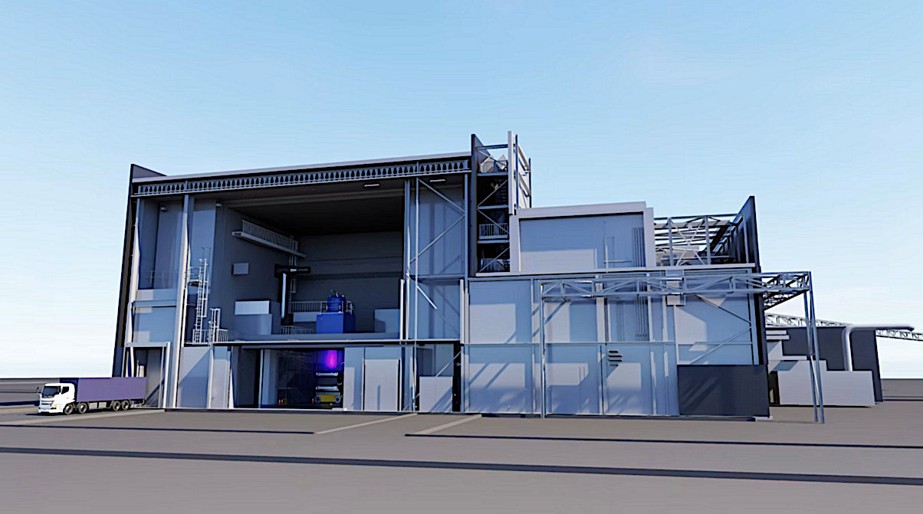
The LIBRTI Facility will allow companies to develop and verify their blanket technologies in conditions representative of full-scale fusion machines.
CFS participation: The UKAEA called CFS the “best-funded fusion energy company globally,” as it has raised more than $3 billion in private capital since it was spun out of the Massachusetts Institute of Technology in 2018. The company is developing and constructing its SPARC fusion demonstration tokamak, which it expects to “become the world’s first commercially relevant fusion energy machine to produce more energy from fusion than it needs to power the process” in 2027. CFS further expects to generate electricity from its first ARC fusion power plant in Virginia by the early 2030s.
For the LIBRTI program, CFS and the UKAEA will collaborate to design the experimental setup for CFS’s technology, develop testing protocols, and conduct experiments at the LIBRTI Facility. CFS will build and provide the test articles to be used in the experiments.
Brandon Sorbom, the cofounder and chief science officer of CFS, said of the partnership, “LIBRTI’s specialized testing capabilities will allow us to demonstrate net tritium production and increase confidence in our ARC blanket system design. Through this collaboration, CFS will gain hands-on experience engineering and building blanket systems directly representative of our commercial fusion power plant. We’re thrilled to partner with UKAEA and the LIBRTI team as an early user.”
Heena Mutha, director of CFS’s fuel cycle and blanket technology, added, “It’s an incredible moment for the fusion industry that we’re building the capability to investigate the performance of blankets in a fusion-relevant environment. We look forward to this collaboration with the UKAEA and LIBRTI.”
Amanda Quadling, LIBRTI’s senior responsible officer, observed that the addition of CFS as a partner “is a defining moment for LIBRTI. Their participation adds momentum to our own efforts and accelerates the global pathway to demonstrated fusion power plant scale technology.”


.jpg)