The deadline arrives: Checking in on the Reactor Pilot Program
On May 23, 2025, President Trump signed Executive Order 14301, “Reforming Nuclear Reactor Testing at the DOE,” which instructed the Department of Energy to create a Reactor Pilot Program (RPP)—a new system in which companies could pursue DOE authorization to build and test their first-of-a-kind nuclear technologies. EO 14301 set an ambitious goal for that program: three reactors achieving criticality by July 4, 2026.
In the 405 days since then, the race has been on to meet that goal. Nuclear News has covered incremental updates in more than two dozen articles as the story has rapidly evolved. With the deadline two days off, three companies have achieved DOE-authorized criticality: Antares Nuclear, Valar Atomics, and Deployable Energy.
The big picture is that the goal staked out by EO 14301 has been achieved. However, that one-sentence summary misses dozens of key expansions, details, and clarifications regarding each involved company and their associated projects. Understanding where those companies currently stand requires a much closer look. So, a summary of the progress achieved so far by every company pursuing DOE authorization for a reactor project is offered below.
Before diving into the minutiae, there is some important context to cover regarding the landscape of DOE authorization.
The RPP was created in direct response to EO 14301 as a one-shot selection of 10 companies, named in August 2025, whose respective projects would be potentially eligible for DOE authorization. In March 2026, the DOE essentially extended and expanded the RPP opportunity into a longer-term program called the Nuclear Energy Launch Pad. Today’s roundup will examine the progress made by companies associated with both of these very similar DOE programs. Not covered in this article is the Fuel Line Pilot Program, a parallel fuel-focused DOE authorization pathway also established by EO 14301.
Next, to get some bearing on how far along each company is in its respective project, it is important to understand the step-by-step process of achieving DOE authorization, which progresses through four milestones:
- A company must first sign an other transaction agreement, or OTA, with the DOE, which signifies the formal partnership and the launch of authorization work.
- Next, the DOE must issue a nuclear safety design agreement (NSDA) approval. This represents an agreement on both the safety and regulatory framework of a project.
- The PDSA, or preliminary documented safety analysis, is the third step. Here, the DOE validates the company’s safety case and establishes a pathway to final approval.
- Finally, the DOE approves a DSA, or documented safety analysis, enabling a company to obtain final authorization and begin operating.
Lastly, with several companies in the final stages of DOE authorization work, it is important to understand what comes after collaborating with the DOE. Thinking of the RPP’s goal as hitting criticality is, in a way, missing the forest for the trees. The bigger-picture goal for each of these companies is to leverage their data, proven reactor concepts, and safety cases into accelerated approvals from the Nuclear Regulatory Commission. Without NRC approval, none of the companies involved will be able to deploy their designs commercially.
To that end, many of the companies pursuing DOE authorization are actively coordinating with the NRC as they reach new milestones, but each one still has a significant regulatory runway ahead of its ambitions to deploy commercial reactors at scale. Most of the companies in the RPP and Launch Pad are targeting commercial deployments before the decade is out.
With that in mind, read on below to learn where each company stands today in its journey to get its DOE-authorized reactor on line:
Aalo Atomics, of Austin, Texas, appears to be next in line to reach criticality. At a June 25 event in Idaho celebrating "the golden era" of nuclear power, Energy Secretary Chris Wright said he had authorized Aalo to proceed with its 10-MWe Aalo-X, a low-enriched uranium–fueled, sodium-cooled reactor. Aalo originally broke ground on the project at Idaho National Laboratory in August 2025. In March 2026, Aalo announced that it had signed fuel fabrication contracts with Global Nuclear Fuel. That same month, Aalo said that Urenco USA had completed enriching the uranium hexafluoride feedstock needed for its fuel and had delivered it to GNF for fuel rod fabrication. The company also announced it had selected Baker Hughes for a 10-MWe steam turbine generator set and associated ancillary systems. The DOE approved Aalo’s DSA in April.
Antares, of Torrance, Calif., became the first company involved in the RPP to achieve zero-power fueled criticality, meeting the milestone at INL on June 4 with its Mark-0, a forerunner to its flagship R1, a sodium heat pipe–cooled, TRISO-fueled microreactor. The Mark-0 is configured for zero-power criticality testing and is equipped with neither power conversion nor heat removal systems, which won't be the case with the R1. The R1 is one of three microreactors selected by the Air Force earlier this year to be included in the Advanced Nuclear Power for Installations program. The Antares design team has also begun working on the Mark-1, an electricity-producing prototype reactor. CEO Jordan Bramble said Antares is on track to deliver commercial units to customers in 2028.
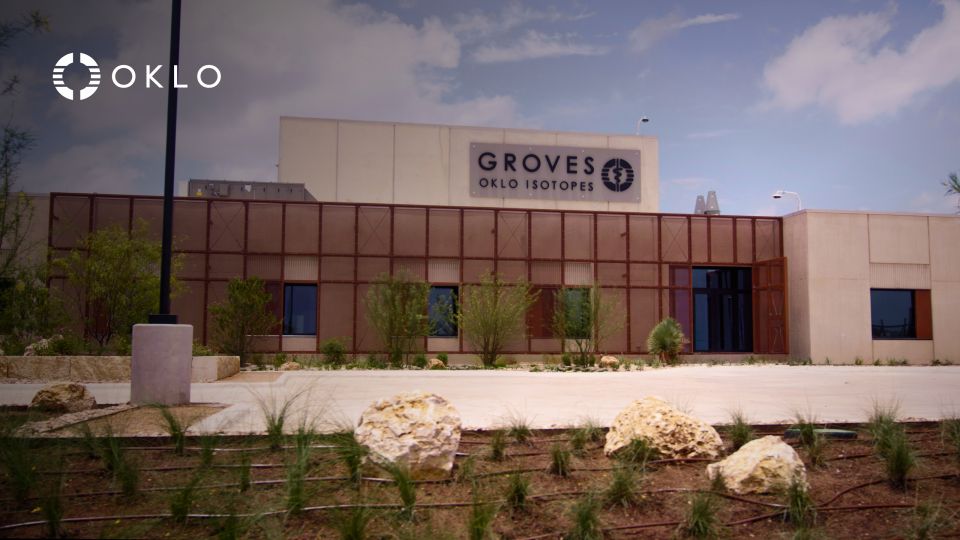
Atomic Alchemy is the former name of a radioisotope production company that was acquired by Oklo in 2025. Since then, it has been quietly rebranded as Oklo Isotopes and has quickly developed its RPP project, which is sited in Lockhart, Texas. That project is called the Groves Isotope Test Reactor, a 15-MWt pool-type, water-cooled, nonpressurized isotope production reactor that uses low-enriched uranium fuel. This week, the company announced that it secured its DSA from the DOE for the project and plans to achieve criticality this month.
Deployable Energy was one of the two reactor-focused companies selected for the Nuclear Energy Launch Pad that was not already involved in the RPP. On July 1—only about 150 days after it began the project—the company announced that it had achieved zero-power fueled criticality at INL with its 1-MWe high-temperature, gas-cooled Unity microreactor. Having only recently emerged from stealth, much remains unknown about Deployable’s broader plans, though the company has previously stated that it is working with multiple partners in Utah and Texas to potentially power data center facilities, research facilities, and remote resource extraction.
Deep Fission, of Berkeley, Calif., continues to "advance development of our first reactor project and is focused on the key engineering milestones required to reach commercial deployment," CEO and cofounder Elizabeth Muller said in a statement to Nuclear News. Work on its 15-MWe Gravity reactor continues in Parsons, Kan., where the company broke ground in December 2025, the same month it announced an OTA with the DOE. Deep Fission is targeting full-power operations in the first half of 2027, with commercial deployment planned for the second half of 2027 or early 2028, she said. The Gravity pressurized water reactor will be deployed underground, placed in a borehole roughly one mile below the surface. Earlier in the year, Deep Fission announced it had drilled to 6,000 feet as part of its first test well.
Last Energy, of Austin, Texas, is pursuing the 20-MWe PWR-20 for eventual commercial deployment. Its pilot project is the PWR-5, a scaled-down version of the same design. In October, the company announced that it had reached an agreement to lease land for the project at Texas A&M University’s RELLIS campus. Since then, construction has begun at RELLIS, as has the manufacturing and shipping of reactor component parts and fuel. In late May, the company announced that it had secured the PDSA for its PWR-5. A Last Energy spokesperson told Nuclear News that the company has completed construction of the pilot project building and installed critical reactor components. The spokesperson added that the company has submitted its final DSA for DOE review and expects to complete an initial criticality test this summer, pending DOE authorization.
Natura Resources, of Abilene, Texas, is currently working with Abilene Christian University to construct and operate a 1-MWt molten salt research reactor (MSRR) that Natura calls MSR-1 at the university’s campus. Natura announced an OTA with the DOE for MSR-1 in December 2025. ACU has already applied for and in September 2024 received a construction permit from the NRC for its MSRR (which is the MSR-1 by another name). In June, Natura announced it had entered into a formal agreement with New York–based start-up Quadrant Nuclear Industries to receive high-assay low-enriched uranium for Natura commercial reactor systems.
NuCube Energy, of Idaho Falls, Idaho, was the second reactor-focused company selected for the Nuclear Energy Launch Pad that was not already involved with the RPP. Between its website and press releases, NuCube describes two different reactor products—the 1.3-MWe NuSun-1 and the 15-MWe NuSun-15—as utilizing a TRISO-fueled, “heat-pipe-cooled, solid-state” design. The company previously referred to a reactor design called the DeccaCell, another 15-MWe reactor that appears to be a rebranding of the NuSun-15. Little is known about NuCube’s progress in DOE approvals, site selection, or timeline to deployment. The company has previously received two DOE Gateway for Accelerated Innovation in Nuclear (GAIN) vouchers—one to partner with Argonne National Laboratory and one to partner with INL.
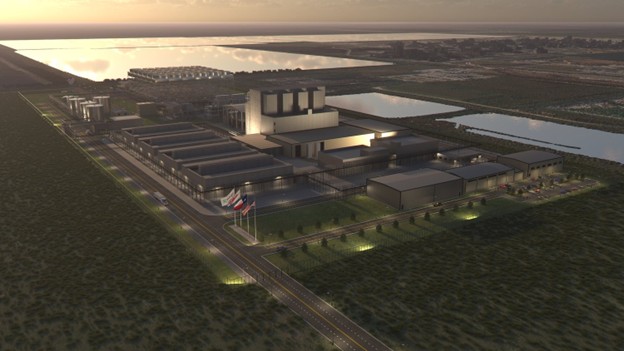
Oklo, of Santa Clara, Calif., was the only company in the RPP selected for two projects—not including its third project under the banner of Atomic Alchemy/Oklo Isotopes. One of those projects is the Aurora-INL, slated to be Oklo’s first deployment of its Aurora Powerhouse, a 75-MWe liquid metal–cooled, metal-fueled fast reactor. Oklo broke ground on Aurora-INL in September 2025. On June 11, 2026, the company announced that it had secured its PDSA approval from the DOE. The second project centers on a reactor called Pluto, a plutonium-fueled fast test reactor. In December 2025, Oklo announced that it conducted “a multiday plutonium fast reactor critical test suite” with Los Alamos National Laboratory at the National Criticality Experiments Research Center (NCERC) using plutonium and a critical assembly from LANL. While Oklo stated that these tests provide valuable data for its RPP project, it gave no estimated timelines for when site development will begin. Similarly, no timeline is currently provided for Aurora-INL.
For its Pluto reactor, Oklo has entered into a strategic partnership project (SPP) with Battelle, the company that manages INL. This authorization pathway (unused by any other company in the RPP) is an alternate to the standard OTA path. Under the SPP, Battelle retains design control over the Pluto facility—as opposed to the OTA pathway, which allows the involved company to retain design control.
Radiant Industries, of El Segundo, Calif., is developing the 1-MWe helium-cooled, TRISO-fueled Kaleidos microreactor. The company received PDSA approval in February 2026. Radiant is first in line to test its reactor at NRIC’s Demonstration of Microreactor Experiments (DOME). On July 1, the company announced that it had received its first tranche of fuel at the DOME, which was fabricated by Standard Nuclear with HALEU committed by the DOE. Radiant plans to conduct a five-phase reactor development testing program over the course of this summer, with plans to progress through zero-power criticality all the way to a 150-hour run at full power without operator intervention. Radiant is the only company selected for both the RPP and the Launch Pad. At this time, it is unclear what the company has gained from its involvement in the latter program. Outside of NRIC and the DOME, Radiant is pursuing a reactor project with the Air Force, a reactor factory in Oak Ridge, and uranium enrichment plans with Urenco.
Terrestrial Energy, of Charlotte, N.C., is pursuing the deployment of its 390-MWe integral molten salt reactor that uses LEU fuel. The company calls its DOE-backed reactor plan Project Tetra, and it signed an OTA with the DOE in January 2026. In June, Terrestrial signed ground lease and research agreements with Texas A&M University for a 77-acre site on its RELLIS campus, where it plans to deploy Project Tetra.
Valar Atomics, of El Segundo, Calif., is one of the three companies, at the time of this writing, that has achieved zero-power fueled criticality. It reached this milestone on June 18 with its 100-kWt Ward 250 helium-cooled, TRISO-fueled, high-temperature gas reactor at Utah San Rafael Energy Lab, where the company originally broke ground in September 2025. The company announced in November 2025 that it had achieved zero-power criticality with an experiment called Nova Core in collaboration with LANL at NCERC. On June 22, the company announced that it had proceeded with a planned power ascension and achieved a 10 kWt output with its reactor. Valar successfully converted this power to electricity and connected that output to an Nvidia Spark chip as part of a broader announcement that the two companies are partnering to develop a 30-MW data center in Utah.