NRIC industry day highlights lessons learned from pilot programs

On Tuesday, the National Reactor Innovation Center hosted an industry day for the Nuclear Energy Launch Pad, providing a forum for companies to learn more about how the program works, timelines, collaboration with the various entities involved, and available resources.
The launch pad is a long-term program stemming from the Reactor Pilot Program and Fuel Line Pilot Program. It aims to fast-track regulatory processes for new reactors and fuel facilities that meet certain milestones.
NRIC announced the first-ever selections for the launch pad in April—Deployable Energy, General Matter, NuCube Energy and Idaho State University, and Radiant Industries—chosen from the pool of applicants to the pilot programs.
A request for applications was issued on April 29, so companies can now apply directly to the Nuclear Energy Launch Pad. Initial applications are due July 8.
“We will be targeting August 19 for the selections of the first round of the RFA, and then the RFA will be continuously open beyond that point and evaluations will occur over a rolling basis,” said Chris Turner, NRIC technical program manager for Launch Pad coordination.
Program evolution: Speakers at the industry day highlighted key differences between the Launch Pad and the Reactor and Fuel Line Pilot Programs.
The most heavily emphasized change, repeated by multiple speakers, is that while pilot program companies were required to show technology maturation at a level that could get through technical and regulatory milestones, launch pad participants are expected to also lay out a plan for commercializing the technology.
“The jump from demo to commercial production is vital, and it cannot be overstated,” said Kaushik Banerjee, a senior technical advisor in the Department of Energy’s Advanced Nuclear Fuel Availability Program.
The launch pad is also aiming to provide greater awareness of and connection to external resources to support commercialization goals. This includes collaboration with national laboratories, universities, and organizations such as the National Nuclear Security Administration for utilizing research facilities and understanding export control for potential international commercialization.
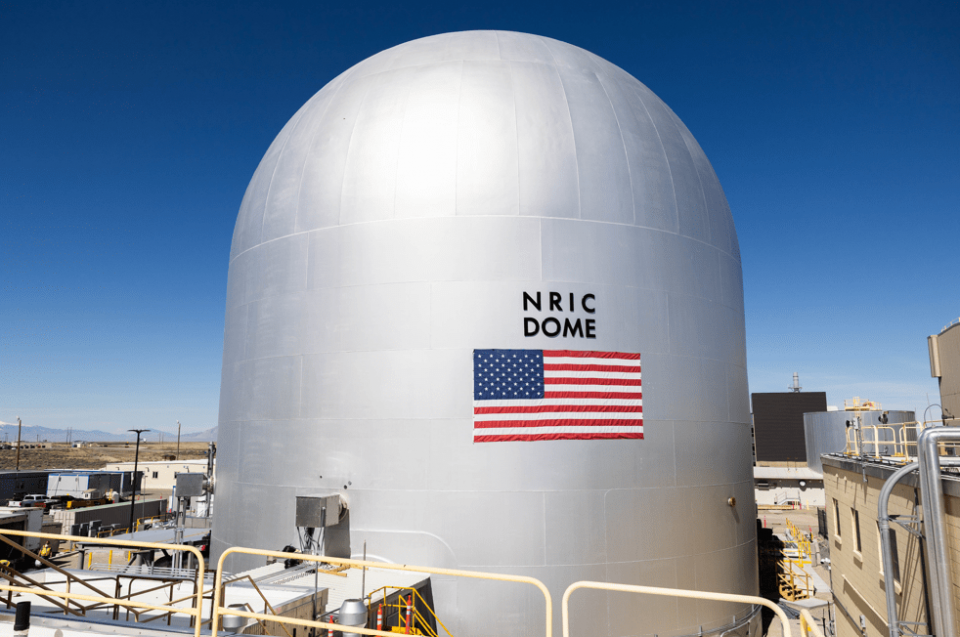
The Nuclear Energy Launch Pad is being run out of NRIC.
“This should have been the home of the reactor pilot program,” said Rian Bahran, deputy assistant secretary for nuclear reactors at the DOE. “We set up the Reactor and Fuel Line Pilot Programs within headquarters because we had to sprint to this capability, but NRIC, led by Brad Tomer and his team, have done exceptional work providing an ecosystem for accelerating reactor testing.”
The launch pad has two application pathways. Companies that know they want to use facilities at INL should apply to Launch Pad INL; while companies seeking to use other DOE sites, national laboratories, or nonfederal locations nationwide should apply to Launch Pad USA.
NRIC Director Brad Tomer said companies that are considering multiple sites of interest, including INL, should apply to Launch Pad USA, but he noted that having a single site identified would be looked at positively.
“We’re trying to judge each candidate on how ready you are to execute. . . . The idea is to accelerate deployment as fast as we can, so the more ready you are, that’ll be a criteria where you’ll score higher on your application,” he said.
Lessons learned: Many of the milestones and deliverables are comparable to the pilot programs, including achieving regulatory authorizations such as the progression through NSDA, PDSA, and DSA safety documents. Applicants are expected to show they have established nuclear material plans that include life cycle pathways; adequate financial resources to accomplish their project; and execution readiness from the standpoint of materials, systems, components, and design.
“We noticed that there was a gap in cybersecurity and IT governance [in the pilot programs], so we’re asking that you start this process as soon as possible in your design phases,” said Turner.
Christian Natoni, a deputy manager at DOE-Idaho, highlighted a range of steps that had been underestimated by some pilot program participants and had been seen to cause delays. He encouraged companies to begin these activities as early as possible.
These include preliminary siting activities, such as environmental baseline sampling; safety management programs that go beyond regulatory documents, such as worker safety programs and radiation protection programs; security clearance requirements, especially if companies have any foreign ownership; and developing implementation plans for transitioning to operations.
While encouraging the use of artificial intelligence as a tool, Natoni emphasized that it is essential to have subject-matter experts checking the output.
“Over the course of this year we have gotten nuclear safety documents that have had significant errors in them as a result of using AI,” he said. “Those could have been precluded if there was adequate checking on the other end.”
Natoni said page turn meetings, where the team’s subject-matter experts and the DOE review team discuss safety document drafts, have been effective at setting the stage for successful reviews, and that program participants who partnered closely with INL through the development of their documentation have had notably high-quality submittals.
Building out support: Several speakers at the industry day provided guidance on resources that are available to prospective launch pad applicants.
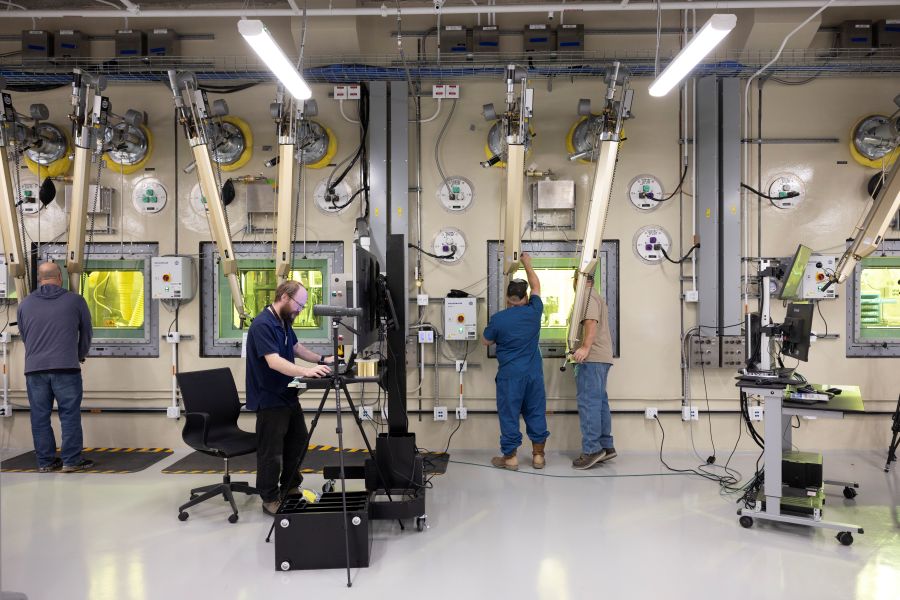
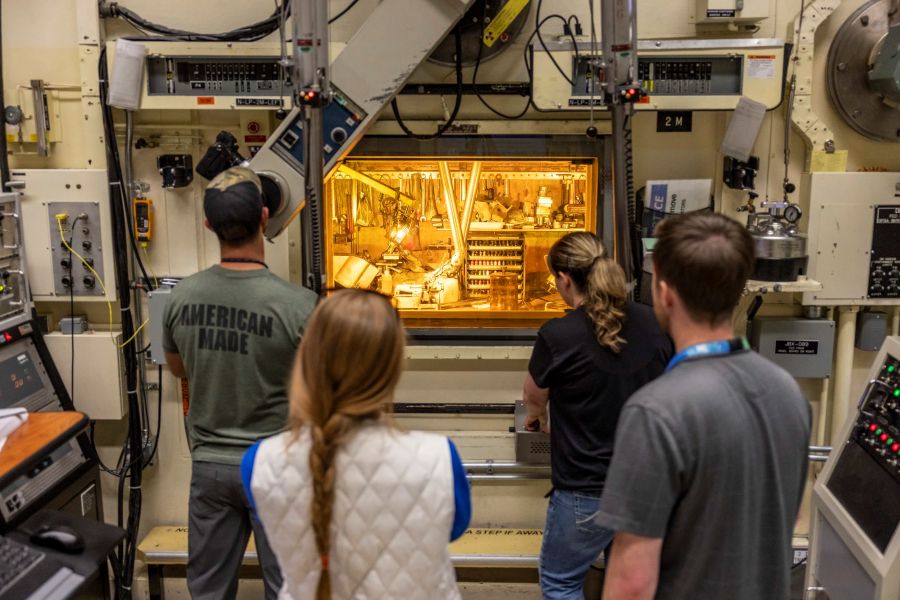
Representatives from Argonne, Los Alamos, Oak Ridge, Pacific Northwest, Sandia, and Savannah River National Laboratories summarized the facilities and expertise that may be of interest to prospective launch pad applicants.
Chad Pope, program director of nuclear engineering at Idaho State University, talked about experimental capabilities of the university’s research reactor.
“Remember that the best thing about universities is they’re very, very low cost,” he said. “A lot of folks in the business have never even touched fuel, so with this facility, you can come in and do an approach to critical experiment hands-on work. . . . We do these workshops for anyone who wants them.”
According to Tomer, the industry day presentations, video recording, and all submitted questions with corresponding answers will be posted on NRIC’s website. The page says a list of experts will also be available soon.