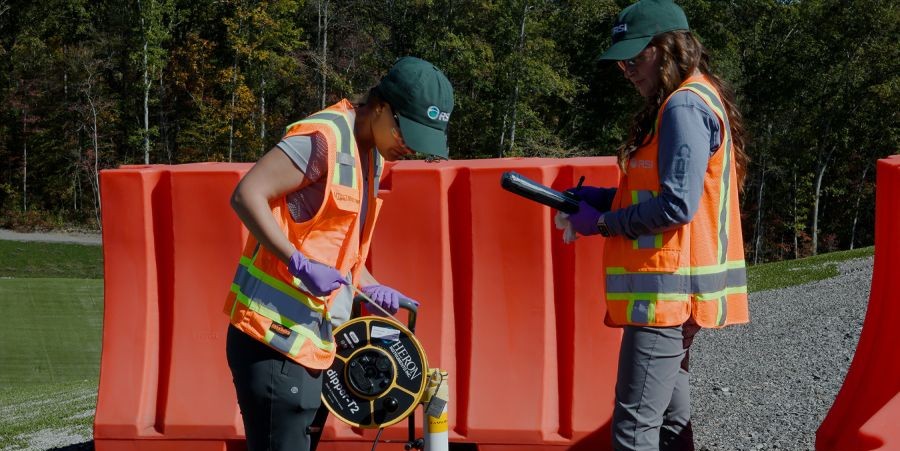
Technicians monitor groundwater levels in wells at the site of the future Environmental Management Disposal Facility in Oak Ridge, Tenn. (Photo: DOE)
Results of a two-year study of groundwater levels at the site of the planned Environmental Management Disposal Facility (EMDF) in Oak Ridge, Tenn., have been released, revealing that the levels fell at a slower-than-expected rate. The collection of data on groundwater levels during two wet seasons, conducted by the Oak Ridge Office of Environmental Management and the contractor United Cleanup Oak Ridge, formed the core of a groundwater field demonstration study which will help inform the final design of the EMDF landfill.
Understanding how groundwater levels change during the wet season, which in eastern Tennessee lasts from December through March, is important for ensuring the proper design of the EMDF. Workers installed an impermeable geomembrane over an area at the site measuring about 1.3 million square feet, or 30 acres, to simulate the eventual landfill liner system. The groundwater levels were then monitored in several wells to determine how the liner system might affect the water elevation.
Collected data had previously indicated that groundwater levels steadily declined during the first wet season as the geomembrane prevented precipitation from infiltrating to the location of the disposal cells. Data from the second wet season also showed groundwater level drops, though the rate of decline was less than expected.
Practical engineering: In light of the new data, engineers altered the system’s design by slightly raising the floor of the first two disposal cells. That change will help ensure that the EMDF adheres to required protective safety measures, which mandate 15 feet of separation between groundwater and disposed waste.
UCOR EMDF project manager Mary Magleby explained, “We had to make a practical engineering decision based on real-world hydrological data. By proactively raising the first two cells of the landfill, we ensure regulatory compliance while preventing what could have been a multimonth delay to our construction timeline.”
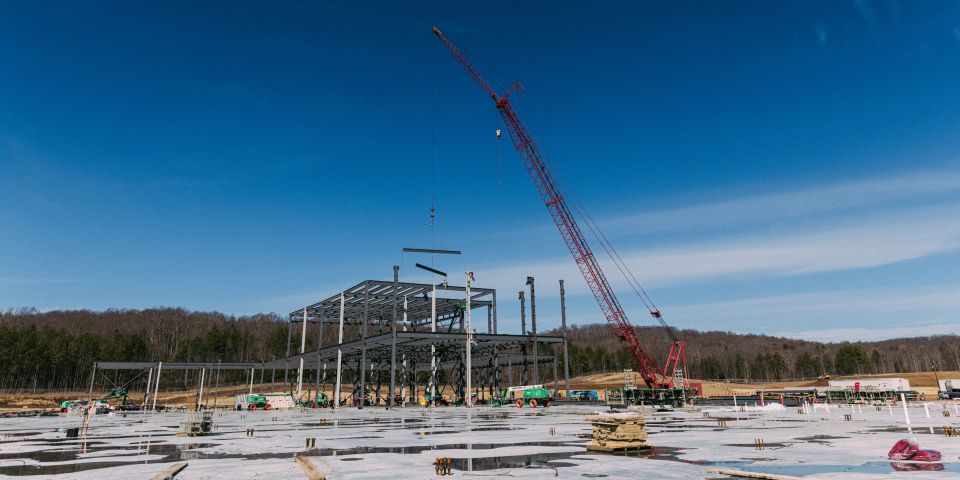
The next step in the EMDF project is a major construction phase. This coming autumn, workers will begin carrying out site grading and utility extensions and pouring foundations for support facilities.
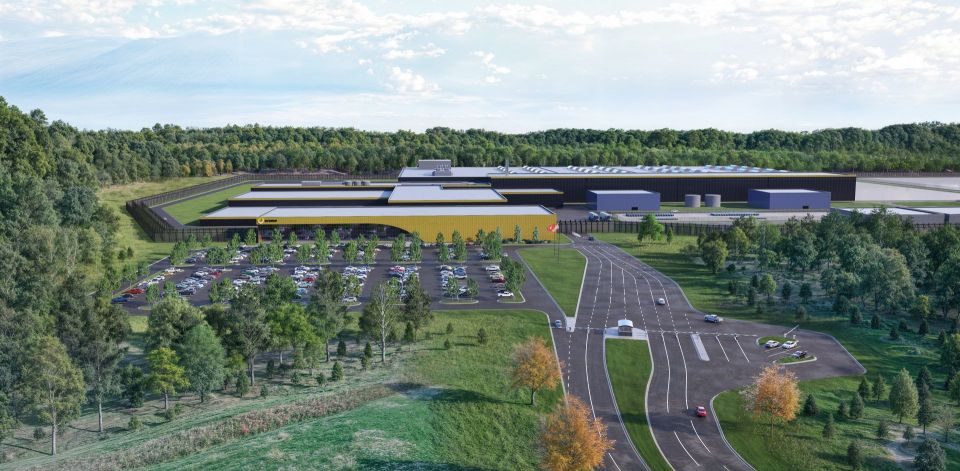
A Superfund project: The EMDF is being constructed to allow OREM to continue cleanup projects on the Oak Ridge Reservation—particularly at the Y-12 National Security Complex and Oak Ridge National Laboratory. OREM’s current disposal facility for radioactive, hazardous, and toxic wastes, the Environmental Management Waste Management Facility, is almost 90 percent filled. The new facility, which is slated to begin operations by 2030, is a project that falls under the Comprehensive Environmental Response, Compensation, and Liability Act—commonly known as the “Superfund.”