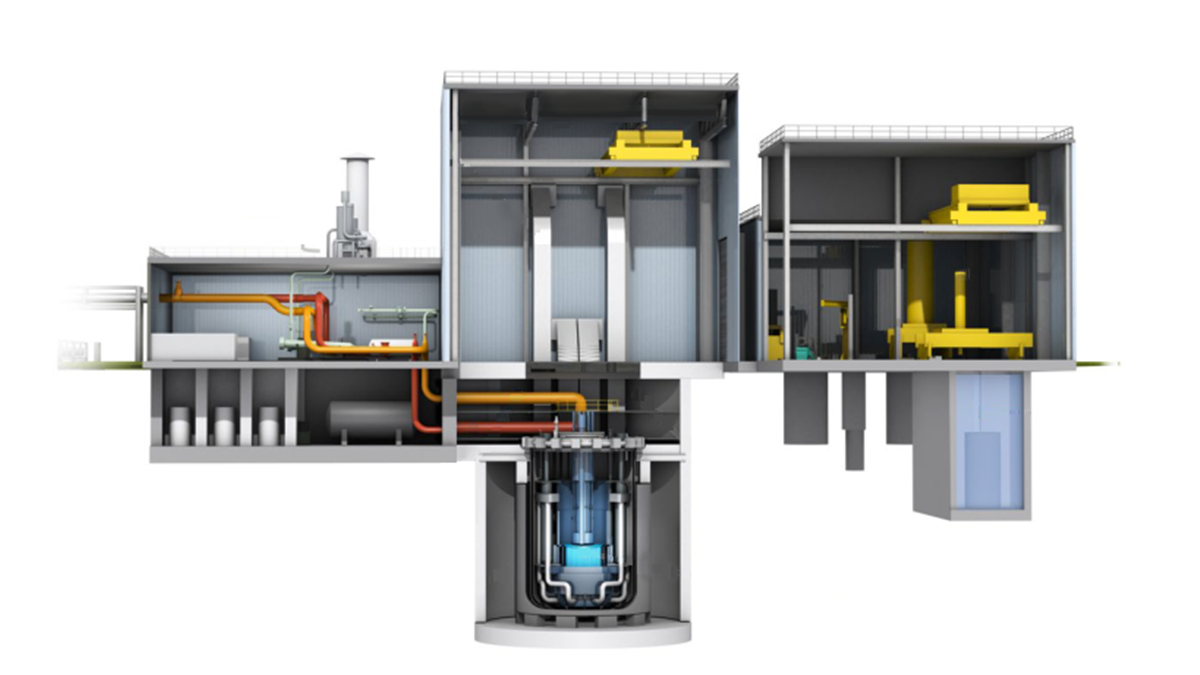
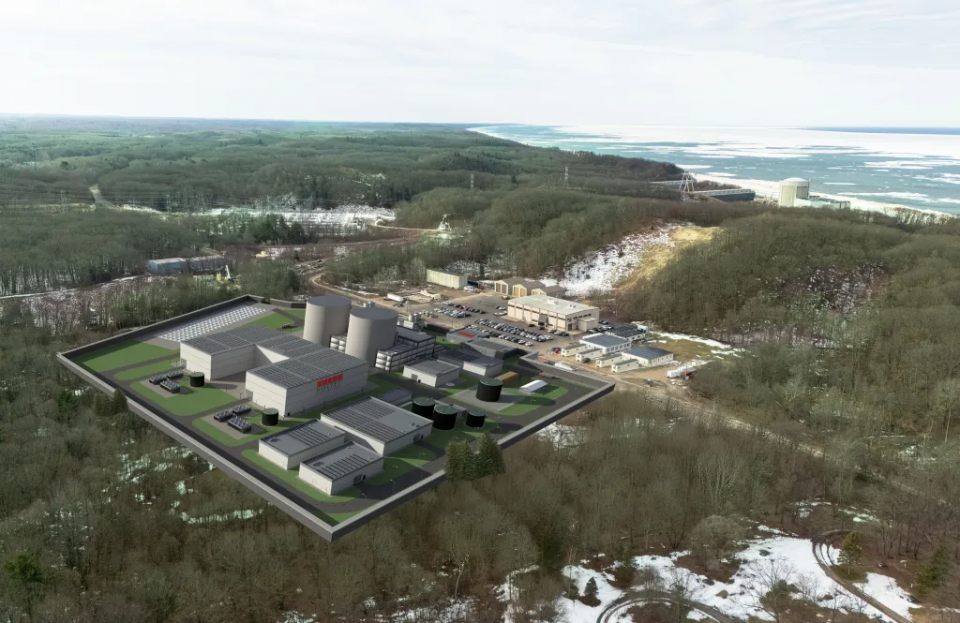
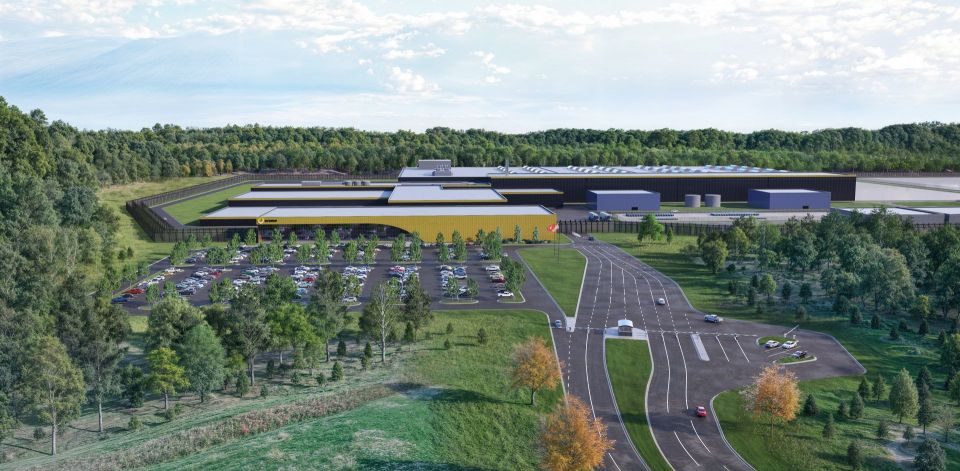
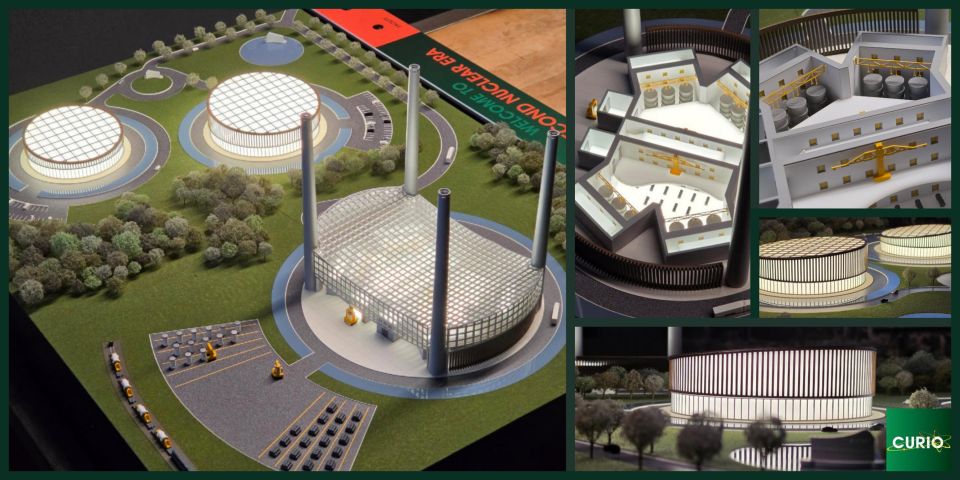
A brief timeline: In August 2020, TerraPower and GE Hitachi Nuclear Energy introduced their jointly designed Natrium reactor, a 345-MWe sodium fast reactor paired with a molten salt thermal storage system capable of boosting the system’s output to 500 MWe for more than five-and-a-half hours. The Natrium design also separates the reactor facility and the energy generation facility into two islands, aiming to reduce regulatory burden and speed construction.
In October 2020, the DOE selected Natrium (along with X-energy’s Xe-100) for the ARDP. The DOE planned to invest $3.2 billion in the projects, ultimately aiming to get both reactors up and running within seven years.
In June 2021, TerraPower—with PacifiCorp as a partner—announced a plan to site its demonstration reactor project at an unspecified retiring coal plant in Wyoming.
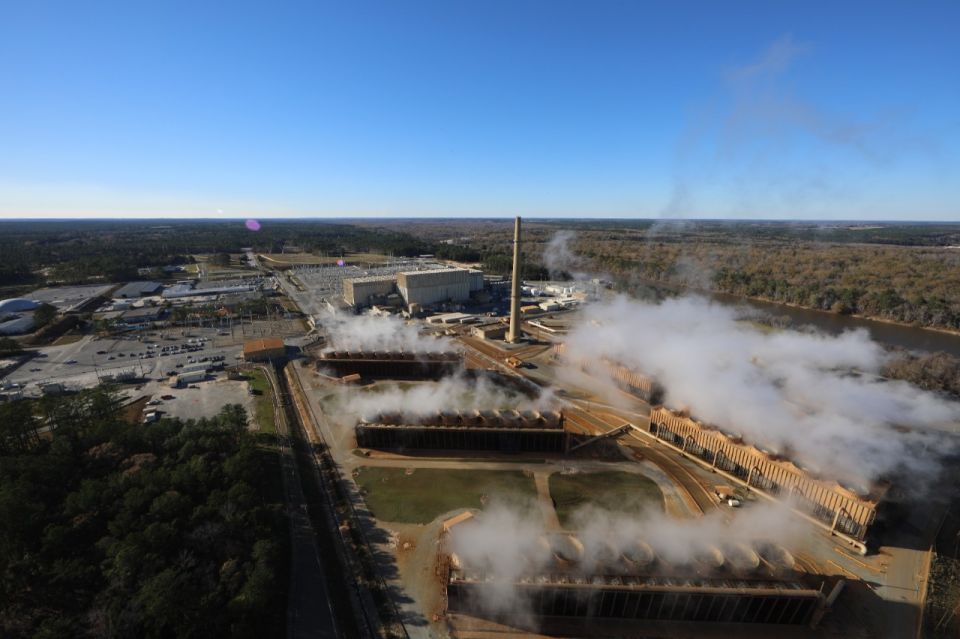
In November 2021, the company officially selected Kemmerer as its preferred site. Kemmerer is near Naughton power plant, a 448-MWe coal-fired facility that is on track to be fully converted to a natural gas plant by 2026.
In March 2024, after extensive, years-long preapplication work, TerraPower submitted its Part 50 construction permit application to the NRC. The NRC formally accepted the application in May 2024 and aimed to complete its review by August 2026.
In January 2025, the Wyoming Industrial Siting Council granted approval to the Kemmerer project for all construction and operational activities outside NRC jurisdiction.
In July 2025, the NRC—making steady progress on its review—shortened its timeline for construction permit approval, aiming to make a decision by the end of 2025, a goal it ultimately missed by three months. Still, the NRC completed its review five months ahead of its original timeline. More broadly, the overall project remains delayed, with completion targeted for 2030—three years beyond the original target set by the DOE.
The bigger picture: Now supplied with the necessary state and federal permitting, it is full steam ahead for the Kemmerer project. In a press release, TerraPower president and CEO Chris Levesque said that the company plans to start construction in a matter of weeks.
NRC Chair Ho Nieh said, “This is a historic step forward for advanced nuclear energy in the United States and reflects our commitment to delivering timely, predictable decisions grounded in a rigorous and independent safety review.”
The NRC also emphasized that in order to operate the completed facility, TerraPower’s wholly owned subsidiary US SFR Owner will need to submit a separate Part 50 operating license application that itself would be subject to NRC approval.
The Kemmerer project is the fourth non-LWR reactor to receive a construction permit in recent years. These are the others that have received construction permits:
Kairos Power’s Hermes, which was issued its permit in December 2023. Hermes is a 35-MWt fluoride salt-cooled, high-temperature reactor.
Abilene Christian University’s Molten Salt Research Reactor, which was issued its permit in September 2024. The MSRR is rated at 1 MWt.
Kairos Power’s Hermes 2, which was issued its permit in November 2024. Hermes 2 broadly shares the design specifications of Hermes, but would be larger and would demonstrate electricity generation.
Unlike these reactors, the Natrium reactor at the core of the Kemmerer project is commercial scale. The last commercial-scale reactor approved by the NRC was Turkey Point-7 in 2018—though that approval came in the form of a Part 52 combined license (COL) for construction and operation rather than a construction permit alone.
A word on RIPB: Aside from these milestones, TerraPower’s application is the first to use a fully risk-informed, performance-based (RIPB) licensing basis for a power reactor, according to the NRC. TerraPower’s application used the Licensing Modernization Project (LMP) methodology, which is described in NEI 18-04. RIPB and LMP methods both aim to reduce regulatory burdens, increase flexibility, and aid the licensing of non-LWR reactor designs. The LMP methodology was endorsed by the NRC in 2020.
“Completing a complex advanced reactor licensing review significantly ahead of schedule reflects improvements in the efficiency of the NRC’s review process while maintaining the agency’s rigorous safety and environmental standards,” said Adam Stein, director of nuclear energy innovation at the Breakthrough Institute. “Touching on the importance of RIPB, he added, “Predictable, risk-informed licensing processes are essential if the United States is to expand nuclear energy capacity at the pace required to meet national goals.”