New lab at ORNL speeds up U-233 cleanup, Ac-225 delivery

August 21, 2026, 7:16AMNuclear News

The ribbon is cut for the new analytical lab in ORNL’s Building 2026 by, from left, AtkinsRéalis’s Jeff Kendall, TerraPower Isotopes’ Scott Claunch, Isotek Systems’ Sarah Schaefer, OREM’s Erik Olds, TerraPower Isotopes’ Ben Goodrich, and OREM’s Teresa Robbins. (Photo: DOE Oak Ridge Office of Environmental Management)

A new analytical laboratory at Oak Ridge National Laboratory has been officially opened by the Department of Energy’s Oak Ridge Office of Environmental Management and its contractor Isotek Systems. The state-of-the-art lab, located in Building 2026, is being used to speed up the high-priority cleanup of ORNL’s uranium-233 inventory and accelerate the delivery of actinium-225 to facilities that use the radioisotope in research and for potential treatment of patients with cancer.

Tuberville’s legislation would stop destruction of thorium stockpiles

June 22, 2022, 7:00AMANS Nuclear Cafe
Sen. Tommy Tuberville of Alabama.

Legislation known as the Thorium Energy Security Act, introduced in Congress last month by U.S. Sen. Tommy Tuberville (R., Ala.), would put a halt to the destruction of U.S. stockpiles of uranium-233 and instead would foster its integration into the development of thorium molten salt–cooled reactors, Newsweek reported last week. The act has been referred to the Senate Committee on Energy and Natural Resources.

TerraPower looks to turn DOE’s waste uranium into actinium-225

August 5, 2020, 10:12AMAround the Web

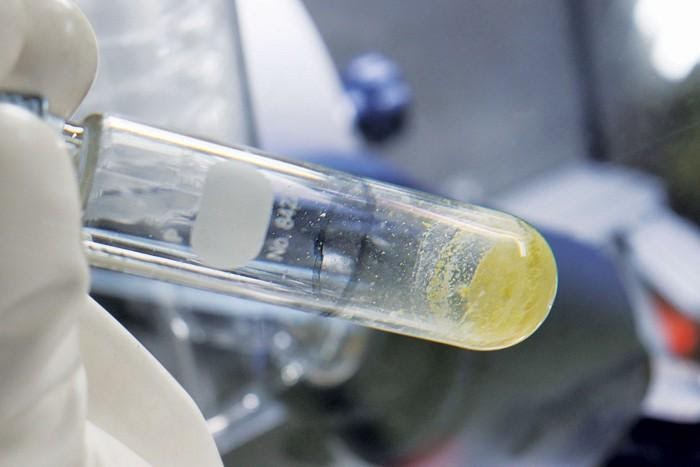
This vial contains traces of actinium within a mixture of thorium and uranium. Photo: Isotek

An article recently published in Chemical & Engineering News describes TerraPower’s efforts to extract actinium-225, a radioisotope with therapeutic potential, from highly radioactive uranium-233 owned by the Department of Energy and slated for disposal. While others are working to ramp up production of Ac-225 by using a linear accelerator or cyclotron, TerraPower hopes to harvest between 200,000 and 600,000 doses a year from U-233 to increase the global supply.