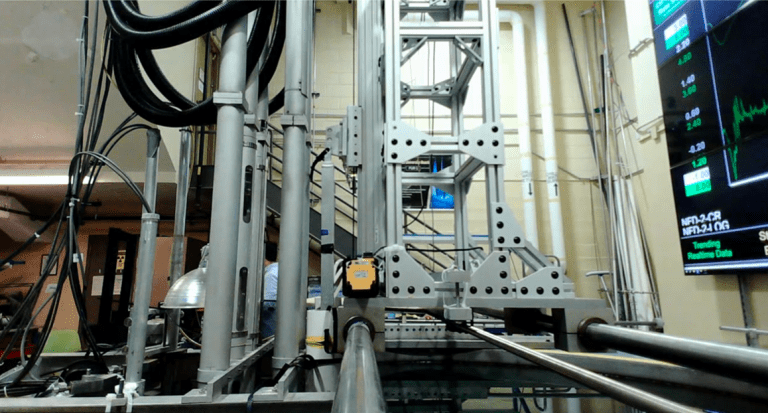
Purdue’s PUR-1 research reactor. (Photo: Purdue University)
The remote, automatic, real-time adjustment of a research reactor’s power by a geographically distributed control system has been reported by researchers from Idaho National Laboratory, the Grainger College of Engineering at the University of Illinois–Urbana-Champaign, and Purdue University. The investigators first used an automatic adjustment “digital control loop” system to demonstrate remote adjustments of Purdue’s PUR-1 research reactor. They then applied a reinforcement learning model that simulates the interaction of physical forces inside the reactor, making the loop system more autonomous.
Left: Behrens as a physics lecturer in 1969 at the University of Illinois—Urbana-Champaign. Right: Behrens at home today with his new pup Snowflake.
We welcome ANS members who have careered in the community to submit their own Nuclear Legacy stories, so that the personal history of nuclear power can be captured. For information on submitting your stories, contact nucnews@ans.org.
The James Wm. Behrens family legacy in America starts with Henry H. Behrens, who came across the pond from Germany in 1857. He was later joined by Wilhelmina, also from Germany, and they were married in Alton, Ill., in about 1862. One of their sons, George Wm. Sr., was my grandfather. He and his wife, Frances Walker (of Irish and English descent), had three sons, one of whom (George Wm. Jr.) was my father. I was born in 1947 and raised in the small country town of Bunker Hill, Ill. I attended Bunker Hill elementary and high schools, graduating from the latter in 1965.
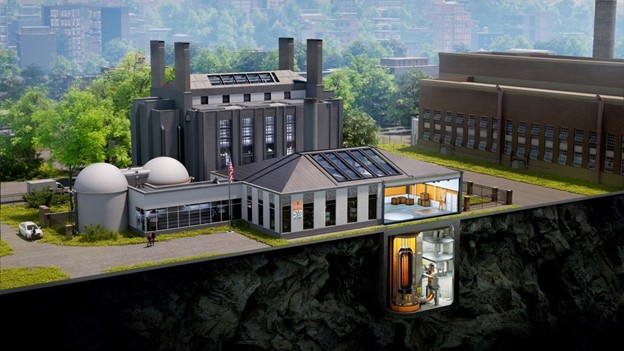
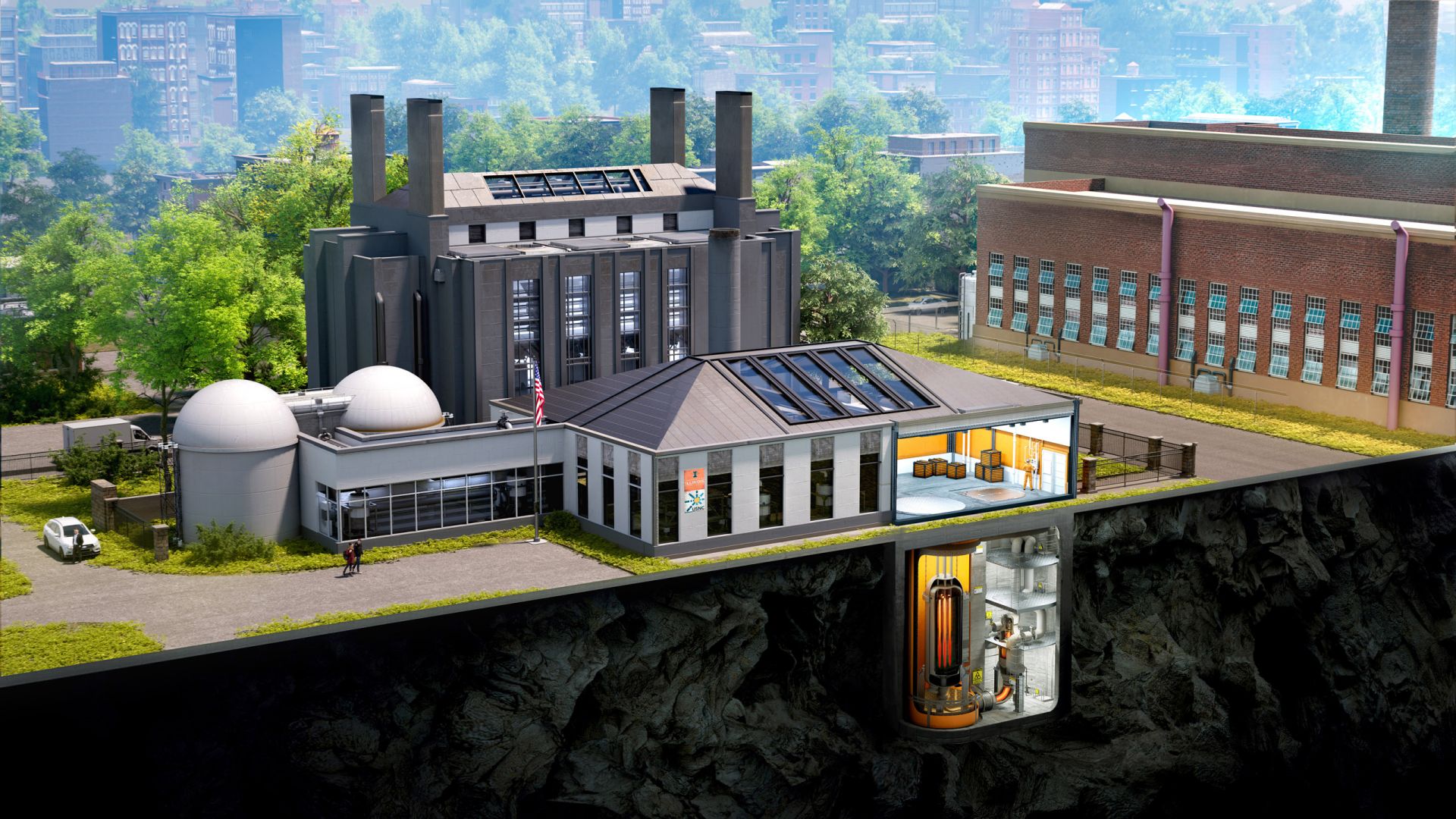
Conceptual art of USNC’s MMR, as proposed for construction on the UIUC campus. (Graphic: USNC)
It’s been almost 35 years since Illinois last added a nuclear power reactor to the grid (Braidwood-2, a pressurized water reactor operated by Constellation, reached commercial operation in October 1988). And it’s been 63 years since a research reactor reached initial criticality at the University of Illinois–Urbana-Champaign (UIUC). The university’s TRIGA Mark II started up in August 1960 and was shut down in 1998. For about 25 years, UIUC—the flagship public university in a state that generates more power from nuclear energy than any other—has lacked an operating research reactor.
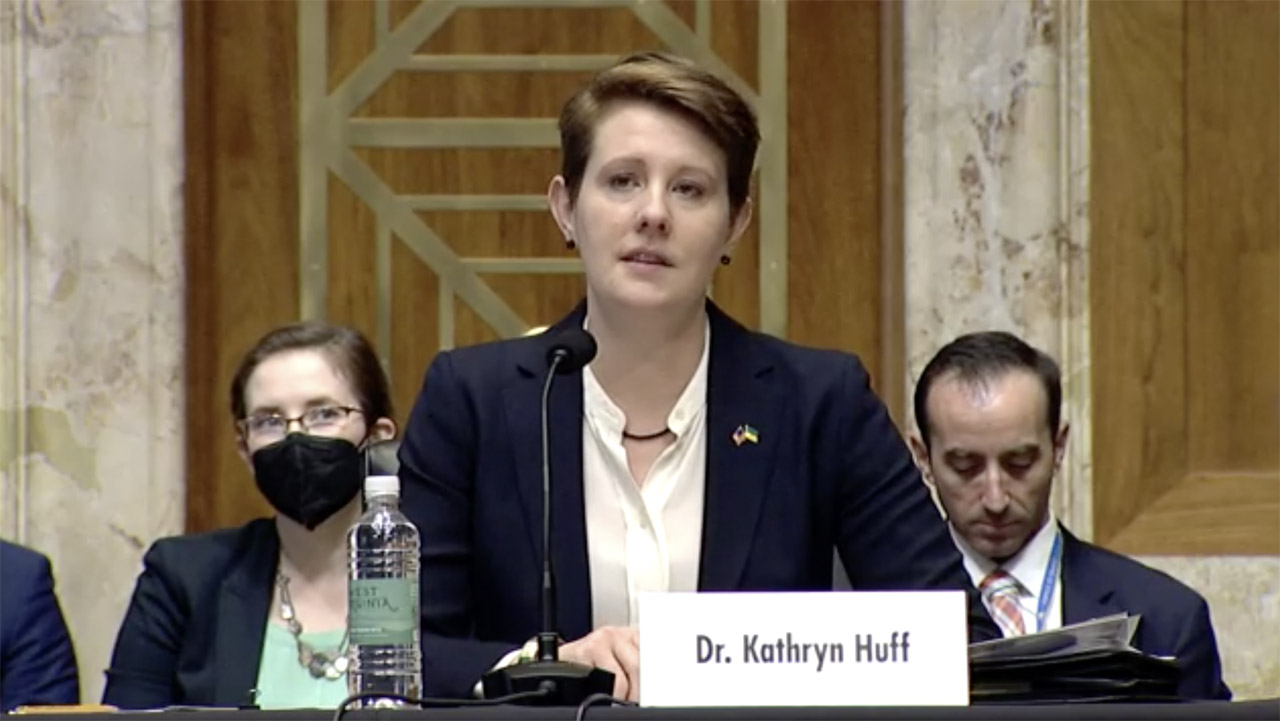
Nominated to lead the DOE’s Office of Nuclear Energy, Kathryn Huff testifies before the Senate Energy and Natural Resources Committee on March 17.
The Senate Energy and Natural Resources Committee met yesterday to consider the nomination of Kathryn Huff to head the Department of Energy’s Office of Nuclear Energy (NE). President Biden selected Huff to fill the top spot at NE in January.


 New York City–based advanced nuclear technology developer Nano Nuclear Energy has been awarded a Direct-to-Phase II Small Business Innovation Research contract for its Kronos micro modular reactor (MMR) by AFWERX, the innovation and venture arm of the U.S. Air Force. The contract calls for AFWERX, with the 11th Civil Engineering Squadron, to explore the feasibility of deploying the Kronos MMR Energy System at Joint Base Anacostia-Bolling (JBAB) in Washington, D.C.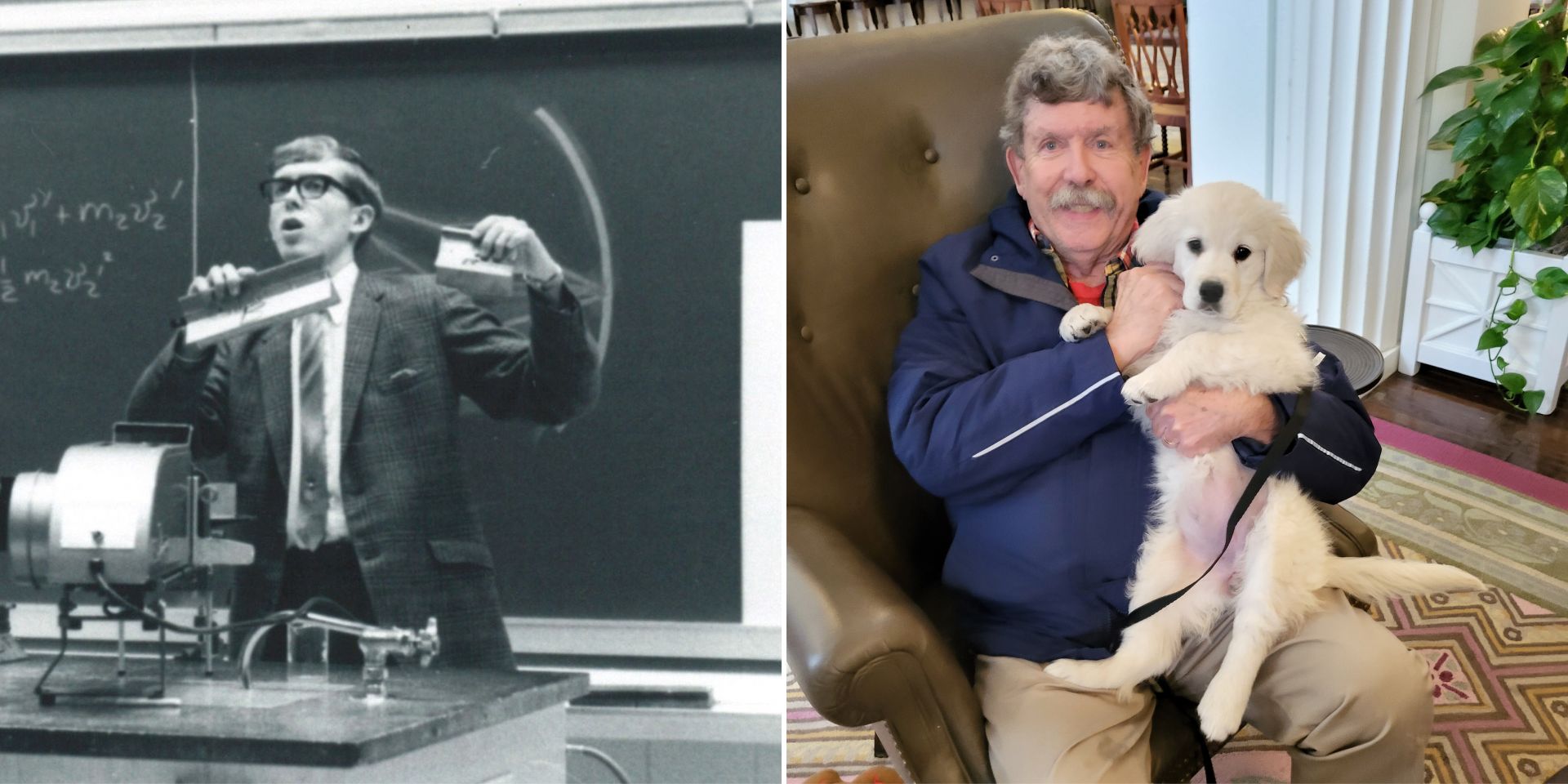

 Among the 12 energy-mix scenarios analyzed in