LLNL, Ampera partner to develop thorium-based TRISO fuel

August 27, 2026, 3:38PMNuclear News

TRISO particle fuel is fully encapsulated by layers of carbon- and ceramic-based materials that prevent the release of radioactive fission products. Each particle (roughly the size of a poppy seed) acts as its own containment system and is more resistant to neutron irradiation, corrosion, oxidation, and high temperatures than traditional reactor fuels. (Image: LLNL)

Lawrence Livermore National Laboratory has formed a strategic partnership with Ampera to develop the company’s nuclear fuel concept through a project named THUNDER, for Thorium Unimodal Droplet Ejection for Reactors.

The focus of THUNDER is fabricating TRISO made with kernels of thorium rather than the usual uranium. LLNL and Ampera will evaluate and optimize liquid metal–jetting technology to produce highly uniform, spherical kernels of thorium-232 for later processing into TRISO fuel.

Centrus, X-energy sign enrichment contract as TRISO-X expands TX-1 campus

August 7, 2026, 11:57AMNuclear News

Centrus Energy Corp. will be providing X-energy with enrichment services for low-enriched uranium and high-assay, low-enriched uranium to support X-energy’s planned deployments of Xe-100 small modular reactors and TRISO-X fuel, according to the terms of a new contract signed by the companies. The fuel will be produced at Centrus’s American Centrifuge Plant in Piketon, Ohio. In turn, X-energy will provide Centrus with prepayments to help support expanding the capacity of Centrus’s domestic commercial enrichment program.

“Now is the time” for more ATR capacity: A conversation with Lightbridge

May 28, 2021, 12:06PMNuclear News
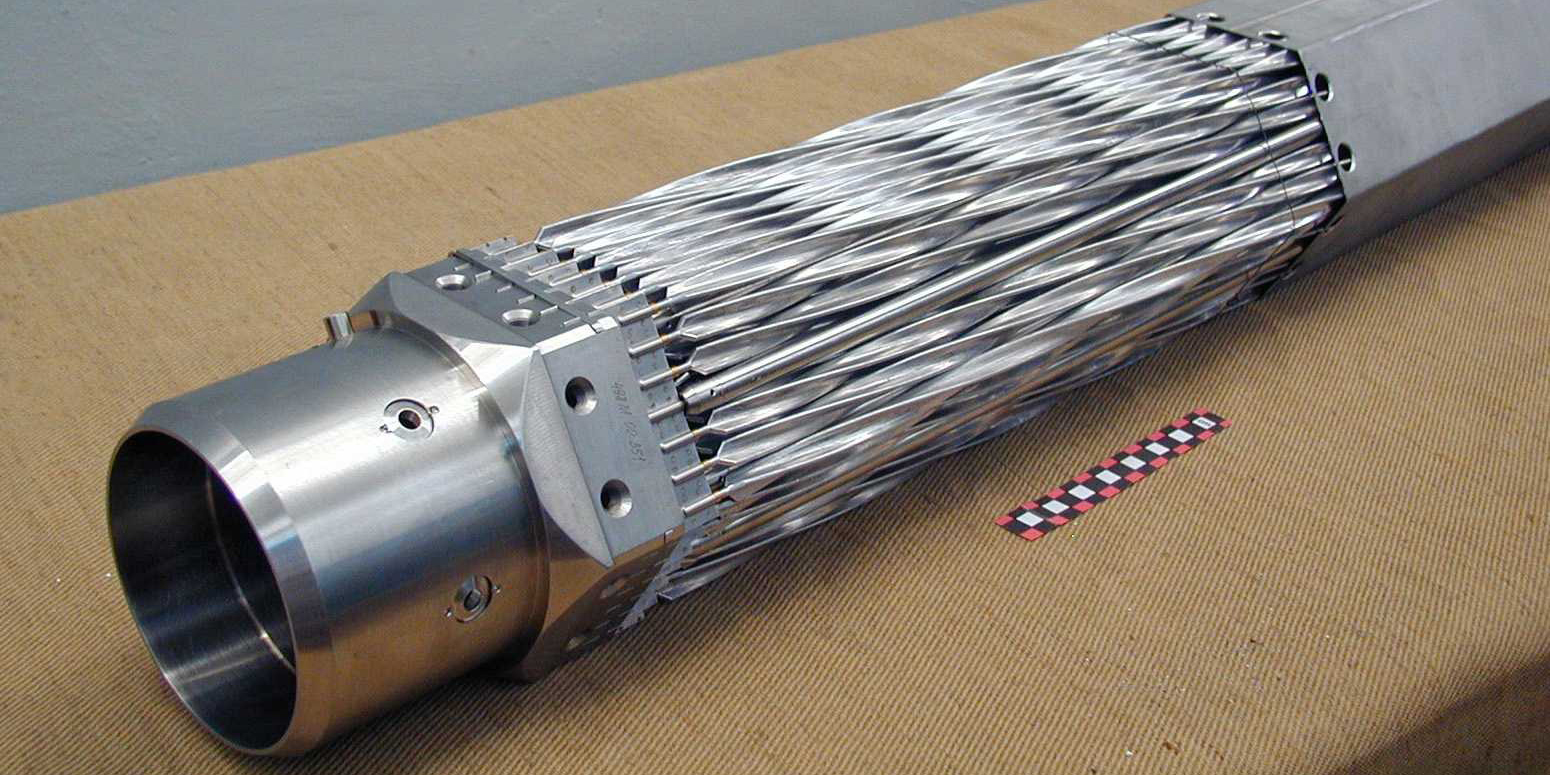
A photo of a prototype Lightbridge fuel assembly. (Photo: Lightbridge)

Operators at the Advanced Test Reactor at Idaho National Laboratory have begun a nine-month outage to perform a core internals changeout. When the ATR is restarted in early 2022, the top head closure plate of the pressurized water test reactor will have new access points that could permit the irradiation of more fuel and material samples in the reactor’s high-flux neutron conditions.