
The Cassini-Huygens Mission to Saturn
February 20, 2013, 2:57PMANS Nuclear Cafe
 Cassini-Huygens is a Flagship-class NASA-ESA-ASI robotic spacecraft sent to the Saturn system. It has studied the planet and its many natural satellites since its arrival there in 2004, as well as observing Jupiter and the Heliosphere, and testing the theory of relativity. Launched in 1997 after nearly two decades of gestation, it includes a Saturn orbiter Cassini and an atmospheric probe/lander Huygens that landed in 2005 on the moon Titan. Cassini is the fourth space probe to visit Saturn and the first to enter orbit, and its mission is ongoing as of 2013. It is powered by a plutonium power source, and has facilitated many landmark scientific discoveries in its mission to the stars.

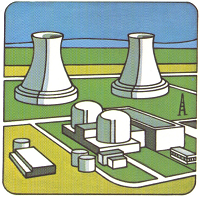 Significant discussions have occurred recently on various internet venues about "load following"-that is, the capability of a generating source to adjust its power output to match variable demands. There is a myth spreading that nuclear power plants cannot load follow, and today's ever-changing discussion about low-GHG generating sources demands that this myth be dispelled.


 This month's post discusses my ideas on an issue I've been thinking about for awhile. Although we have four new reactors under construction in the United States (at
 Three courts, three cases