Developing an RIPB design framework for external hazards

The American Nuclear Society’s Risk-informed, Performance-based Principles and Policy Committee (RP3C) held another presentation in its monthly Community of Practice (CoP) series on April 4.
-3 2x1.jpg)
A message from Curtiss-Wright
High-Temperature neutron flux detectors for Generation IV reactors and SMRs

The American Nuclear Society’s Risk-informed, Performance-based Principles and Policy Committee (RP3C) held another presentation in its monthly Community of Practice (CoP) series on April 4.

The cost to complete the cleanup of the Department of Energy’s Hanford Site in Washington state could cost as much as $589.4 billion, according to the 2025 Hanford Lifecycle Scope, Schedule, and Cost Report, which was released by the DOE on April 15. While that estimate is $44.2 billion lower than the DOE’s 2022 estimate of $640.6 billion, a separate, low-end estimate has since grown by more than 21 percent, to $364 billion.
The life cycle report, which the DOE is legally required to issue every three years under agreement with the U.S. Environmental Protection Agency and Washington State Department of Ecology (Ecology), summarizes the remaining work scope, schedule, and cost estimates for the nuclear site. For more than 40 years, Hanford’s reactors produced plutonium for America’s defense program.
Leaders in Ghana announced recently that the country has a “framework agreement” with U.S.-based companies NuScale and Regnum Technology Group.
The announcement made by Stephen Yamoah, executive director of Nuclear Power Ghana, was reported by the Ghana News Agency on March 31. He also said Japanese firms will be working in partnership with NuScale and Regnum on the small modular reactors while the China National Nuclear Corporation will construct a large reactor.
The Roy G. Post Foundation announced on February 6 that a total of $310,000 in scholarships will be awarded this year to college students in recognition of their academic achievements, leadership qualities, and positive impacts on their communities.

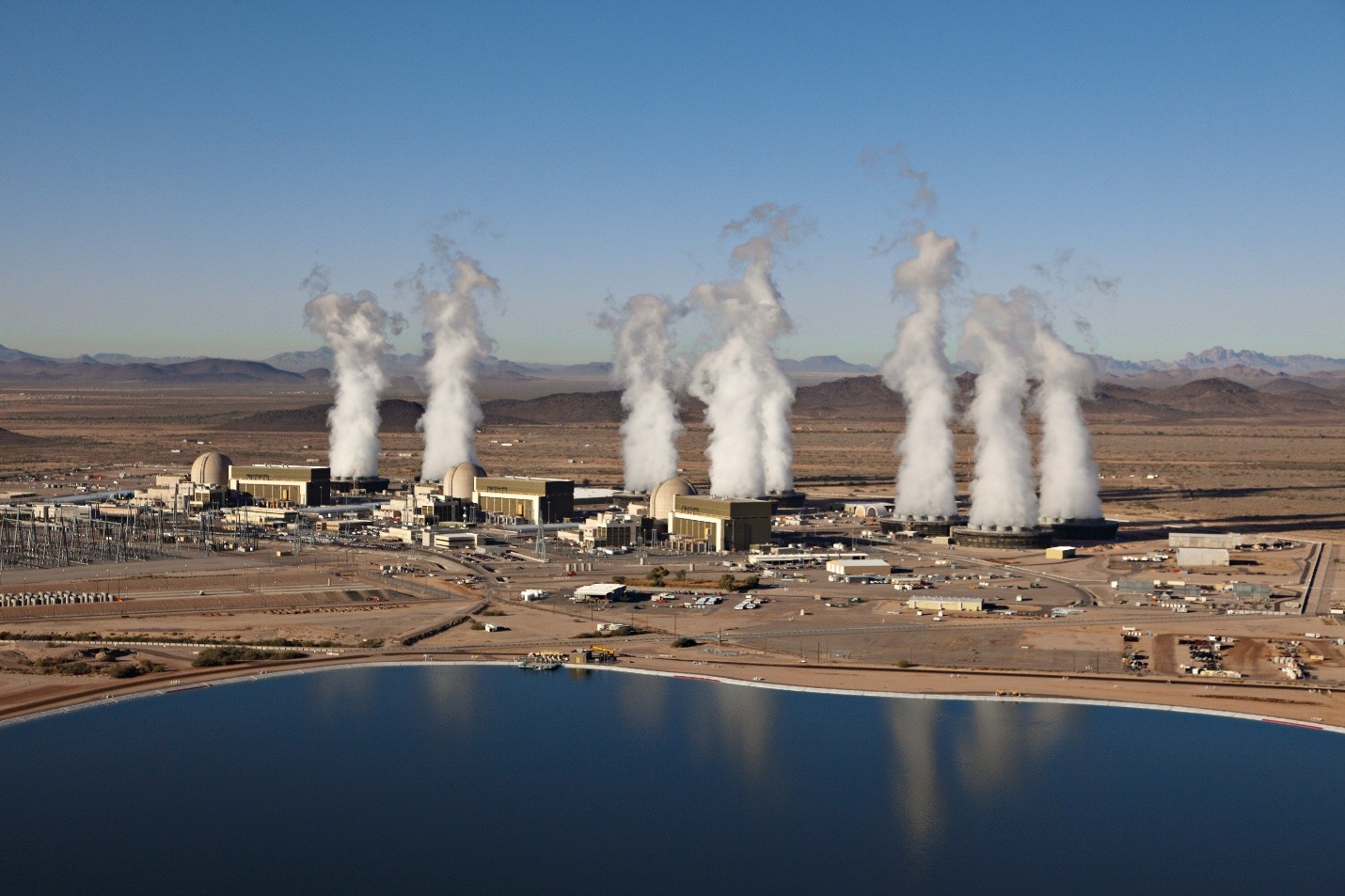
The top three utilities in Arizona are teaming up to explore opportunities to add nuclear generation facilities in the state.
Arizona Public Service (APS), Salt River Project (SRP), and Tucson Electric Power (TEP) announced in a February 5 news release that they are working together to assess possible sites, including retiring coal plants. The group is looking at possibilities for both small modular reactors—units generating 300 MW or less—and potential large reactor projects, which could generate nearly five times the power.
Energy secretary Chris Wright outlined his priorities and plans this week, including a focus on modernizing nuclear power and “taking the politics out” of energy discussions, especially as they relate to climate change.
Statement from ANS on Chris Wright's confirmation to head the Department of Energy
Washington, D.C. — The American Nuclear Society (ANS) issued the following statement:
"The American Nuclear Society congratulates Chris Wright on his confirmation as the 17th U.S. Secretary of Energy. America's nuclear professionals stand ready to help make nuclear technology a key contributor to U.S. energy abundance and economic prosperity.”

With the annual American Nuclear Society election right around the corner, ANS members will be going to the polls to vote for a vice president/president-elect, treasurer, and members-at-large for the board of directors. Nuclear News is printing here statements from each nominee for vice president/president-elect and treasurer. The February NN issue will feature the statements of board member-at-large nominees.

Westinghouse Electric Company’s eVinci Advanced Logic System (ALS) Version 2 (v2) instrument and control (I&C) platform has received approval from the U.S. Nuclear Regulatory Commission through a final safety evaluation report on two topical reports.
The eVinci is now the first and only microreactor with an I&C system approved by the NRC, which opens a path to autonomous operation. The approvals also allow the ALS v2 platform to be used by any reactor currently in the U.S. fleet.

The Department of Energy’s Oak Ridge Office of Environmental Management (OREM) and contractor United Cleanup Oak Ridge (UCOR) have finished fieldwork and have begun monitoring groundwater elevations for a study at the Environmental Management Disposal Facility (EMDF) project site in Tennessee.
ANS CEO Craig Piercy welcomes tech industry's plans to build nuclear energy projects
Washington, D.C. — Craig Piercy, CEO of the American Nuclear Society (ANS), issued the following statement:
"The American Nuclear Society applauds the announced partnerships between Google and Kairos Power and by Amazon and X-energy. Together, these deals will add at least 820 megawatts of zero carbon electricity to the U.S. energy supply. This is a major step toward securing the commercial deployment of advanced nuclear technologies that will make the world a cleaner and more prosperous place."

John Kelly, ANS past president (2018–19), passed away peacefully in his sleep on October 3, 2024, in Gilbert Ariz., at the age of 70. Kelly was born on March 9, 1954, and was the eldest of Jack and Aileen Kelly’s six children.
His career, which spanned more than 40 years, began at Sandia National Laboratories in Albuquerque, N.M., where he focused on safety and severe accident analysis. His leadership led him to Washington D.C., where he served as the deputy assistant secretary for nuclear reactor technologies at the U.S. Department of Energy. Kelly played a critical role in shaping nuclear policy and guiding the world through significant events, including the Fukushima Daiichi accident in Japan. At the end of his career, he was honored to serve as the American Nuclear Society’s president. In retirement, he was actively involved with ANS in technology events and mentoring the next generation of scientists.
Kelly is survived by his wife, Suzanne; his children Julie Kelly-Smith (Byron), John A. (Sarah), and Michael (Nicole); and grandchildren Kiri and Kyson Smith and John and Maximilian Kelly. His family was his pride and joy, including his cherished dog, Covie, who brought him happiness in recent years.
In lieu of flowers, donations may be made to the American Nuclear Society or Detroit Catholic Central High School (27225 Wixom Road, Novi, MI 48374). Please designate Memorial and specify John Kelly ’72 Memorial Fund.
In honor of Kelly's commitment to ANS and to celebrate his life, his profile from the July 2018 issue of Nuclear News is published below.

Statement from ANS on Supreme Court’s decision to grant certiorari to NRC v. Texas
Washington, D.C. — The American Nuclear Society (ANS), a nonprofit representing over 10,000 professionals in the fields of nuclear science and technology, issued the following statement regarding the U.S. Supreme Court’s decision to grant certiorari to Nuclear Regulatory Commission v. Texas:
U.S. Reps. Mike Levin (D., Calif.) and August Pfluger (R., Texas) have introduced the bipartisan Nuclear Waste Administration Act of 2024, which would establish an independent agency to manage the country’s nuclear waste.
In addition to establishing a new, single-purpose administration to manage the back end of the nuclear fuel cycle, the bill would direct a consent-based siting process for nuclear waste facilities and ensure reliable funding for managing nuclear waste by providing access to the Nuclear Waste Fund. According to Pfluger and Levin, the bill’s provisions are in line with recommendations from the Blue Ribbon Commission on America’s Nuclear Future.

Microreactor developer Aalo Atomics and municipal electric utility Idaho Falls Power have developed a memorandum of understanding that could lead to the siting of seven sodium-cooled microreactors and a power purchase agreement for Idaho Falls.
The Department of Energy has released a notice of a funding opportunity (DE-FOA-0003422) for the department’s Office of Environmental Management Minority Serving Institutions Partnership Program (MSIPP). With an estimated value of $15.5 million, the funding opportunity is a set-aside for minority-serving institutions (MSIs) and will result in multiple financial assistance awards ranging from one year to three years in length.

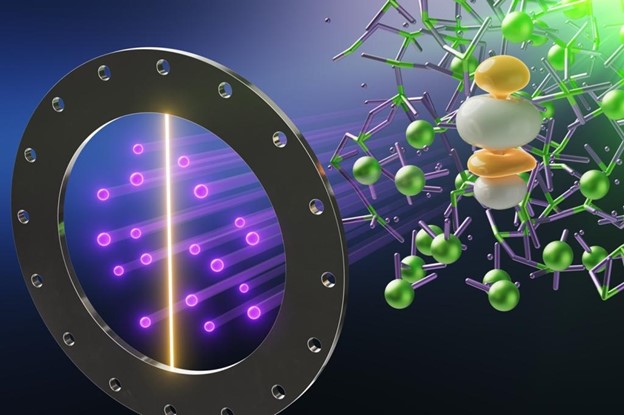
New research into the dynamics and structure of high-temperature liquid uranium trichloride (UCl3) salt—a potential fuel for molten salt reactors—has been published in the Journal of the American Chemical Society. A recent news release from Oak Ridge National Laboratory describes how researchers from ORNL, Argonne National Laboratory, and the University of South Carolina used ORNL’s Spallation Neutron Source (SNS) to document the unique chemistry of liquid UCl3 “for the first time.”

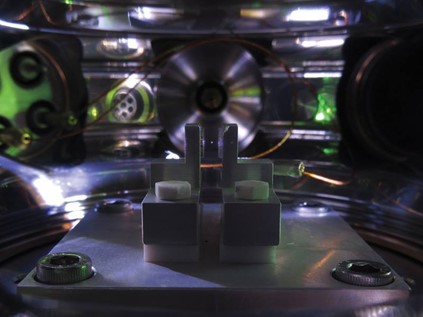
Start talking about dust in a vacuum, and some people will think of household chores. But dust has featured in recent nuclear science and engineering headlines in curious ways: ITER is deploying oversized dust covers inspired by space satellites in the south of France, while at Yale University, researchers have watched every move of a dust-sized particle levitating in a laser beam for telltale twitches that indicate radioactive decay.

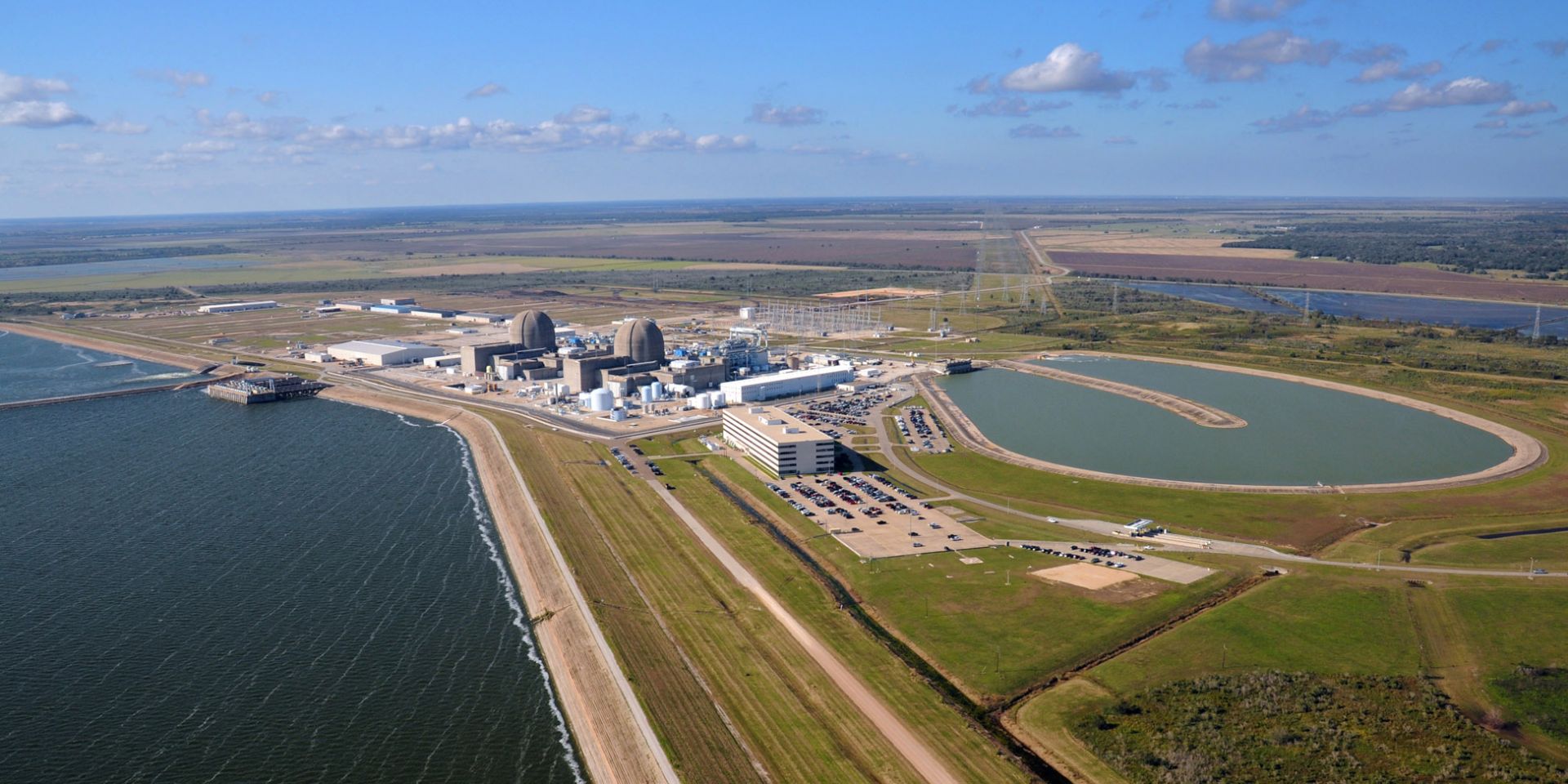
The U.S. Nuclear Regulatory Commission began a special inspection last week at South Texas Project nuclear power plant into two incidents at the site, which led to separate, unplanned shutdowns of both Units 1 and 2.
The American Nuclear Society recently selected two of its members to serve as the 2025 Glenn T. Seaborg Congressional Science and Engineering Fellows. The 2025 Congressional Fellows, Jacob Christensen and Mike Woosley, will help the Society fulfill its strategic goal of enhancing nuclear policy by working in the halls of Congress, either in a congressional member’s personal office or with a committee, when their fellowship term begins in January.