The technology: eVinci is being developed as a 5-MWe (15-MWt) microreactor on a refueling cycle of eight or more years. It uses heat pipes for passive heat transport, a closed Brayton cycle system, TRISO fuel, and control drums.
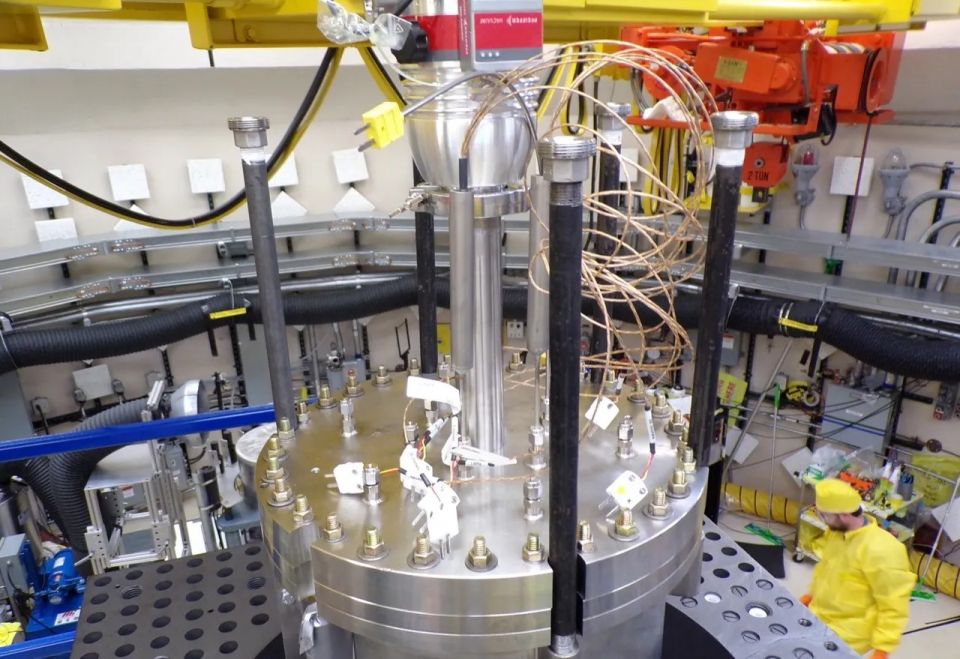
The eVinci test reactor is a one-fifth-scale representation of the commercial design.
Westinghouse has described eVinci as appropriate for remote and challenging environments and has explored eVinci’s potential for a range of applications, including lunar surface power, research, and defense.
In 2022, Westinghouse was picked by NASA to provide an initial design concept for a 40-kWe version of eVinci that could operate for at least 10 years on the moon. Last year, Penn State University submitted a letter of intent to the Nuclear Regulatory Commission to host and operate an eVinci reactor as a campus research reactor. And in April, Westinghouse was selected as a potential developer and operator of microreactors at U.S. Air Force installations.
Testing location: In 2023, Westinghouse was awarded funding via a front-end engineering and experiment design (FEEED) process from INL’s National Reactor Innovation Center to develop an end-to-end program to evaluate the eVinci test reactor at the Demonstration of Microreactor Experiments (DOME) test bed. Last year, the Department of Energy conditionally selected Westinghouse and Radiant to run the first projects at DOME, but Radiant is first in line. That company announced earlier this month that its Kaleidos microreactor was en route to the facility and that the DOE has awarded it exclusive access to DOME for a full year.
Yesterday’s announcement appears to be the first public record of an eVinci testing campaign at NCERC, which is located at the Nevada National Security Site.