Second round of Launch Pad selections includes eight newcomers
The National Reactor Innovation Center at Idaho National Laboratory has announced 13 project selections across 12 companies for the Nuclear Energy Launch Pad, a Department of Energy–led program that integrates reactor and fuel facility authorization, testing, and deployment support for private nuclear developers.
The Launch Pad emerged from the Reactor Pilot Program and Fuel Line Pilot Program.
According to INL, projects selected include reactor development and nuclear fuel cycle advancements, including fabrication, enrichment, and conversion technologies.
“These selections show a strong and growing interest from developers ready to move their technologies forward,” said NRIC Director Brad Tomer. “Nuclear Energy Launch Pad gives these developers a prioritized pathway to the DOE authorization process, and access to subject matter experts, facilities, and regulatory support tailored to their needs. We’re helping bridge the gap between concept and commercialization—and these selections show that pipeline is only getting stronger.”
The selected companies can now start working with NRIC to receive the technical, regulatory, and deployment support available through the Launch Pad.
The selections: Eight of the 12 companies selected have not been previously selected for one of the pilot programs or for the Launch Pad: Atlas Atomics, Forge Atomics, Hexium, Lightbridge, Nusano, Raven-Flint Nuclear, Scaled Atomics, and Sublime Atomics. The other four companies selected were all among the group that has achieved zero-power fueled criticality, with Aalo Atomics being the only company that achieved the milestone but was not included in this round of selections.
- Antares Nuclear was part of the RPP and was the first company to achieve zero-power fueled criticality, reaching the milestone at INL on June 4 with its Mark-0, a sodium heat pipe–cooled, TRISO-fueled microreactor designed to validate the performance and safety of the company’s R1 commercial platform. The company is now working on the Mark-1, an electricity-producing prototype. R1 is one of three microreactors selected by the U.S. Air Force earlier this year to be included in the Advanced Nuclear Power for Installations program. The company has signed a long-term enrichment services agreement with Urenco for its high-assay low-enriched uranium fuel supply. CEO Jordan Bramble said Antares is on track to deliver commercial units to customers in 2028.
- Atlas Atomics has a minimal online presence, but a letter from the company’s CEO, Kevin Gan, supporting a Nuclear Lifecycle Innovation Campus in Utah, said the company is developing heavy water reactor technology designed to deliver power, enable isotope production, and support spent fuel recycling.
- Deployable Energy was included in the first round of Launch Pad selections and is the only company to have two projects picked for this second round. Despite not having been selected for the RPP, the company was one of four to reach zero-power fueled criticality by the July 4 goal, doing so with its 1-MWe high-temperature, gas-cooled Unity microreactor. The design uses 5 percent enriched uranium oxide fuel, helium coolant, and is designed for five-year refueling cycles. Last week the company announced it had signed a memorandum of understanding with Hornbeck Offshore “to transform five strategic maritime and offshore markets” through the utilization of the company’s microreactor. Deployable’s website said they expect the system to be commercially available starting in 2030.
- Forge Atomics is developing a factory-built, 25-MWe pressurized water reactor that will use uranium dioxide fuel with less than 5 percent enrichment. It said it is codeveloping its Ember power plant with a factory that aims to produce reactors at a rate of 300 MWe per year.
- Hexium is an Austin-based isotope enrichment technology developer. It focuses on laser isotope separation and industrial-scale production to create a scalable supply of isotopes for the nuclear energy industry, beginning with lithium-6 and lithium-7. The company’s research and development is building on work in atomic vapor laser isotope separation (AVLIS) performed at Lawrence Livermore National Laboratory.
- Lightbridge Corporation is developing Lightbridge Fuel, a uranium-zirconium alloy fuel rod that could be used for existing light water reactors and pressurized heavy water reactors, offering a path to power uprates and extended fuel cycles. Earlier this month, the company announced it had fabricated fuel samples that will undergo irradiation testing at INL’s Advanced Test Reactor.
- Nusano is an accelerator-based isotope production company with a focus on the therapeutic market. It recently opened a 190,000-square-foot radioisotope production facility in West Valley City, Utah, which it said will be utilized to produce more than 40 different radioisotopes.
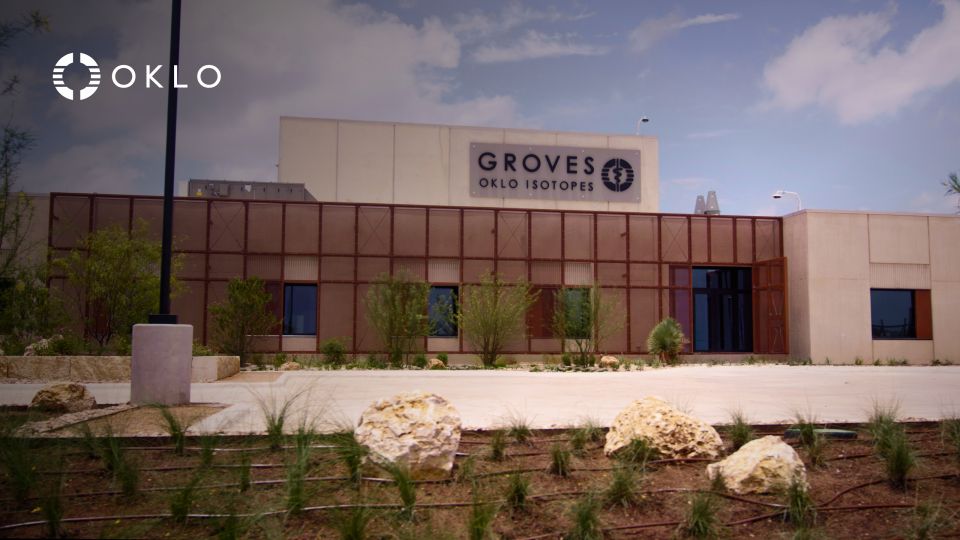
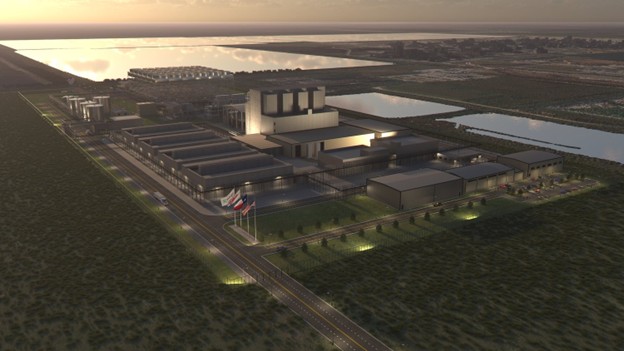
- Oklo has been highly active in DOE programs, with two direct projects in the RPP plus a third via its wholly owned subsidiary Oklo Isotopes, formerly Atomic Alchemy, and a Fuel Line Pilot Program project. Its Groves Isotope Test Reactor is a 15-MWt pool-type, water-cooled, nonpressurized isotope production reactor that uses low-enriched uranium fuel. It reached zero-power fueled criticality on August 5. Its other reactor projects include a 75-MWe, liquid metal–cooled, metal-fueled fast reactor for which ground was broken at INL in September 2025 and a plutonium-fueled fast test reactor.
- Raven-Flint Nuclear is focused on developing a uranium conversion pilot plant that does not require elemental fluorine, which is expected to reduce costs, improve safety, and simplify permitting. According to the Texas Nuclear Alliance, in June, CEO Nick Smith said the company will make its first deliveries in 2028. The company’s website said the pilot plant is being designed to produce 500 tons of uranium per year. Raven-Flint was selected for a Gateway for Accelerated Innovation in Nuclear (GAIN) voucher in June to work with INL on an integrated mass-balance, material control and accountancy, and stream characterization for its pilot plant.
- Scaled Atomics, formerly Avant Tech, is an Oak Ridge–based company developing a microreactor that, according to the East Tennessee Economic Council, will provide 350 kWe and is expected to fit in a 20-foot ISO shipping container. In a LinkedIn post, the company said selection for the Launch Pad will allow them to move MN-350 “from advanced design toward demonstration and commercial deployment.” The company recently signed a memorandum of understanding with Oak Ridge National Laboratory. An article in Teknovation describing the company’s participation at a recent Knoxville innovation night said MN-350 uses TRISO fuel.
- Sublime Nuclear is a nuclear fuel cycle start-up with minimal public information. It was founded this year and states its focus is on securing the domestic nuclear supply chain.
- Valar Atomics was an RPP participant and achieved zero-power fueled criticality with its 100-kWt Ward 250 helium-cooled, TRISO-fueled, high-temperature gas reactor on June 18. Valar is now proceeding with a planned power ascension. On June 22, the company announced it had reached a 10-kWt output.
NRIC announced the first round of Launch Pad selections in April from the pilot programs applicant pools.
They said it: “A resilient nuclear fuel supply chain is essential to America’s energy future, and the projects selected today reflect real progress on fabrication, enrichment, and conversion technologies,” said Deputy Assistant Secretary for the Nuclear Fuel Cycle Josh Jarrell. “DOE is committed to working alongside these companies to strengthen domestic fuel availability and reduce our reliance on foreign sources.”
“Building on the early momentum of DOE’s Reactor Pilot Program and Fuel Line Pilot Program, this round of selections proves those efforts weren’t a one-time success,” said Acting Deputy Assistant Secretary for Nuclear Reactors Chimi Zacot. “The progress we’re seeing is the start of a lasting pipeline of advanced nuclear projects moving toward deployment.”
“One of Idaho National Laboratory’s greatest strengths is the combination of world-class infrastructure, technical expertise, and decades of operational experience we’ve built to support the nation’s nuclear mission,” Idaho National Laboratory Director John Wagner said. “The Nuclear Energy Launch Pad initiative makes those capabilities available to developers, helping them move technologies from design to deployment safely and efficiently.”