The report argues that the COP28 goal can be achieved only with the transformative scenario—the most ambitious plan. However, this scenario would require OECD countries to make major changes in their government policies, project execution approaches, industrial capabilities, and financing schemes.
Four scenarios: The report’s four scenarios consider such developments as nuclear refurbishments, long-term operations of existing reactors, and new builds of both gigawatt-scale reactors and small modular reactors.
- In the low scenario, global nuclear capacity would be only 347 GWe at 2050 (compared with roughly 400 GWe today), because reactor retirements in OECD countries would offset deployments of new nuclear projects.
- In the current trends scenario, capacity would reach 619 GWe by 2050, largely because of planned and proposed projects in non-OECD countries.
- In the ambitious scenario, capacity would reach 883 GWe as a result of SMR deployments and other new builds.
- The transformative scenario sees global nuclear capacity increasing to 1,324 GWe by 2050. This more-than-tripling of capacity can be achieved only by the realization of long-term, optimistic nuclear goals in many OECD and non-OECD countries, including quadrupling U.S. nuclear capacity by 2050 and reaching 100 GWe of nuclear capacity in India by 2047. Also required are the successful long-term extensions of existing reactors, accelerated large-scale reactor new builds, and substantial SMR deployments.
The challenge of achieving the transformative scenario in OECD countries, according to the report, is that most of the world’s new nuclear activity is presently taking place in non-OECD countries. These non-OECD countries—particularly China and Russia—are currently driving 80 percent of the near-term expansion of nuclear construction. Government policies and industrial approaches would have to be transformed in OECD nations so that new builds can move forward aggressively, with deployment rates “that far exceed recent experience,” the report stated.
Furthermore, the operation of existing reactors must be maximized. Many reactors in OECD countries will reach the end of their initial licenses before 2040, and power plants accounting for more than 50 GWe of nuclear capacity have not yet secured licenses to operate to that year. Renewing these licenses and extending reactor operations to 60 or 80 years is essential.
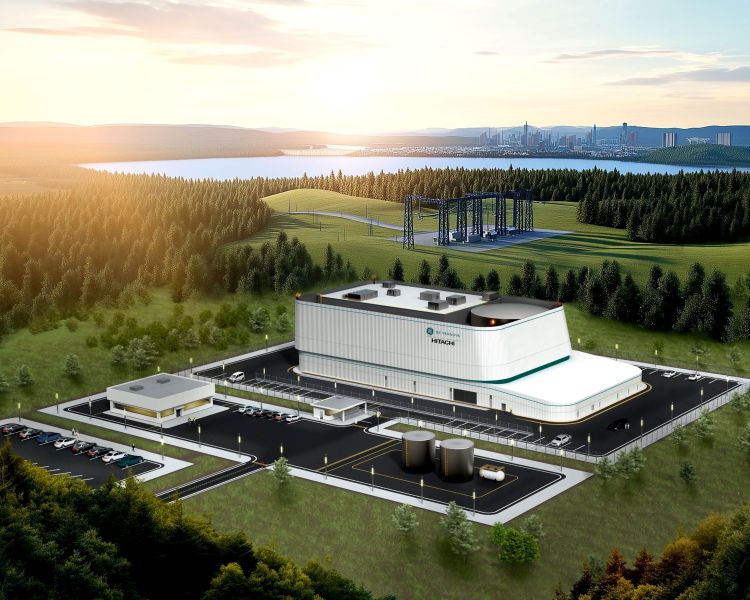
SMR deployment: The OECD NEA report says that SMR deployment at scale depends on new delivery models. A transformative scenario will require mass manufacturing, product-based licensing, prequalified sites, and aggregated demand “sufficient to support robust order books, enabling 12–16 GW per year in the long term.”
Under the transformative scenario, “global SMR capacity could exceed 150 GWe by 2050, shared broadly between OECD and non-OECD countries. However, the enabling conditions for mass manufacturing are unlikely to be fully in place before the 2040s, limiting the contribution of SMRs before 2050. A larger role for SMRs may emerge in the second half of the century, particularly if regulatory harmonization, factory production, and customer demand aggregation can be advanced in parallel.”
Supply chain and workforce capacity: In many OECD countries, limited new builds during the past 25 years have weakened the industrial workforce, supply chain, and project delivery capabilities. To overcome such challenges and meet the pipeline of new nuclear projects, OECD countries will need to rapidly expand their nuclear supply chains and trained workforces.
As stated in the report, “Meeting this challenge will require close cooperation among like-minded countries, stronger industrial partnerships, and a shift from project-by-project approaches to program-based deployment. Programmatic strategies provide visibility for investment, support standardization, enable learning effects, and reduce construction costs.”
Financing: OECD countries face serious financing challenges for new nuclear projects. Recent global capital expenditure on new nuclear has averaged approximately $30 billion per year, driven mostly by China and Russia. The report stresses that global capital expenditure needs to “rise sharply” in the transformative scenario. In OECD countries, annual capital requirements must increase from an average of about $12 billion per year during the past decade to an average of $143 billion per year. During the 2030s, the transformative scenario would see OECD capital requirements approach $200 billion per year.
“Given fiscal pressures on public budgets, mobilizing private capital will be essential,” the report said. “This will require bankable project structures, clear risk allocation, credible revenue models, and government-backed mechanisms that reduce construction, market, and political risks.”
The Nuclear Energy Outlook’s transformative scenario is certainly ambitious—well beyond the “ambitious scenario.” However, as NEA Director General William D. Magwood IV noted in the foreword, “The future of nuclear energy will not be shaped by ambition alone, but by the ability to deliver projects successfully and at scale. By systematically tracking progress and identifying the opportunities and challenges ahead, this report aims to support informed decision-making and, ultimately, to help enable the future global expansion of nuclear energy.”

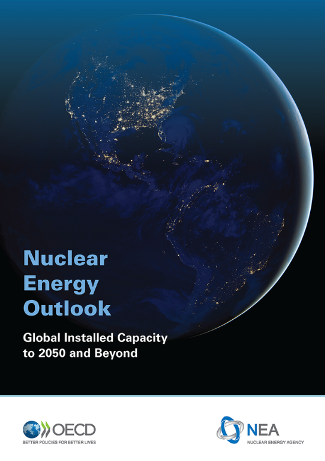 In 2023, more than 20 countries at the World Climate Action Summit of the 28th Conference of the Parties to the U.N. Framework Convention on Climate Change (COP28) set the goal of tripling global nuclear energy capacity by 2050. Now, a new report from the OECD Nuclear Energy Agency describes the daunting challenges involved in trying to meet that goal.