(Image: McMaster University)
The Canadian Medical Isotope Ecosystem, which is backed by the Canadian federal government’s Strategic Innovation Fund, has announced funding for a collaboration between Promation, Astral Systems, and McMaster University to establish a proof-of-concept approach for a fusion reaction–based copper-67 production process with automated postirradiation isotope separation and purification.
Cu-67 is a beta and gamma emitter with a 2.58 day half-life that has been of increasing interest in recent years for use in radioimmunotheranostics, including for single-photon emission computed tomography (CT) imaging.
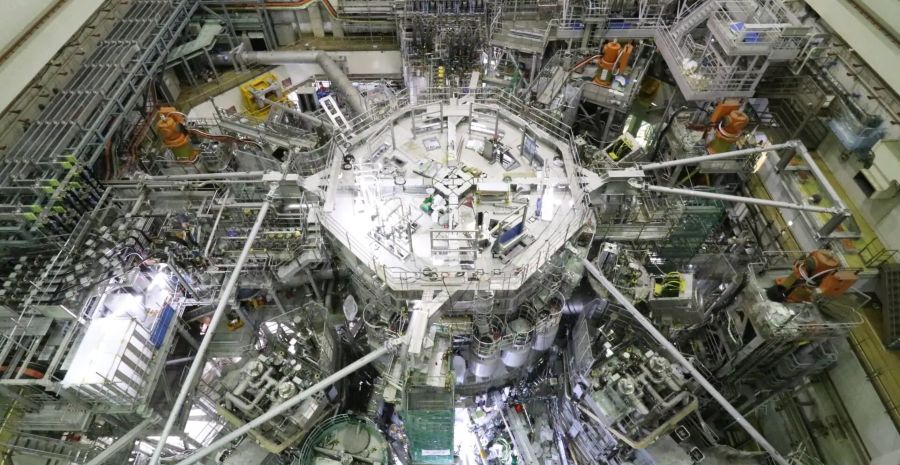
Astral Systems has been developing what it calls “multistate fusion” reactors, where fusion primarily occurs within a solid-state lattice while also occurring in the plasma, which it is using to produce “high-energy [deuterium-deuterium, or DD, and deuterium-tritium, or DT] and high-performance (yield and flux)” neutrons.
According to Ram Mullur, vice president of strategic development at Astral Systems, the company wants to use its device to irradiate target material for isotope production, and this project will take the next steps toward the commercializing the process.
Karin Stephenson, McMaster’s director of nuclear research and education support, said the university will be supporting the development of isotope processing and purification.
They said it: “Ensuring access to innovative medical isotopes like Cu‑67 is essential to advancing next‑generation cancer therapies,” said Holly Bilton, CMIE executive chair. “Through the Scale‑67 project, the CMIE is supporting a collaborative, made‑in‑Canada approach that addresses a global supply challenge while building scalable production capability and long‑term expertise within the Canadian medical isotope ecosystem.”
Astral CEO Talmon Firestone said, “This project represents an important step forward in demonstrating the potential of fusion-based approaches to the scalable production of Cu-67. Working alongside Promation, McMaster University, and CMIE, we are bringing together complementary expertise to address one of the key bottlenecks in expanding access to next-generation medical isotopes. It is exactly this kind of collaborative, high-caliber program that is required to translate advanced nuclear science into real-world clinical and industrial impact.”