NRC Chairman Nieh speaks at Energy Summit
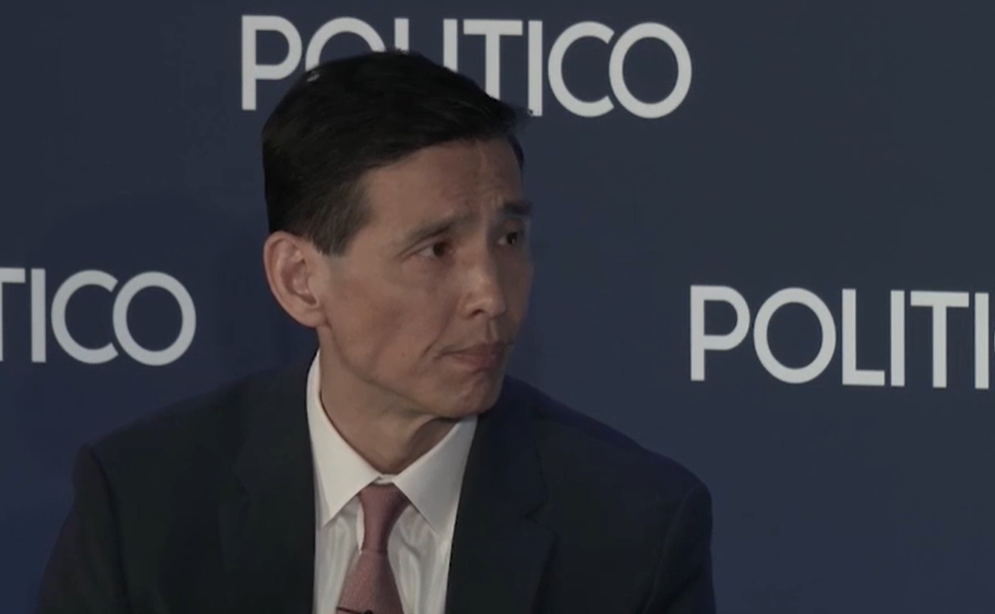
The digital publication Politico held its Energy Summit on Wednesday, gathering several prominent speakers to discuss the U.S. energy agenda, including nuclear power’s role. Nuclear Regulatory Commission Chairman Ho Nieh was among those who took the stage.
While he had only about 20 minutes to speak at the gathering, which was also broadcast virtually, Nieh broached several topics with Politico reporter Kelsey Tamborrino, including small modular reactors, licensing, the agency’s recruitment and retention efforts, and the NRC’s status and operations as an independent regulator.
On SMRs: In a June 9 Washington Examiner article, Nieh said SMRs could be ready for deployment and generating power by 2030. Nieh addressed this topic when asked about it Wednesday.
While not necessarily providing additional details, he did provide some context: Deployment and power generation are possible in the near future so long as bottlenecks do not occur in areas outside of the NRC’s purview. These areas include financing, supply chain, fuel, and the workforce—any bottlenecks here stand as the biggest obstacles to SMRs going on line, Nieh said.
The reactor licensing process, though, won’t be among the main impediments standing in the way of new nuclear reactors.
“We’re not going to have unnecessary regulatory risk. Regulatory uncertainty is risk to capital, and capital will go elsewhere if risks are too high. We’re taking those risks off the table through the reforms that are happening at the NRC.”
On licensing reform: As part of the ADVANCE Act and Executive Order 14300’s requirements, the NRC is in the midst of reforming and modernizing its licensing process, with rulemaking efforts like Part 53 and Part 57 opening new pathways for advanced reactor and microreactor applications, respectively. These rules have taken a more risk-informed approach to add flexibility while maintaining the NRC’s approach to safety.
Nieh said these changes have been made to reflect varied nuclear reactor designs now and in the future. The nuclear power industry is no longer all about large light water reactors—it is also about SMRs, microreactors, non–light water reactors, and reactors built in factories. Applicants are no longer solely utility companies with decades in power generation, he said. They now include start-ups eyeing their first reactors.
Of legacy regulations, Nieh added: “These frameworks were developed around 70 years ago, and they included conservatisms from an era where we knew much less than what we know today through operating experience and more sophisticated analytical capabilities. We’re taking out those unnecessary conservatisms in our regulations.”
On the NRC workforce: Much of this work is being done in a smaller NRC. Nuclear News and others have pointed out the attrition the agency has undergone since the start of 2025. In May, Commissioner Bradley Crowell said the NRC had lost more than 500 employees. The agency’s fiscal year 2027 budget request, meanwhile, is roughly 8 percent less than the FY 2026 enacted budget. This includes 2,606 full-time employee equivalents, a decrease of 7 percent from the previous year.
While he didn’t say where or how attrition is impacting the agency the most, Nieh said they are looking at different ways to compensate staff and retain them. This includes recruitment and retention efforts like a new internship program, Nieh said. Outside of the NRC, a U.S. House subcommittee recently discussed a draft piece of legislation that would better compensate NRC staff.
One of the main obstacles in recruiting and retaining NRC staff? Ironically, it is the companies the agency has helped or may soon help in the licensing process.
“All these companies want to design and get reactors licensed, and they need the talent to do that. They’re hiring people from the NRC and they’re paying them far more than the federal government pays,” said Nieh.
On independence and operations: Since the start of the second Trump administration, much has been said and written about the independence of the NRC and how it operates. Is there pressure from the White House and the Department of Energy to accelerate timelines? Are projects being rubber-stamped? Can the NRC do more with less?
Nieh has repeatedly vouched for the agency’s independence and continues to do so. But, “Independence does not mean isolation,” Nieh said about the NRC’s role. This includes working with agencies like the DOE as both sides look to deploy more nuclear reactors.
“Two agencies, each working in their own separate lanes but headed to the same destination, where America is leading the world again in nuclear energy,” Nieh said.
And internally, despite the turmoil that engulfed the bipartisan commission last year, Nieh said the commission has unanimously agreed on about 94 percent of votes since he took over as chairman in January.
“This commission is working through a workload I’ve never seen before and we’re doing it with collegiality and rigor and really delivering results to help this country,” he said.