-3 2x1.jpg)
One small step for fission—on the Moon and beyond
July 27, 2020, 12:02PMNuclear News
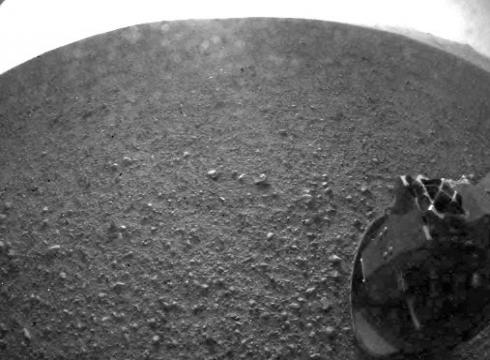
A reliable energy source is critical for long-duration space exploration. NASA, targeting launch readiness by the end of 2026, has teamed up with the Department of Energy and Idaho National Laboratory to solicit realistic assessments of fission surface power systems designed for deployment on the Moon that could, with little modification, be sent to Mars as well.
To continue reading, log in or create a free account!

 Welcome to the New Year! Even though I am on the road, there is just so much happening lately in nuclear I could not pass up the opportunity to talk about it!
  ANS member Dr. Christopher Morrison was a recent guest on
  Cassini-Huygens is a Flagship-class NASA-ESA-ASI robotic spacecraft sent to the Saturn system. It has studied the planet and its many natural satellites since its arrival there in 2004, as well as observing Jupiter and the Heliosphere, and testing the theory of relativity. Launched in 1997 after nearly two decades of gestation, it includes a Saturn orbiter Cassini and an atmospheric probe/lander Huygens that landed in 2005 on the moon Titan. Cassini is the fourth space probe to visit Saturn and the first to enter orbit, and its mission is ongoing as of 2013. It is powered by a plutonium power source, and has facilitated many landmark scientific discoveries in its mission to the stars.
 The 2013 ANS Topical Meeting on Nuclear and Emerging Technologies for Space (NETS 2013) will be held February 25-28, 2013, at the Albuquerque Marriott in Albuquerque, New Mexico.