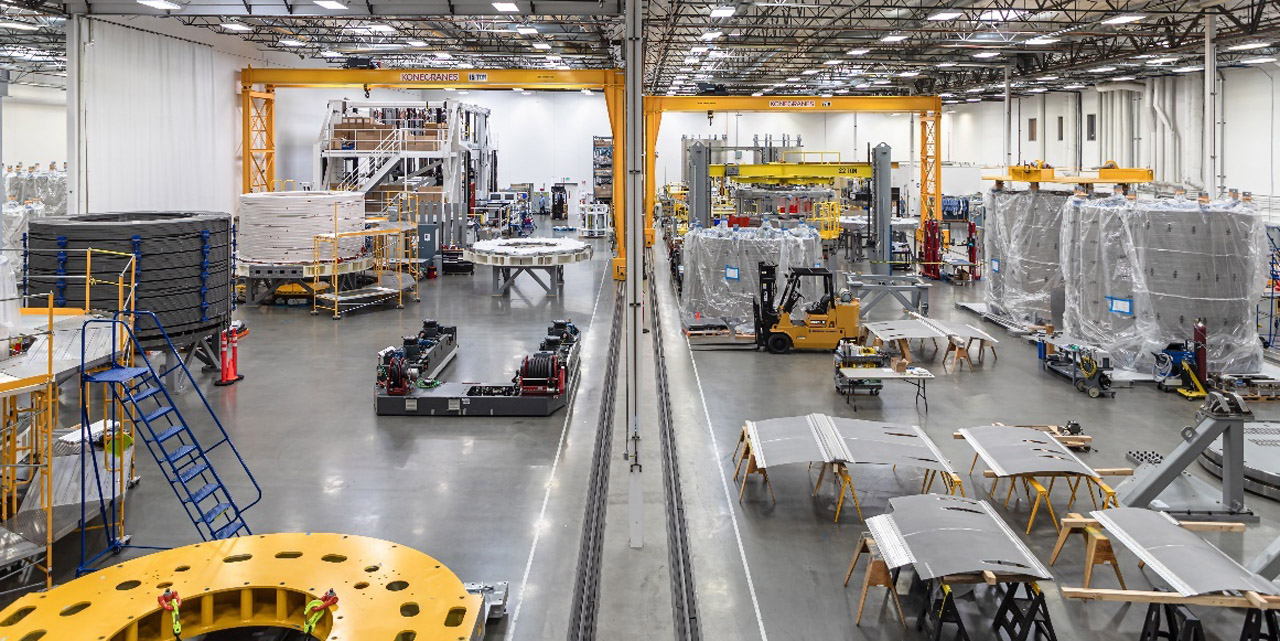
GA’s Magnet Technologies Center. (Photo: GA)
General Atomics (GA) and Tokamak Energy Ltd. are each independently developing magnetic confinement fusion power plant concepts that would use a tokamak and high-temperature superconducting (HTS) magnets to confine and shape a plasma heated to over 100 million degrees Celsius. On May 30, they announced a memorandum of understanding to collaborate on HTS magnet technology for fusion energy and other applications.
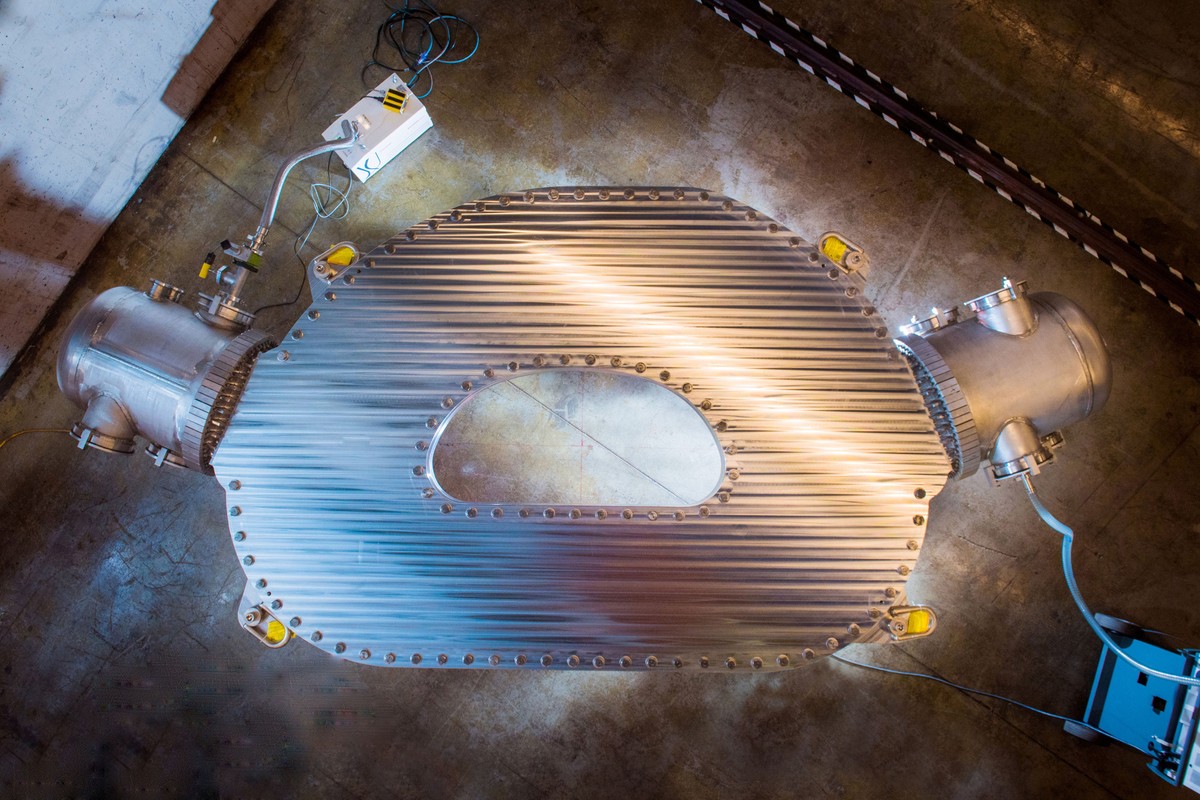
This large-bore, full-scale high-temperature superconducting magnet designed and built by Commonwealth Fusion Systems and MIT’s Plasma Science and Fusion Center is the strongest fusion magnet in the world. (Photo: Gretchen Ertl, CFS/MIT-PSFC)
A high-temperature superconducting magnet reached and maintained a magnetic field of more than 20 tesla in steady state for about five hours on September 5 at MIT’s Plasma Science and Fusion Center. Not only is the magnet the strongest high-temperature superconducting (HTS) magnet in the world by far, it is also large enough—when assembled in a ring of 17 identical magnets and surrounding structures—to contain a plasma that MIT and Commonwealth Fusion Systems (CFS) hope will produce net energy in a compact tokamak device called SPARC in 2025, on track for commercial fusion energy in the early 2030s.