In my last article, I discussed the importance of the economics of nuclear power. I'm personally of the belief that if we cannot find ways to make nuclear energy the most cost competitive form of electricity universally, then the industry will eventually fizzle out. Since writing that last article, Toshiba, who owns Westinghouse and is responsible for AP1000 construction, declared billions of dollars in losses, and is looking to sell their nuclear assets. This to me represents the need to look more closely at the reasons behind nuclear energy's economic barriers, and the best ways to address them, especially here in the U.S. If the U.S. wants to be a global leader for nuclear energy, we have to take an honest look at what's holding us back. Before getting too much into that though, I think it is important to understand the electricity market here in the U.S., since it sets the stage on how to approach future decision making. I think that given the current market, and capacity demand, SMRs (small modular reactors) fill a unique niche. While the reduced initial capital is certainly attractive, for this article, I would like to focus on the electric market forces that could factor into utility decision making.

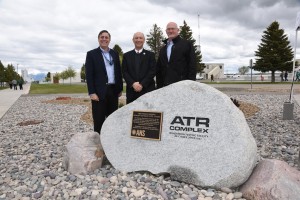 The American Nuclear Society recently recognized the Idaho National Laboratory's Advanced Test Reactor (ATR) Complex as a Nuclear Historic Landmark at the 2016 ANS Winter meeting in Las Vegas. On May 18, ANS President Andy Klein presented the award during a visit to ATR.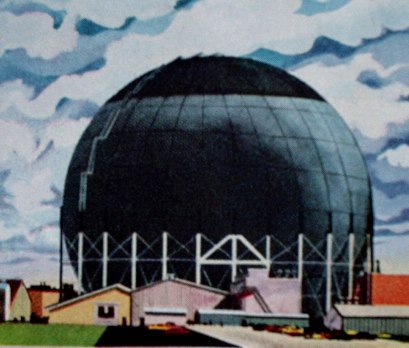
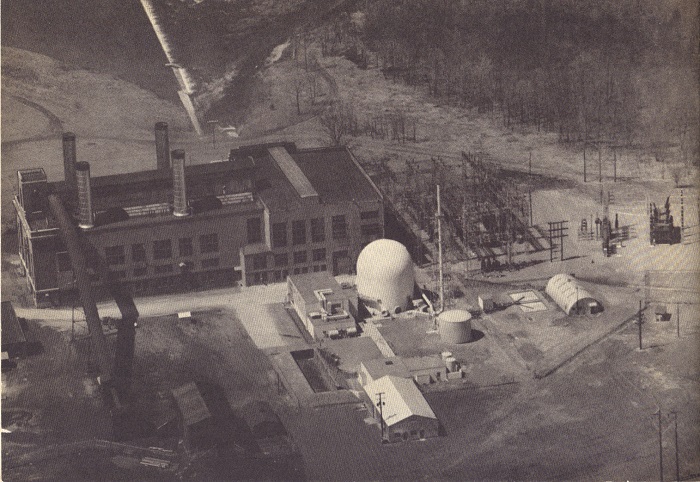 There's talk in some circles these days about selecting fossil-fueled power plants and adding nuclear reactors to them in order to "repower" them without emissions. One early example, the Saxton Experimental Reactor, is seen above in a photo from my collection*. There are some important things to think about before this is tried on a plant; here are five things to consider:
 I was fortunate enough to have the opportunity to go to the American Nuclear Society meeting in Las Vegas in November 2016, although it was by happenstance. I had contributed to a paper that was to be presented at the meeting but the author was unable to attend, so I was sent instead. To be honest, at the time I was more excited, as a naïve college student, to get a university-sponsored trip to Las Vegas than by participating in the conference itself. What college student wouldn't jump at the opportunity to lose every cent of his single-digit bank account to a slot machine? I couldn't have been more wrong.