Panelists talk domestic enrichment expansion at Global 2026
 What fuels the future of nuclear? Whether it is low-enriched uranium, LEU+, or high-assay low-enriched uranium, one of the answers is in the question itself: fuel.
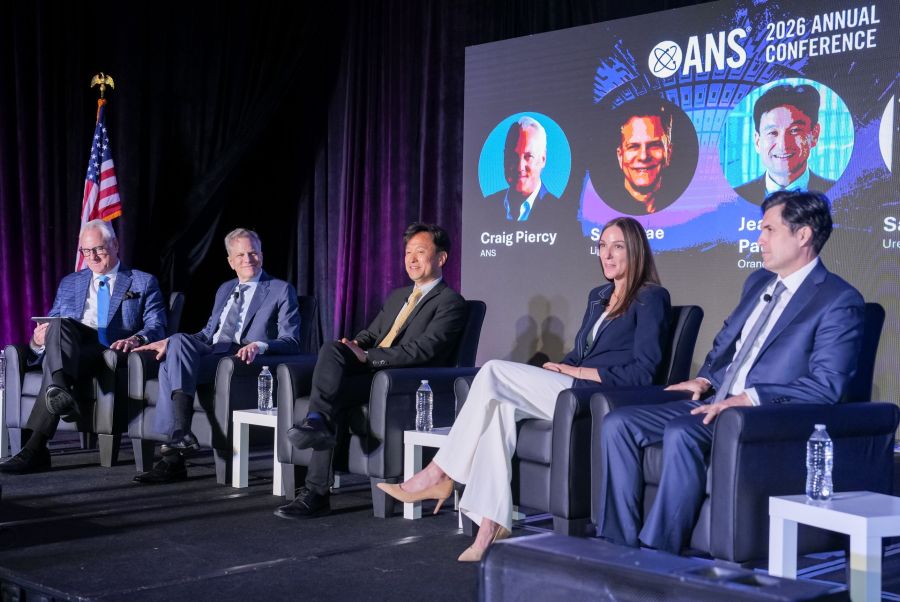
Earlier this week, the American Nuclear Society’s Fuel Cycle & Waste Management Division hosted Global 2026, with the theme of “Deploying Sustainable Nuclear Fuel Cycles.”
During one plenary session, “Fueling the Future of Nuclear,” panelists from Urenco USA, Centrus Energy, General Matter, and Global Laser Enrichment shared with attendees how the companies were contributing to the front end of the fuel cycle—more specifically, by launching or expanding their respective enrichment services.
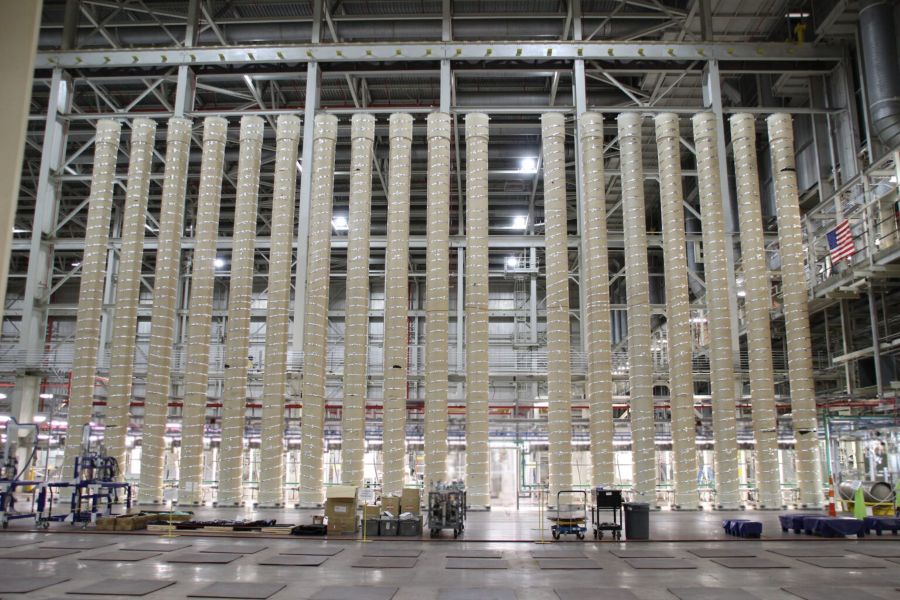
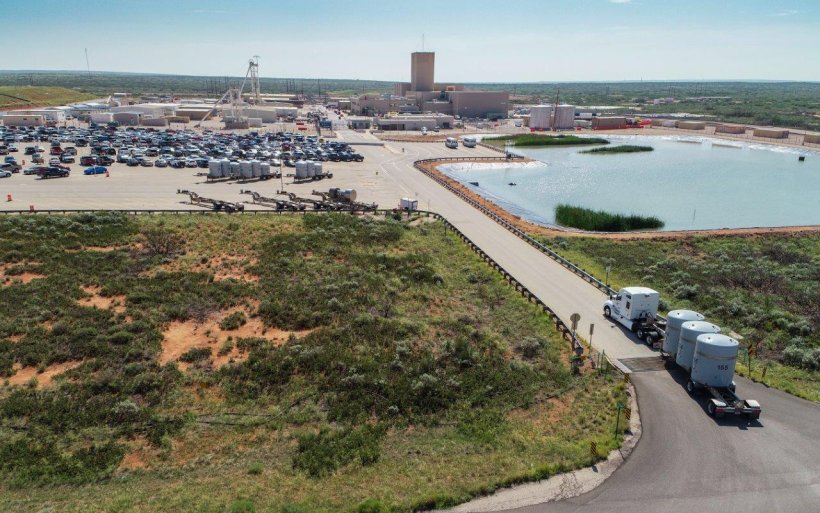
Urenco’s plans: On Tuesday, Department of Energy Secretary Chris Wright was on hand in Eunice, N.M., for a ground-breaking celebration at the site where the company will expand its U.S. commercial uranium enrichment facility. Once completed, the project will allow Urenco USA to increase its LEU capacity by nearly 50 percent. This expansion will install 2.1 million separative work units (SWU) of new gas centrifuge enrichment capacity.
Mary Neumayr, Urenco’s head of government affairs, said during the plenary that the expansion will grow the facility’s capacity to more than 7 million SWU by 2036. The facility’s Nuclear Regulatory Commission license permits up to 10 million SWU.
While much of the discussion focused on domestic enrichment, Neumayr noted Urenco produces 17.2 million SWU per year globally. Among Urenco’s other notable projects is a HALEU advanced fuels facility at its Capenhurst, England, site that will be ready by 2031. Urenco must address how to recruit and retain workers and compete for talent with other industries, Neumayr noted, a challenge that other companies in the nuclear industry are also facing.
“Another area that is challenging is we are looking at the deployment of new reactors, but it's still not as well known what those demands will be for advanced fuels,” she said.
Centrus’s plans: In 1985, the United States had a 64 percent share of global uranium enrichment. By 2024, that share had dropped to less than 1 percent, while Russia’s had grown to 43 percent.
“This entire supply chain around the world—which the United State used to dominate—is now almost completely owned by foreign, state-owned enterprises,” said Dan Leistikow, Centrus Energy’s vice president for corporate communications. “The United States has really fallen dramatically behind the rest of the world, and it is most highly concentrated in uranium enrichment.”
“We collectively have a big hole to fill” when it comes to uranium enrichment, he added. The United States and Europe are shifting away from Russian enriched uranium, but calls for more—and more advanced—nuclear reactors will only intensify the need for fuel. While steps have been taken to support domestic enrichment, more can be done.
Centrus is in the midst of growing its domestic manufacturing supply chain. Just this month, Centrus and X-energy signed a contract that, among other things, would support expanding the capacity of Centrus’s domestic commercial enrichment program at its American Centrifuge Plant in Piketon, Ohio. Earlier this summer, Centrus also reached an agreement with the DOE valued at $900 million to support expanded HALEU production capacity.
General Matter’s plans: General Matter cofounder Drew DeWalt said fuel is the bottleneck to nuclear; nuclear is the bottleneck to electricity; and electricity is the bottleneck to AI. Under the transitive property, one would deduce then that fuel is the bottleneck to AI. By almost any metric, the United States will need more power to support areas like AI, DeWalt said.
There is cause for optimism, however, and DeWalt believes General Matter is contributing to that optimism. There are more people throwing their hats in the ring, more “new blood” and “new energy,” he said.
“There's a lot of people working on this problem,” he added.
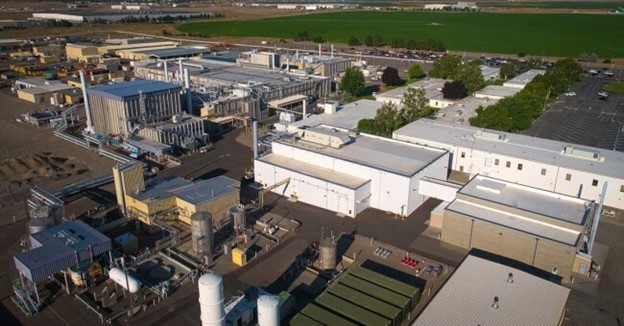
The California-based company signed a lease with DOE’s Office of Environmental Management for the reuse of a 100-acre parcel of federal land at the former Gaseous Diffusion Plant in Paducah, Ky., for a private-sector domestic uranium enrichment facility. From 1952 to 2013, the Paducah Gaseous Diffusion Plant enriched uranium and was the last government-owned uranium enrichment facility operating in the United States. General Matter and DOE-EM have also teamed up to explore the potential use of the Fuel and Materials Examination Facility at the Hanford site in Washington state.
GLE’s plans: Global Laser Enrichment is no stranger to Paducah, having submitted its license application to the NRC for the Paducah Laser Enrichment Facility in July 2025. Plans are for the company to commercialize the Silex laser-based uranium enrichment process it has been working on at its North Carolina headquarters. The facility would re-enrich a portion of the depleted uranium hexafluoride tails stored at the Paducah site. Nima Ashkeboussi, GLE’s vice president for government relations and communications, said significant construction is coming in 2027, and the company hopes to complete the facility by 2030.
GLE is excited about the project, which Ashkeboussi claimed was at one point the largest investment in western Kentucky history. It has since been dwarfed by a data center project, he added.
“Paducah is setting itself up for reestablishing its role as the U.S. enrichment hub with us and General Matter being neighbors at that site,” he said.
“I think we have the technology that can unlock the valuable 235 that’s still in those tails,” Ashkeboussi added. “We can do it in an economic fashion. The market has changed significantly where it makes a lot of business sense to take that on.”