The purpose: The OED frames this designation system as serving both the involved communities and the broader industry alike. For communities, the system serves as a guidepost pointing to milestones that should be achieved ahead of new project development. For industry, the various designations within the program serve as simple indicators of a community’s infrastructure, regulatory engagement, workforce capacity, and overall local support.
More broadly, the OED hopes that the system attracts new nuclear developers and manufacturers to the state; helps ensure coordination across state agencies, utilities, and local governments; and strengthens Indiana’s nuclear workforce pipeline.
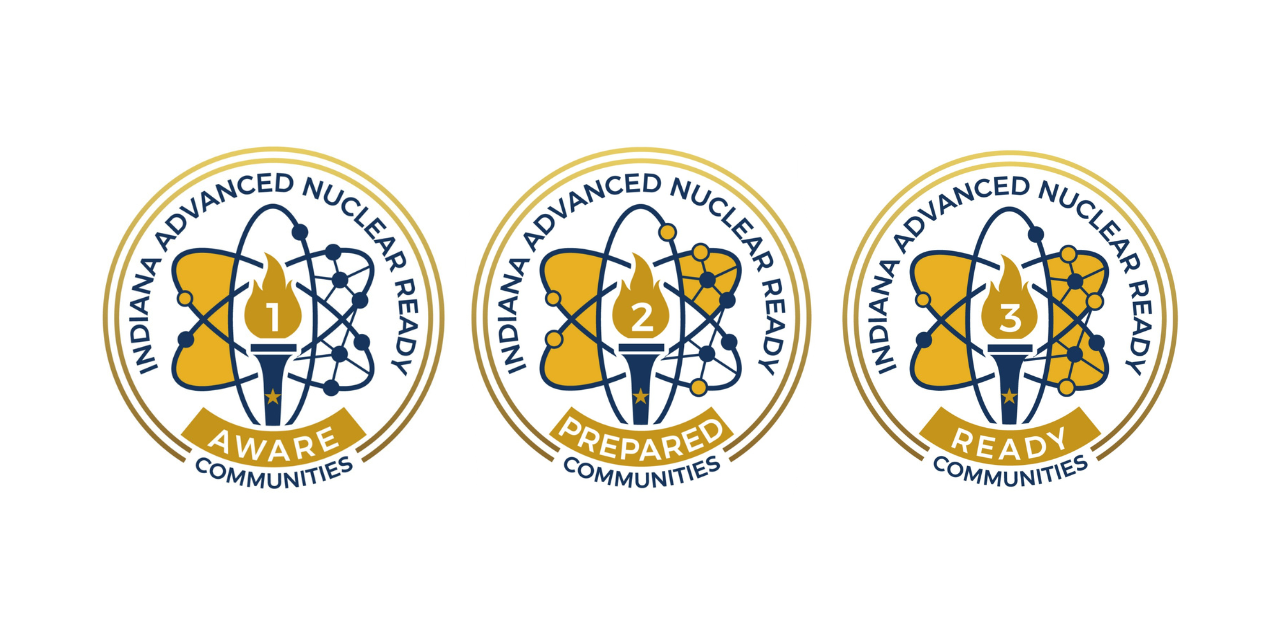
Tier breakdown: The Indiana Advanced Nuclear Ready Communities Program is broken down into three designation tiers: Nuclear Aware, Nuclear Prepared, and Nuclear Ready. Designations can be awarded at the city, township, or county level.
A Tier 1, Nuclear Aware, designation requires that a community has conducted at least two public education meetings to build a local understanding of nuclear energy. These meetings are intended to cover the basics of nuclear power and the economic benefits it can bring to the community, while also providing an opportunity for public questions and feedback.
A Tier 2, Nuclear Prepared, designation builds on this educational foundation and represents more formal commitments to and planning for a project. To earn this designation, a community must
- Secure a resolution of support from the involved local government or governments, along with letters of support from local utilities and economic development organizations. Alternatively, a countywide ballot initiative indicating local support for nuclear project development can fulfill this requirement.
- Complete preliminary siting assessment work. The proposed site must meet certain size and zoning requirements and have adequate access to transmission infrastructure and water.
- Develop a workforce development plan. This plan must include partnerships with community colleges or universities, an assessment of the existing regional workforce, and K–12 initiatives.
A Tier 3, Nuclear Ready, designation builds on all of the requirements of Tiers 1 and 2 and further requires that a community engage with the Nuclear Regulatory Commission’s preapplication process and Early Site Permit framework; sign letters of memoranda with a regional utility; and develop a sophisticated economic development strategy that engages with opportunities at the local, state, and federal levels.
As of now, no communities hold any designation under this new system; the OED awaits notices of intent and follow-on applications from communities seeking to earn their designation.
Quotable: "The Indiana Advanced Nuclear Ready Community program bridges the gap between state strategy and local economic development,” said Suzanne Jaworowski, Indiana Secretary of Energy and Natural Resources, who previously served as chief of staff and senior advisor for policy and communications in the Department of Energy’s Office of Nuclear Energy. “By empowering communities to proactively assess their infrastructure and align local goals, Indiana is significantly reducing developer risk and accelerating timelines for advanced energy investment."