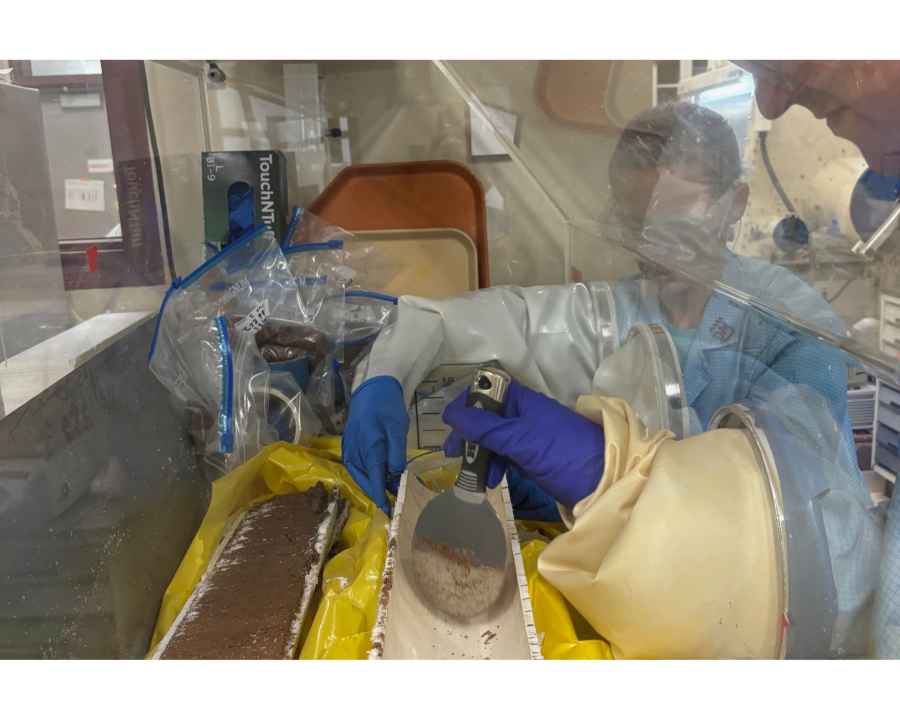
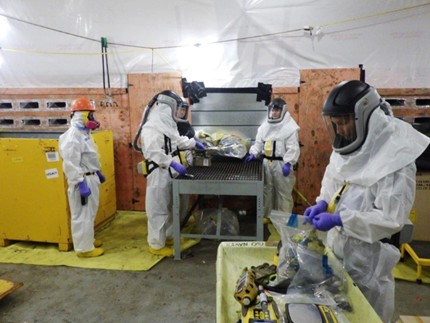
Scientists at the University of Manchester examine how crushed concrete interacts with Sr 90. (Photo: University of Manchester)
Researchers from the University of Manchester, the U.K. National Nuclear Laboratory, and Clemson University have studied using crushed concrete at legacy nuclear facilities as a long-term sink for strontium-90, a radioactive contaminant found at many such sites. Their research has been published in the American Chemical Society journal ACS ES&T Water.
Carbonation reactions + phosphate: The study, which was funded by the U.K. Nuclear Decommissioning Authority, suggests that concrete that is crushed and exposed to air at decommissioned nuclear sites can actively remove strontium from the environment and hold it in a stable state for a long time. This happens as a result of natural carbonation reactions, in which calcite forms as the elements in concrete react with the carbon dioxide in air. The researchers found that the process can be enhanced by treating the concrete with phosphate.
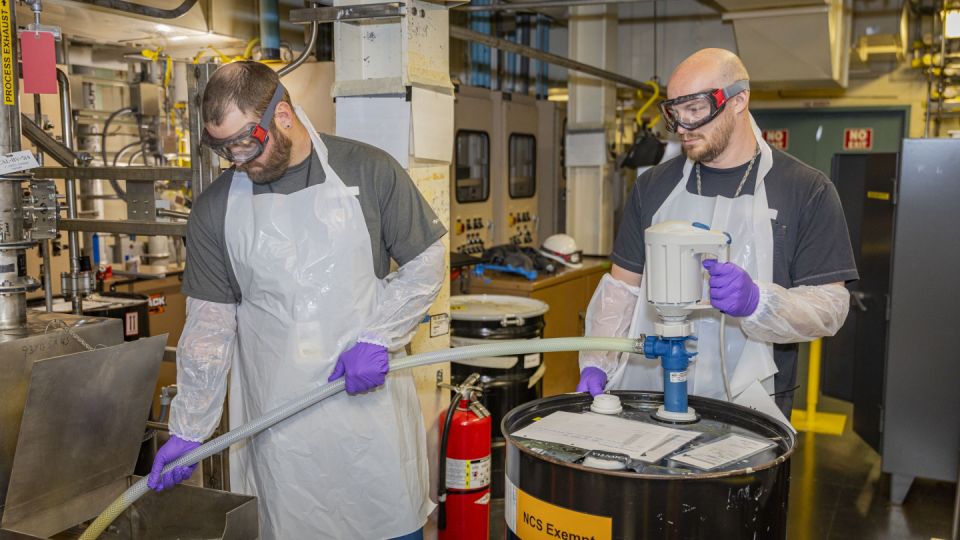
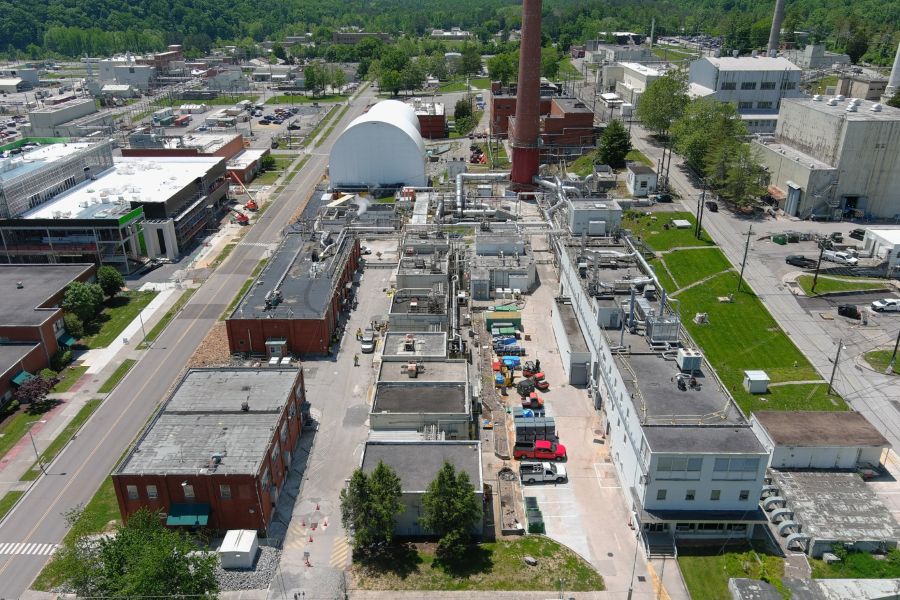
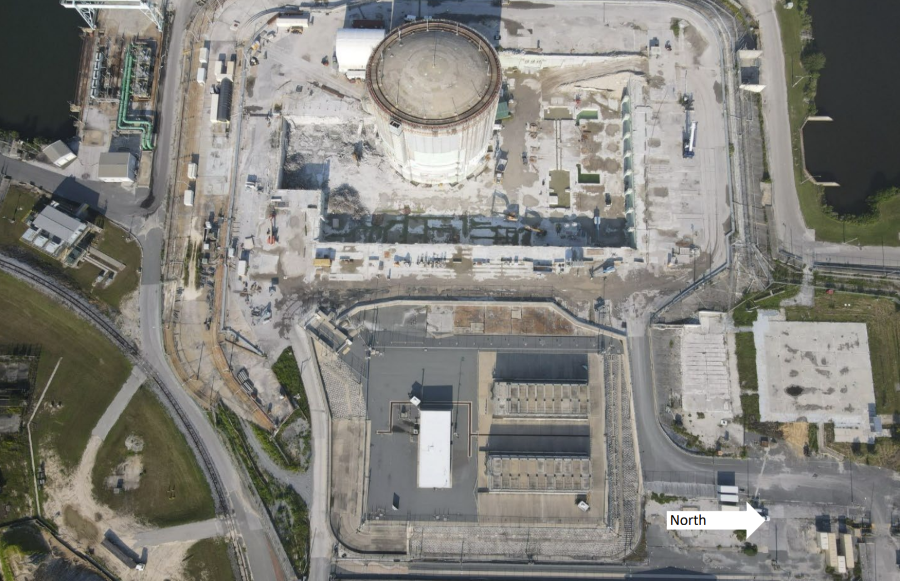
On-site treatment option: Concrete at nuclear power plants typically becomes contaminated with Sr-90 as a result of the radioisotope’s presence and mobility in groundwater and in the environment. On-site treatment of this material and of contaminated groundwater during decommissioning offers an attractive option for managing such waste, because it would eliminate the need for waste transport.
To investigate this possibility, researchers, led by Katherine Morris, BNFL Research Chair in the Department of Earth and Environmental Sciences at the University of Manchester, obtained crushed concrete from the Nuclear Decommissioning Authority and mixed it with synthetic groundwater containing radioactive Sr-90 or stable strontium. They ran experiments for three months under two different conditions—air-limited, mimicking sealed or subsurface conditions, and air-exposed, as in shallow disposal conditions in which air is present.
The experiments revealed that the air-exposed crushed concrete removed about 82 percent of strontium from the synthetic groundwater solution. Analysis with X-ray absorption spectroscopy showed that the strontium had been partially incorporated into the calcite (calcium carbonate) minerals that formed in the concrete. These minerals essentially locked the strontium inside the crushed concrete in an inert state. By contrast, the air-limited concrete removed only 14 percent of the strontium from solution.
Adding phosphate: The researchers next treated the concrete with phosphate using two different methods. In one method, they added phosphate during the groundwater experiments. In the other, they pretreated the concrete with phosphate before the experiments. The results showed that both methods led to increased strontium uptake from the groundwater, in both the air-exposed and air-limited conditions. As much as 98 percent of the strontium was removed from solution within 48 hours.
Long-term land management: In describing the team’s findings, Morris said, “These results give us a clearer picture of what happens when concrete waste interacts with groundwater over time. By understanding the mechanisms that trap strontium, we can better support safe, evidence‑based decisions about on-site disposal and long-term radioactively contaminated land management.”