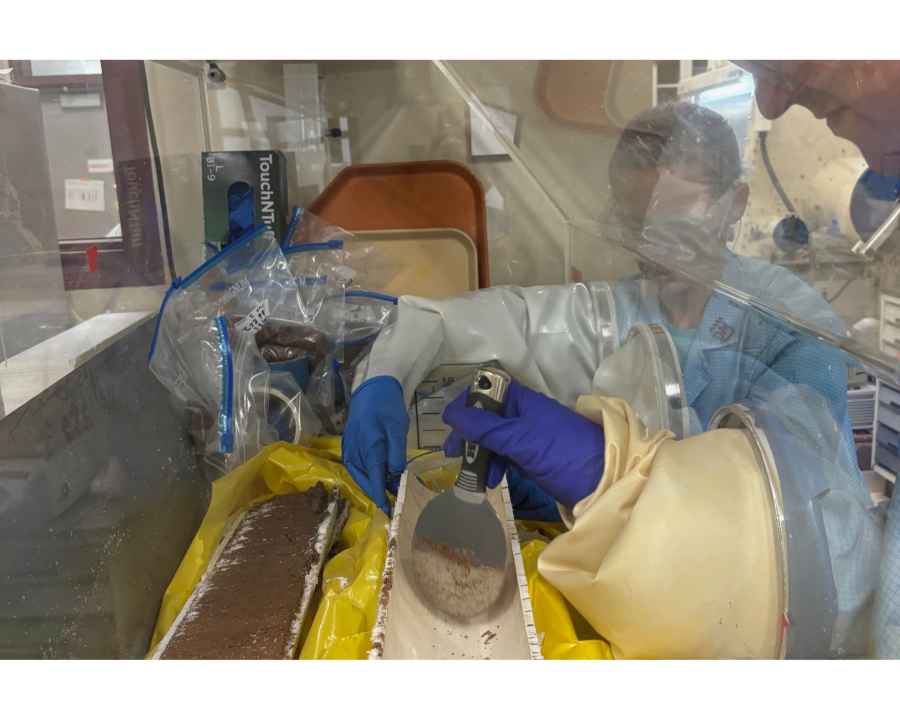
Scientists at the University of Manchester examine how crushed concrete interacts with Sr 90. (Photo: University of Manchester)
Researchers from the University of Manchester, the U.K. National Nuclear Laboratory, and Clemson University have studied using crushed concrete at legacy nuclear facilities as a long-term sink for strontium-90, a radioactive contaminant found at many such sites. Their research has been published in the American Chemical Society journal ACS ES&T Water.
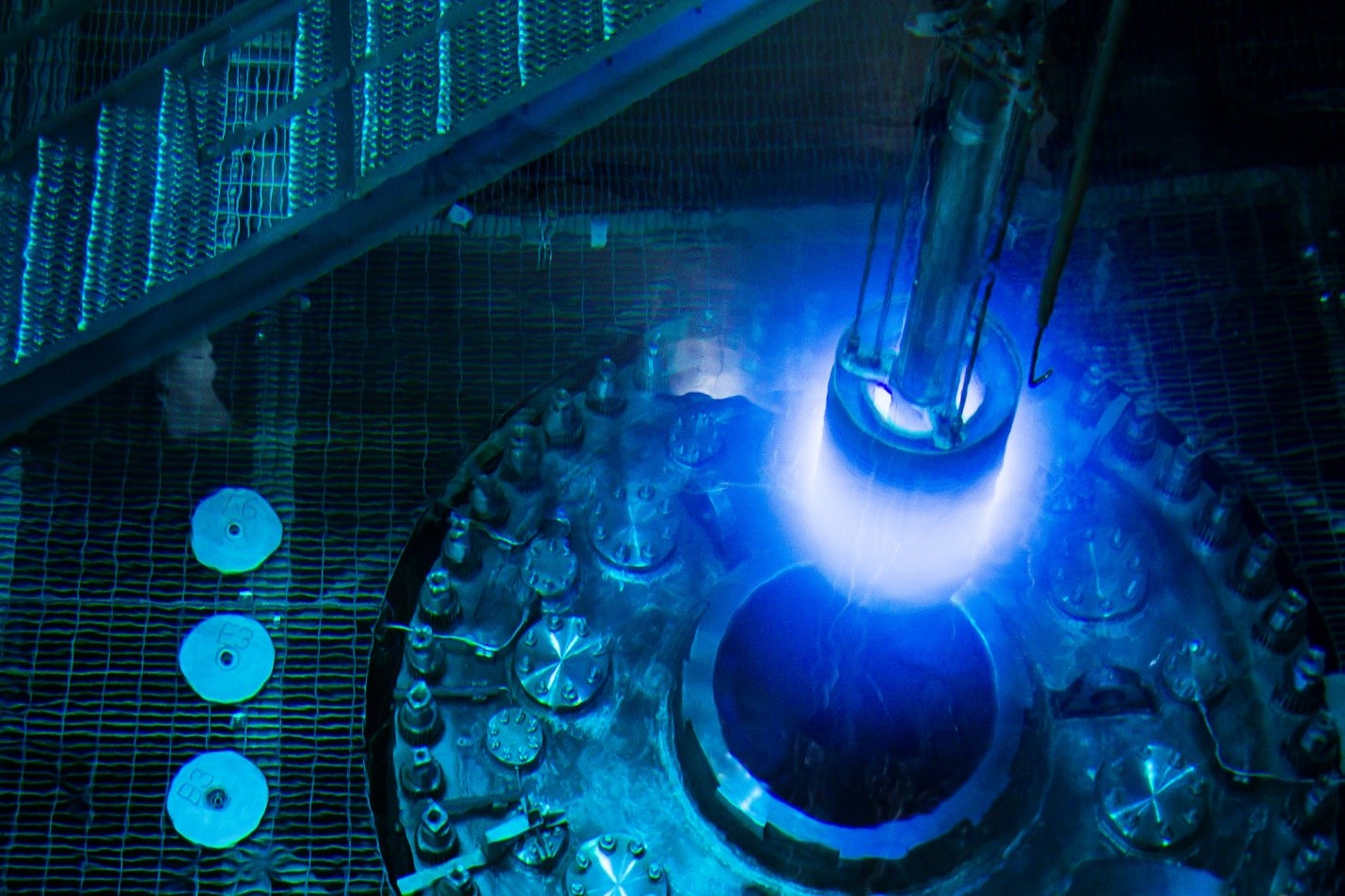
ORNL’s High Flux Isotope Reactor, where Sr-89 and other radioisotopes are produced, photographed during a 2015 refueling. (Photo: ORNL)
The Department of Energy’s Isotope Program (DOE IP) announced last week that it would end its “active standby” capability for strontium-82 production about two decades after beginning production of the isotope for cardiac diagnostic imaging. The DOE IP is celebrating commercialization of the Sr-82 supply chain as “a success story for both industry and the DOE IP.” Now that the Sr-82 market is commercially viable, the DOE IP and its National Isotope Development Center can “reassign those dedicated radioisotope production capacities to other mission needs”—including Sr-89.
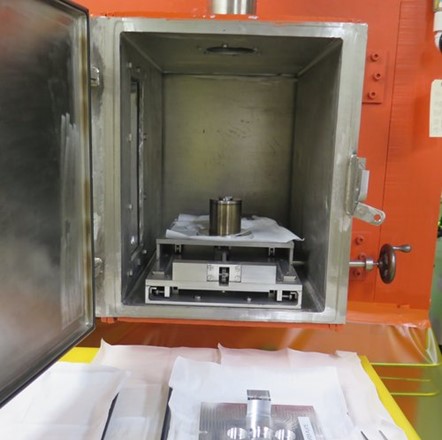
Fabricated Z1 heat source in transfer port. (Photo: Zeno Power)
Zeno Power, a developer of commercial radioisotope power systems (RPSs), announced on October 26 that it has completed the design, fabrication, and testing of its Z1 strontium-90 heat source. According to Zeno, they have tested the first commercially developed radioisotope heat source and reached a key milestone for Zeno to begin delivering RPSs to customers in 2025.