Saudi Arabia, U.S. sign civil nuclear energy deal
This story has been updated to include a July 23 quote from President Trump.
The United States and Saudi Arabia have reached a civil nuclear cooperation agreement that could allow the Middle Eastern country to develop civilian nuclear infrastructure and provide a new commercial market to the U.S. nuclear industry.
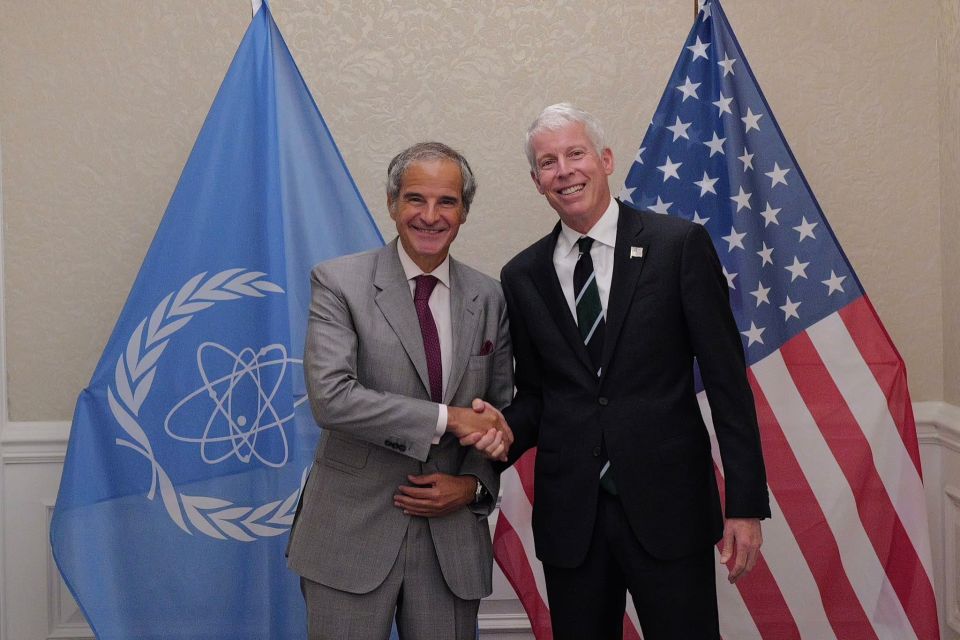
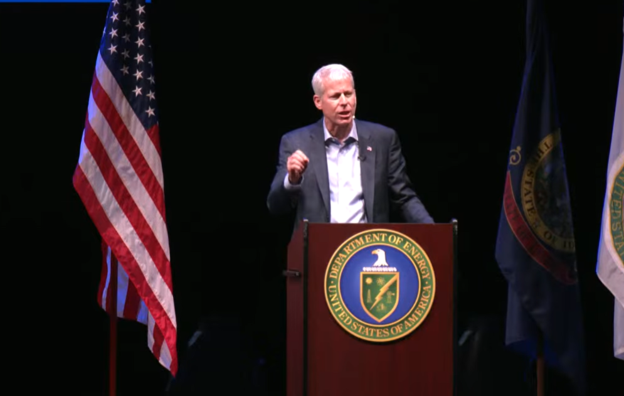
On Tuesday evening, the Wall Street Journal first reported that the two sides had reached an agreement with a term of 30 years. Then, Department of Energy Secretary Chris Wright said Wednesday that he and Saudi Minister of Energy Prince Abdulaziz bin Salman had signed the agreement alongside an accompanying bilateral safeguards agreement.
While multiple outlets reported on the potential for Saudi Arabia to host uranium enrichment facilities, President Donald Trump on Thursday wrote a Truth Social post saying "there will be no enrichment of material," with no other details or explanation. The post also said the agreement was subject to Saudi Arabia joining the Abraham Accords, a series of agreements that established diplomatic relations between Israel and other countries in the region, including Bahrain and the United Arab Emirates.
“These agreements reflect our two nations’ shared commitment to strengthening U.S.-Saudi commercial relations, delivering prosperity at home and security to our allies abroad,” Wright said in a news release. “Rest assured, these agreements uphold the highest standards of nuclear safety and nonproliferation, while relying on the world’s best nuclear technology and scientists, designed right here in the United States. Thanks to President Trump, the American nuclear renaissance is underway and will deliver long-term benefits to the American and Saudi people.”
About the deal: According to reports, the agreement could allow Saudi Arabia to enrich uranium without adopting the International Atomic Energy Agency’s Additional Protocol, which grants the IAEA significant authority to “verify the peaceful use of all nuclear material in States with comprehensive safeguards agreements.” The U.S. agreement with the United Arab Emirates in 2009 included the Additional Protocol. Some fear that Saudi Arabia having this pathway to enrichment could ultimately lead to it developing nuclear weapons. Saudi Arabian officials have said that the country’s intentions are strictly civilian, although Crown Prince Mohammed bin Salman has said the kingdom would respond should Iran ever build a weapon.
Other reports state that American companies would be involved in the development of Saudi Arabia’s nuclear energy program. It is expected the agreement would generate billions for the U.S. nuclear industry while possibly keeping other nuclear energy competitor countries, like China and Russia, out of Saudi Arabia.
According to the agreement announcement, this deal “provides great access for American companies in the Saudi nuclear energy program, benefiting American industry, workers, and supply chains while helping to meet Saudi energy needs.”
The release continued, “The two agreements also advance U.S. and regional security by upholding high standards of nuclear safety, security, and nonproliferation and strengthening the United States’ competitive edge in civil nuclear technology.”
A civil nuclear cooperation 123 agreement, named after Section 123 of the Atomic Energy Act, requires Congressional review and approval. Even if it were to face opposition in Congress, the U.S.-Saudi agreement would require a veto-proof majority to override the president.
Saudi Arabia’s ambitions: Saudi Arabia and the United States have worked on civil nuclear cooperation multiple times and through multiple presidential administrations. This agreement comes eight months after the two countries signed a joint declaration on cooperation in the civilian nuclear energy sector. That declaration “establishes the groundwork for a long-term, multibillion-dollar nuclear partnership with the kingdom; affirms that the United States and U.S. firms will be Saudi Arabia’s preferred partners for its civilian nuclear program; and guarantees that all collaboration will follow rigorous nonproliferation standards,” according to an analysis by the Center for Strategic & International Studies. The analysis also pointed out Saudi Arabia’s vast uranium reserves, which, it argued, “uniquely position the kingdom to develop the nuclear fuel cycle, supporting its domestic energy strategy while opening the door to potential exports to the United States.”
Saudi Arabia has coveted its own civil nuclear energy program for years for reasons including electricity production, water desalination, diversification of its economy, and reducing reliance on fossil fuels. In 2017, the kingdom approved a National Project for Atomic Energy that sought to build large and small nuclear reactors. In 2018, the IAEA completed a nuclear infrastructure review of the kingdom and issued its final report one year later. Saudi Arabia also established its own Nuclear and Radiological Regulatory Commission in 2018 and created the Saudi Nuclear Energy Holding Company in 2022 to develop and operate planned nuclear facilities. China National Nuclear Corporation, EDF of France, the Korea Electric Power Corporation, and Rosatom of Russia have reportedly bid on prospective nuclear facility projects in Saudi Arabia.