In a press conference yesterday, NASA Administrator Jared Isaacman and NASA Moon Base Program Manager Carlos García-Galán discussed new award announcements to Astrobotic, Firefly Aerospace, and Intuitive machines to deliver NASA science payloads to the moon.
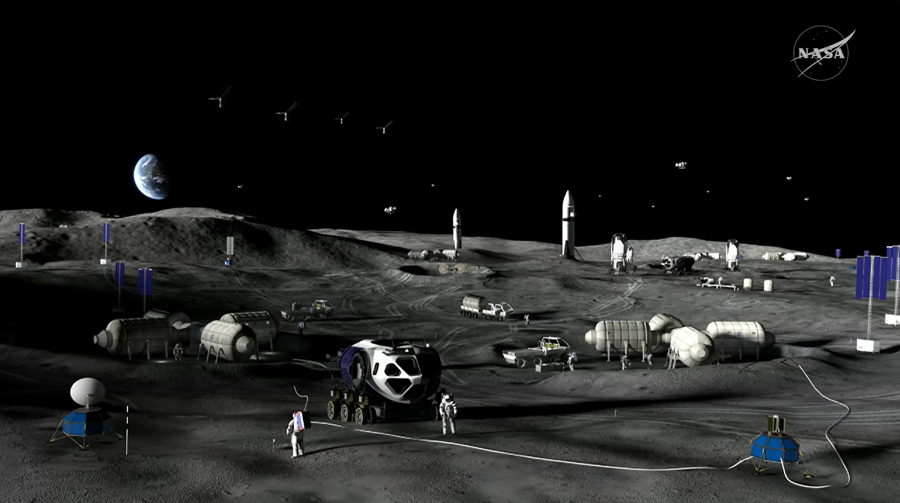
They also announced that the agency will be opening a new solicitation avenue for technology related to phase 1 of the moon base plan, with the first focus being surface power. García-Galán said the solicitation for ideas and proposals would open in July.
This follows a NASA announcement on Monday seeking feedback on the draft solicitation “Lunar Enabling Infrastructure Accelerator,” an effort to help develop a selection of emerging capabilities, including in surface power that is reliable throughout the lunar day and night and in radioisotope power for operating spacecraft systems.
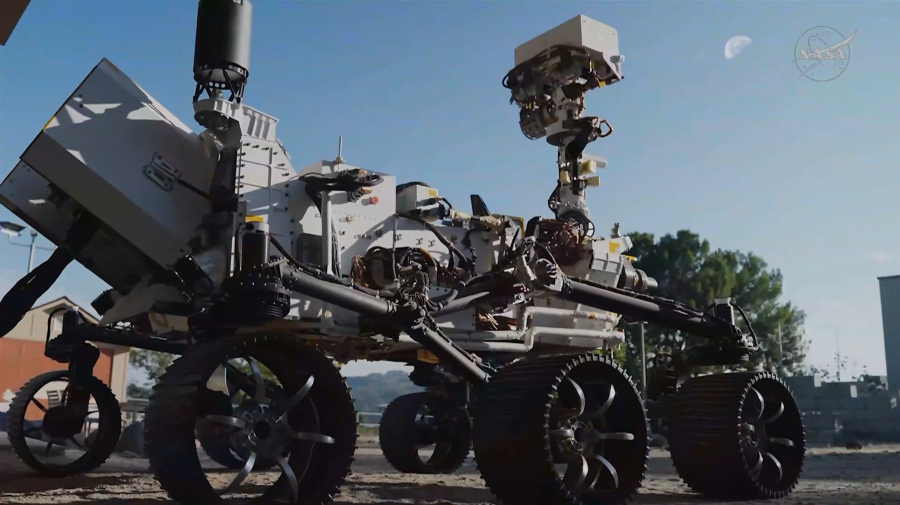
According to Isaacman, NASA has been exploring existing projects that could be repurposed for the lunar base. He highlighted an engineering development version of the Mars Perseverance and Curiosity rovers as a system that the agency is “thinking very hard” about sending to the moon.
The rover, named Polar Rover for Observation, Mapping, and In-Situ Exploration (PROMISE), has an RTG, which would offer broader mission capabilities than the Volatiles Investigating Polar Exploration Rover (VIPER), which uses solar power.
“Surviving the lunar night is going to be one of the bigger challenges,” said García-Galán. “With this capability, we wouldn’t have to worry about that.”
Isaacman said there is “very little” that would hold them back from using the hardware, though adjustments would need to be made to the instruments.
“It’s going to be a highly capable vehicle for the for the South Pole moon, and we can get it there fast, versus any kind of new project,” said Isaacman. “This is exactly what we should be trying to do to put wins on the board.”

.jpg)