The human factor in licensing and operating the next generation of nuclear plants
As human factors specialists working at the intersection of human performance and nuclear operations, we are witnessing one of the nuclear sector’s most significant transitions in decades. The emergence of small modular reactors, microreactors, and other advanced designs is reshaping the industry’s landscape. Digital instrumentation and controls, passive safety systems, and increased automation are creating opportunities for greater safety margins and more flexible operation. These same features also fundamentally redefine what it means to “operate” a nuclear plant. Interactions among human roles, automation, and passive systems shape how people maintain awareness, exercise judgment, and intervene when necessary. These developments affect both operational realities and the regulatory foundations on which nuclear safety is built.
Evolving roles
The transformation begins with the role of the operator. For decades, operators built expertise through manipulating analog controls, interpreting local indicators, and drawing on sensory cues such as vibration or sound. In advanced reactors, operators will instead supervise highly automated systems through digital interfaces. They may perform few manual actions during routine operations, with their role shifting toward monitoring, diagnosing, and managing exceptions.
This shift places greater emphasis on the quality of digital information. With a dearth of physical cues to help them detect abnormal conditions, operators instead will rely entirely on how clearly displays organize and convey plant status. They maintain situational awareness through interface design, data integration, and transparent automation behavior rather than physical proximity to equipment. These changes require rethinking how organizations prepare operators, design control rooms, and develop procedures and training tailored to supervisory rather than manual control.
New concepts of operation
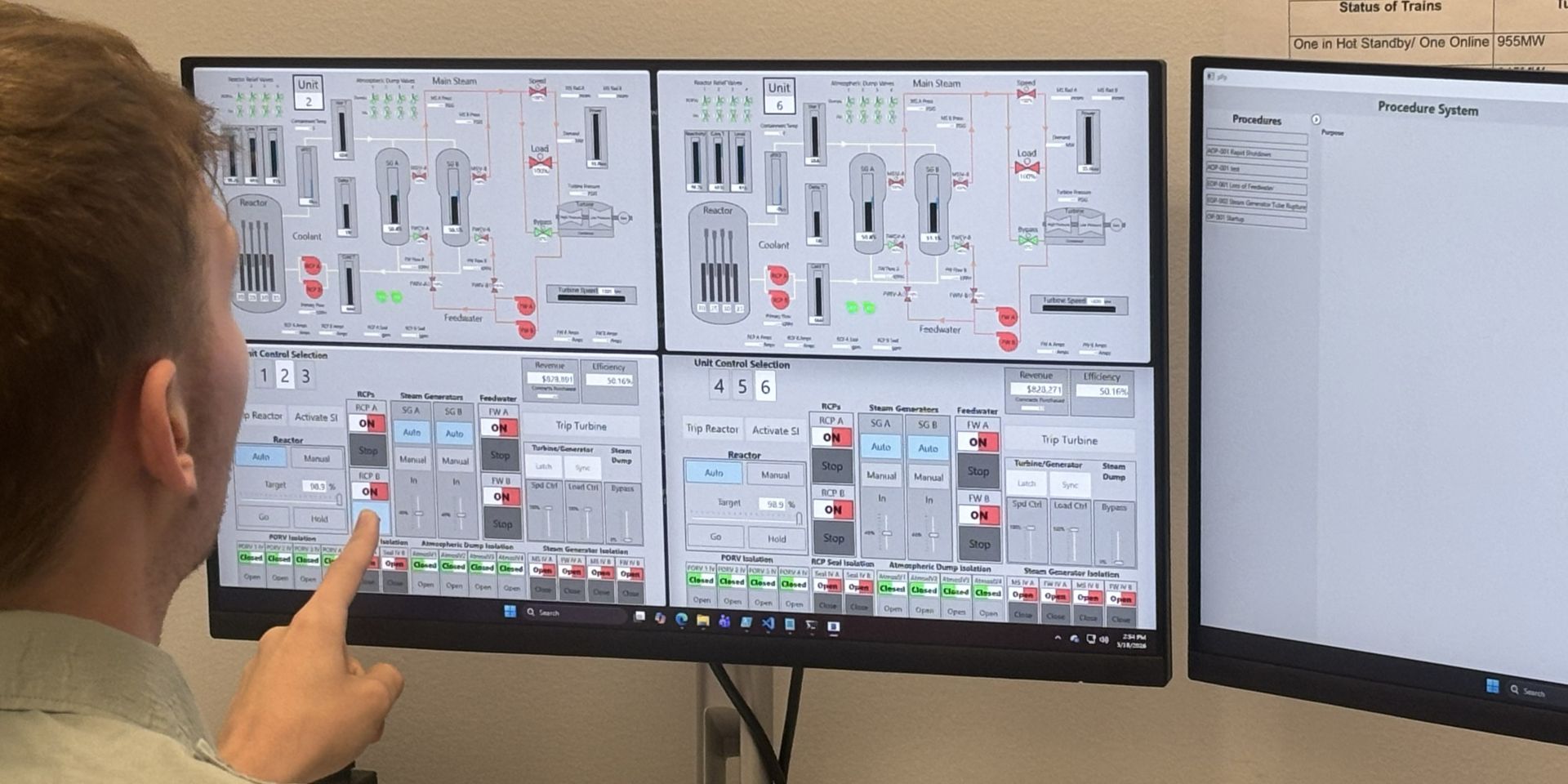
Desktop workstation display of the Rancor Microworld simulator, developed by INL, in the NRC’s Human Performance Test Facility. The display shows a simplified control interface with multiple reactor units and digital procedures used for human factors research. (Photo: NRC)
We are closely following emerging advanced reactor design concepts, such as remote, multiunit, and autonomous operation, and their implications for human performance. Some of these approaches place centralized control centers in charge of multiple reactor modules at a single site or even multiple reactor units at geographically distributed sites. In some concepts, operational responsibilities are entirely off-site, supported by robust digital communication systems.
While these concepts offer potential for efficiencies, they also introduce distinct human performance challenges. Without physical proximity, the interface must convey clear, actionable information to support detection of anomalies. Communication systems must be robust enough to support not only normal operations but also abnormal events, cyber disruptions, and periods of degraded connectivity. Distributed teams need clearly defined roles and authorities, as unclear division of responsibilities can lead to hesitation or conflicting actions during critical moments.
Autonomous operational concepts add another layer of complexity. As systems take on more adaptive or independent behaviors, the underlying question becomes, How autonomous is an autonomous system? High levels of autonomy, paired with the expectation that operators may still need to intervene during unanticipated conditions, create human factors challenges that differ markedly from designs in which operator control is limited to only a basic manual shutdown capability. Operators must understand automated actions, anticipate limits, and supervise system behavior effectively.
Perennial challenges in new contexts
Despite changing technologies and operating environments, classic human factors challenges remain and often become more pronounced.
Situational awareness can degrade when humans intervene only rarely and then quickly reengage during dynamic or abnormal events. Automation can reduce routine workload but may also lead to periods of low engagement followed by sudden spikes in cognitive demand during abnormal conditions, a pattern observed in current operations but expected to be more pronounced in advanced reactors. Trust in automation must be calibrated appropriately, as both overtrust and undertrust can lead to errors or unnecessary interventions.
Digital environments introduce new error pathways like mode confusion, wrong unit actions, or missed cues in information-dense displays. Skill retention also becomes a challenge when operators infrequently perform critical manual actions. Regular training, realistic simulation, and scenario-based practice are essential to ensure operators remain prepared for rare, high-consequence events.
Finally, organizational factors are increasingly important, as advanced reactors may be operated by new entrants or organizations managing fleets across multiple sites. Training programs may be centralized and led by developers or vendors rather than the operating organization. Lean staffing, distributed operations, and shared responsibilities between vendors and licensees can strain institutional knowledge, coordination, and culture. Nuclear safety culture must be cultivated deliberately, including communicating openly, encouraging the raising of concerns, and ensuring that decisions prioritize nuclear safety.
Several industries have confronted similar challenges associated with automation, remote operation, and distributed team structures. Aviation provides extensive evidence on managing pilot-automation interactions, addressing mode confusion, and supporting vigilance in supervisory roles. Maritime and offshore energy operations highlight experiences with remote monitoring centers and the coordination of distributed teams. Space systems offer lessons in managing high levels of automation and ensuring operator readiness for rare, high-consequence interventions. Across these sectors, common themes emerge: validate automation behavior, design interfaces that reveal system intent, and maintain clear authority structures and communication pathways. Many of these lessons are highly applicable in the context of advanced nuclear and are informing current research and guidance development.
Regulatory frameworks for modern technologies

NRC headquarters in Rockville, Md. (Photo: NRC)
Regulation is evolving alongside technology. In 2026, the Nuclear Regulatory Commission finalized 10 CFR Part 53, a risk-informed, technology-inclusive rule designed to support the licensing of advanced commercial reactors. A companion framework, 10 CFR Part 57, is under development for microreactors and other low-consequence designs.
These rulemakings, building on long-standing principles introduced after the Three Mile Island accident in 1979, reaffirm the importance of human factors engineering (HFE). Part 53 makes this explicit: 10 CFR 53.730(a) requires that “the plant design must reflect state-of-the-art human factors principles for safe and reliable performance in all locations where human activities are expected for performing or supporting the continued availability of plant safety or emergency response functions.”
One key guidance document for Part 53, Development of Scalable Human Factors Engineering Review Plans Interim Staff Guidance (DRO-ISG-2023-03), introduces a scalable HFE review process. This approach enables NRC staff to tailor the depth of review to the safety significance, novelty, and human performance implications of each design. Rather than applying a uniform level of scrutiny to all reactors, this graded approach focuses on areas where human contributions to safety are most critical, such as highly automated designs, remote operations, or new staffing models. This provides applicants with clearer expectations and supports efficient, predictable licensing outcomes.
However, this graded approach to HFE licensing reviews does not diminish the importance of integrating HFE principles across the entire design lifecycle. In fact, by demonstrating how human-centered considerations are woven into novel operating concepts, applicants build regulatory confidence and can show that innovation and safety are mutually reinforcing.
Applying HFE principles to licensing
One of the most critical steps for novel designs is to define the concept of operations early, as it anchors both the HFE program and regulatory review. For instance, under Part 53, classifying a design as a self-reliant mitigation facility versus an interaction-dependent mitigation facility is key to the scope and depth of HFE activities. “Self-reliant-mitigation facility” and “interaction-dependent-mitigation facility” are defined in 10 CFR 53.725(c) on the basis of a nuclear plant design meeting the operating and technical criteria specified in 10 CFR 53.800. The terminology used to designate these facility types reflects differences in how operators are anticipated to interact with their plant systems to mitigate events and achieve safe outcomes. Such systems may either need operators to interact with them in some manner (interaction-dependent) or may instead be able to fully rely on their own capabilities independent of operator interaction (self-reliant).
A clear operational concept should explain not only how the plant will function but also how the design supports human needs, capabilities, and limitations. Framing these decisions through a human-centered lens helps ensure future operations are intuitive, safe, and aligned with how people actually work.
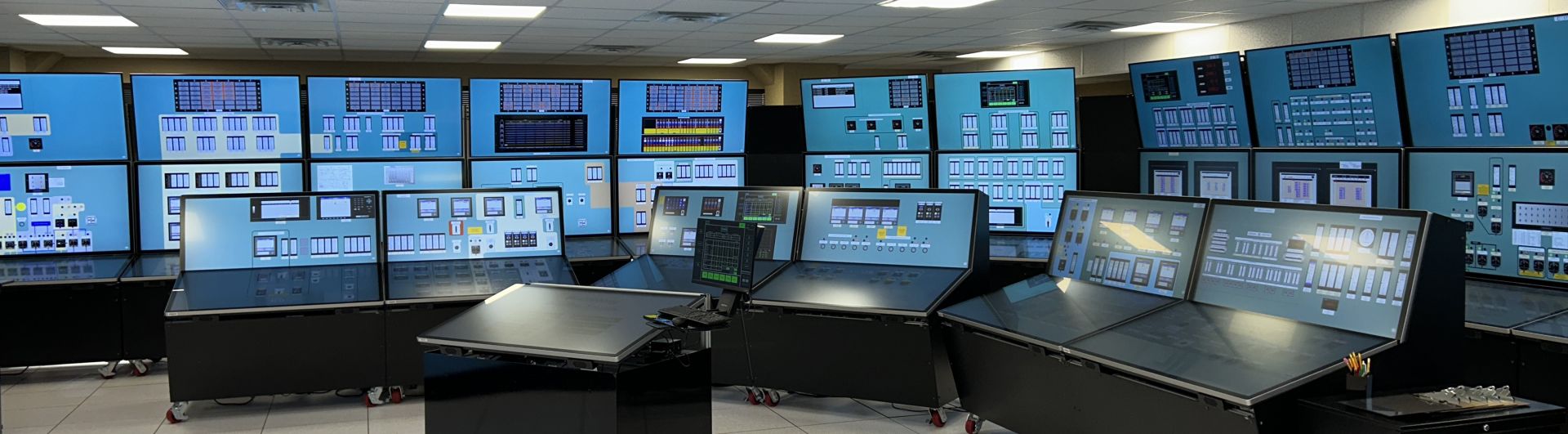
Touchscreen consoles and digital display panels are arranged in a full-scale control room layout in the NRC’s Glass Panel Simulator at the Technical Training Center in Chattanooga, Tenn. (Photo: NRC)
Although technologies and operating contexts may change, core HFE design principles still apply. Functional requirements analysis and function allocation involve identifying the essential safety and operational functions of the plant and then determining whether humans, automation, passive features, inherent design characteristics, or some combination should perform each function. Modern function-allocation methods emphasize how humans and automation collaborate to achieve safety and performance goals.
Task analysis builds on this by identifying what operators must perceive, decide, and do to carry out their responsibilities effectively. For advanced reactors, this can include identifying the information needed to maintain situational awareness across multiple units, understanding automated behaviors, diagnosing system states during abnormal events, and performing rare but critical manual tasks. Task analysis outputs inform interface design, procedures, staffing, and training.
The human-system interface represents one of the most visible components of human-system integration. Digital environments offer great flexibility, but they can introduce the potential for inconsistency, information overload, and loss of transparency. Operators perform best when displays align with their mental models, present information in integrated and intuitive ways, and reveal the intent of automated systems clearly.
Verification and validation are cornerstones of HFE. They test design assumptions through performance-based evaluations that reflect real operating conditions. Through integrated system validation, applicants demonstrate that operators can perform effectively during both normal and abnormal scenarios, providing evidence that the overall design can support safe operation. This relies on realistic scenarios, broad sampling strategies, and close observation of operator behavior to confirm that workload, task performance, and critical actions remain within acceptable limits under realistic conditions.
Research priorities
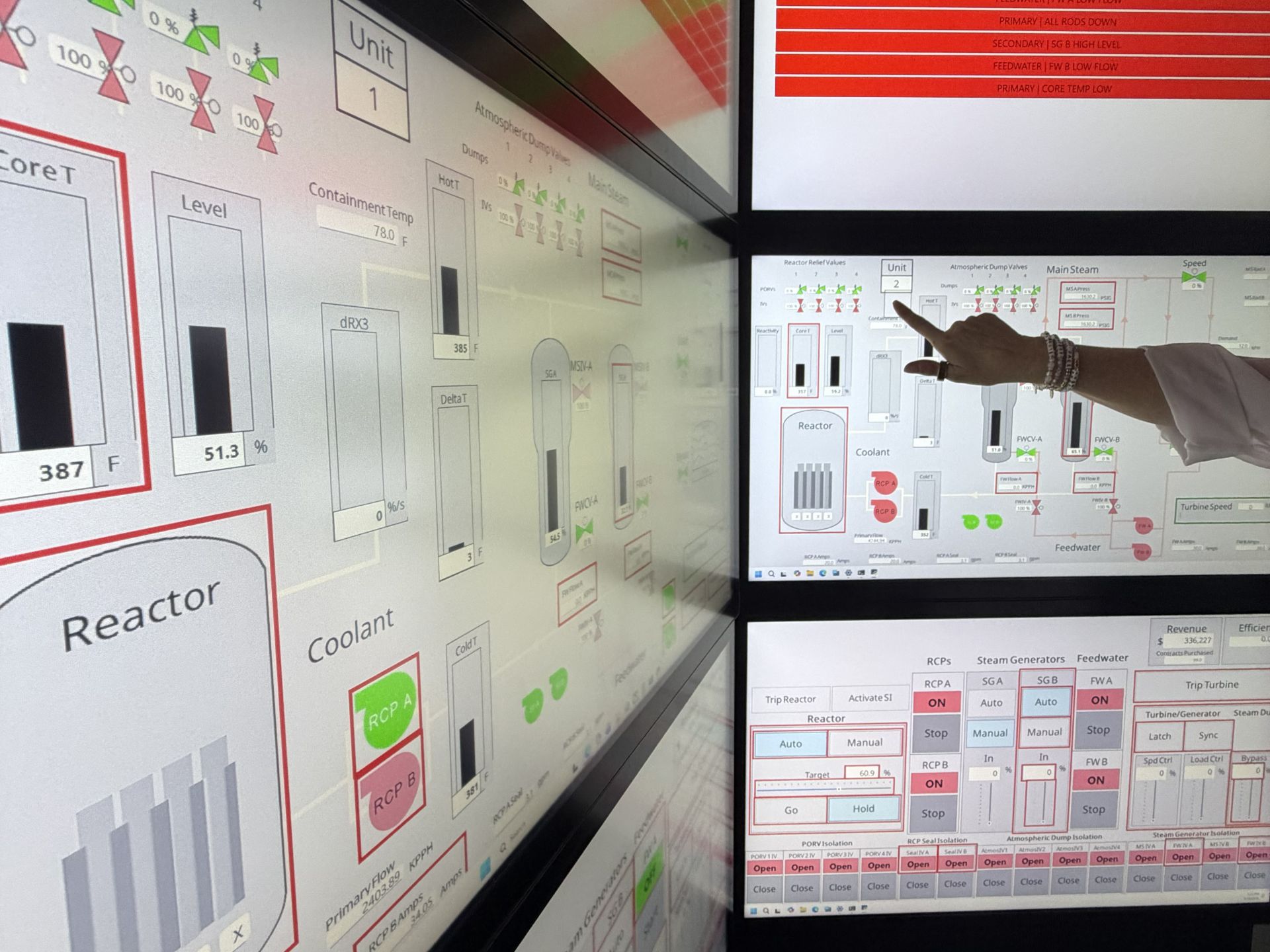
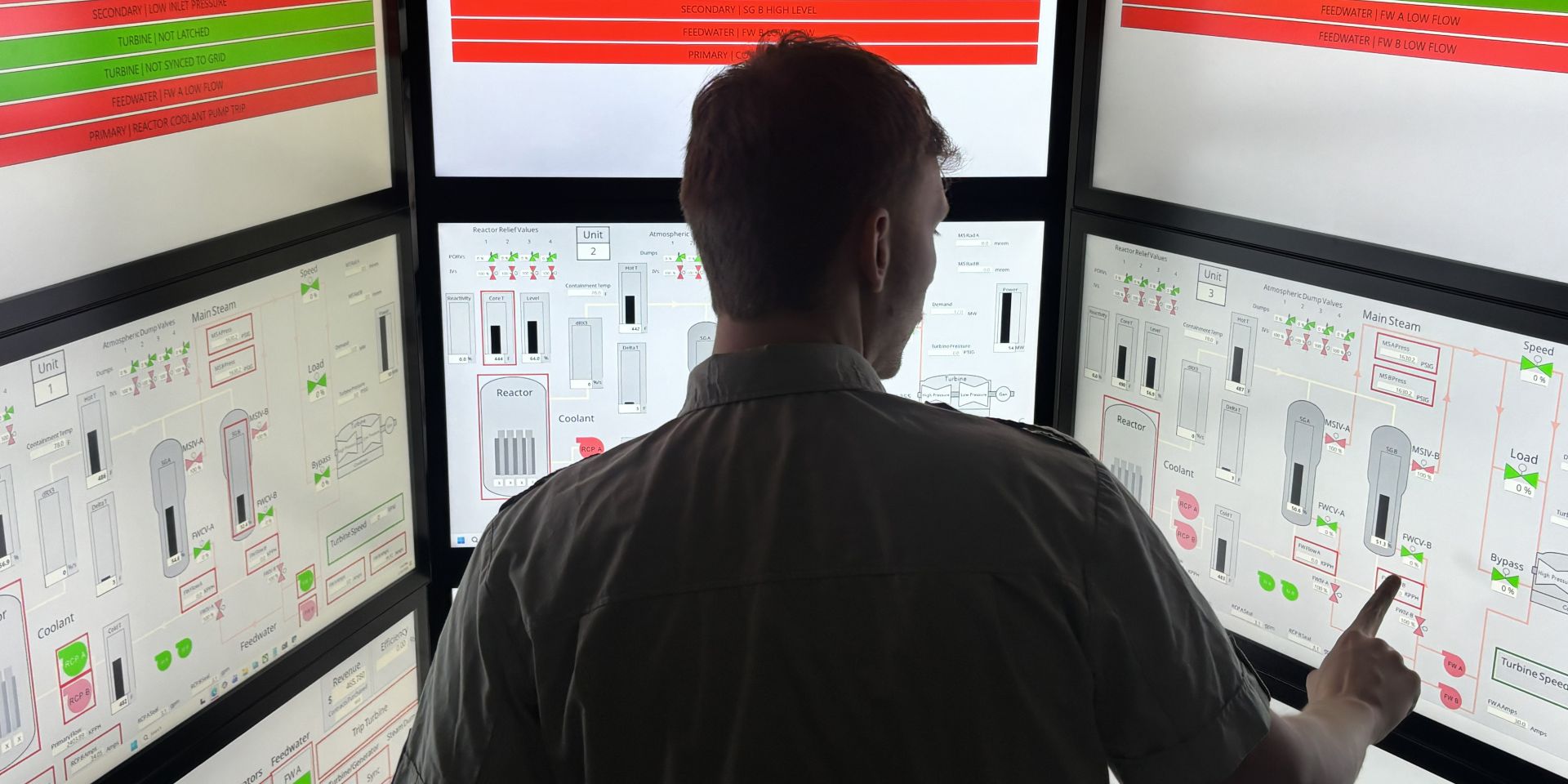
Close-up of reactor and coolant system indicators using the Rancor Microworld simulator. (Photo: NRC)
As we look toward the future of advanced reactor deployment, much of the NRC’s human factors research centers on regulatory readiness for advanced reactor licensing reviews. Our research aims to build the technical bases and guidance needed to evaluate these technologies effectively.
One priority area is understanding the human factors implications of remote operations, where operations may be conducted from centralized control facilities or through hybrid arrangements that split responsibilities between on-site and off-site staff. Remote Operations for Advanced Reactors: Human Factors Engineering Technical Basis and Recommendations for Guidance (RIL 2026-01), examines these emerging concepts and identifies the key human factors challenges to support future regulatory guidance.
We are also studying how digital control environments influence operator workload, ergonomics, and usability. Insights from Human Performance Test Facility Volume 7: Differences Between Hard Panel and Glass Top Simulator Ergonomics, Workload, and Usability (RIL 2022-11) help us understand where digital systems improve performance and where they may introduce new vulnerabilities that must be mitigated through design.
Another major step forward has been the publication of NUREG-0700 (rev. 4), Human-System Interface Design Review Guidelines. The updated guidelines include criteria for evaluating displays, alarms, navigation structures, and other interface elements in digital control rooms. Keeping these guidelines aligned with modern technology supports consistent, predictable licensing reviews.
We are also preparing for increased autonomy in plant systems. Human Factors Considerations for Anticipated Uses of Autonomy in Advanced Reactor Technologies (INL/RPT-25-89289) explores the landscape for how advanced reactor designers may apply higher levels of autonomy in operations. In Autonomous Operations for Advanced Reactors: Human Factors Engineering Topic Characterization and Needs Assessment (RIL 2026-02), we define concepts like “autonomy” and “autonomous operations” and explore the human factors considerations with higher levels of autonomy and how that impacts the need for NRC review guidance. Complementing this, our paper in the journal Energies, “What Can the History of Function Allocation Tell Us About the Role of Automation in New Nuclear Power Plants” (doi.org/10.3390/en19010220), highlights why modern automation requires more nuanced allocation strategies than traditional human-versus-machine models.
Looking ahead, our ongoing research efforts include continued work on function allocation, remote and multiunit operations, and updating guidance for reviews that involve changes to important human actions. We are also advancing our research on autonomous operations by assessing how autonomous systems reshape human roles and developing the guidance regulators need to ensure reviews are aligned with advancing technology.
Aligning people, technologies, and organizations

The NRC Technical Training Center in Chattanooga, Tenn. (Photo: NRC)
Through our work, a unifying theme becomes clear: the human role is not disappearing—it is evolving. Advanced reactors offer remarkable potential, but only if they are designed in ways that support human performance from the outset. Integrating human factors across design, training, staffing, and organizational structure is critical to achieving this. Ultimately, the promise of advanced nuclear power depends on aligning people, technologies, and organizations to create systems that remain safe, reliable, and resilient.
As specialists in this field, we remain committed to advancing research and supporting regulatory clarity. With thoughtful planning and open dialogue, we believe the next generation of nuclear plants can achieve the high standards of safety and performance that the industry and the public expect.
Stephanie Morrow and Niav Hughes Green are human factors psychologists in the NRC's Office of Nuclear Regulatory Research.