Over before it’s begun?
Josh Freed
On top of the many celebrations planned for America’s 250th birthday, the Trump administration wants to mark a nuclear milestone as well: achieving criticality for at least three advanced reactor concepts by July 4, 2026.
But this wouldn’t really be a milestone. On a day of fireworks nationwide, it would just be more noise.
Third Way has celebrated the nuclear sector’s progress during the Trump administration and supported the goal of 400 GW of nuclear energy by 2050. Additionally, we think all five commissioners on the Nuclear Regulatory Commission have prioritized safety in new designs and defended an understaffed agency under pressure to bypass important processes.
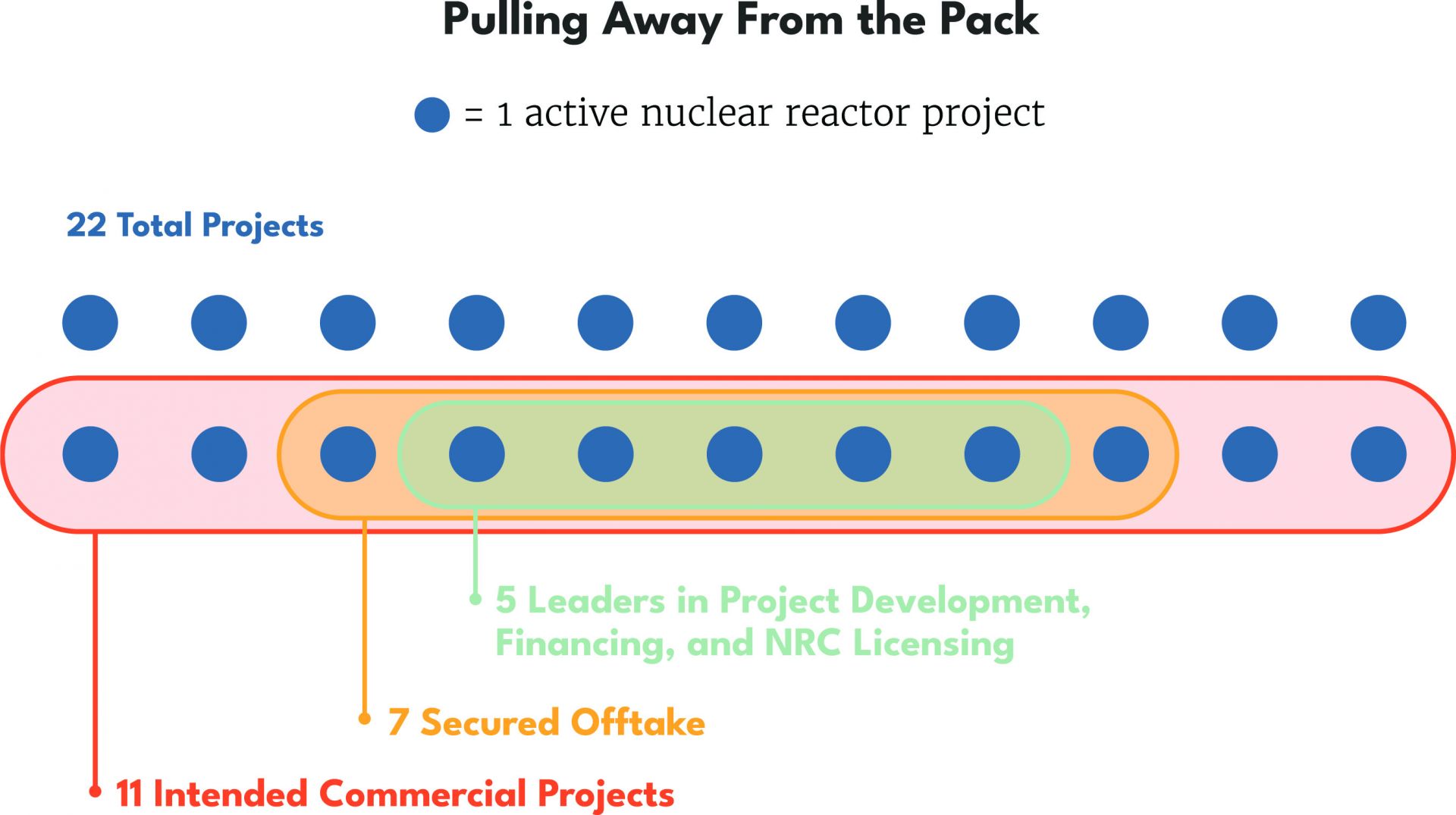
Among the 22 new nuclear projects analyzed, excluding restarts, 11 are intended to commercially provide energy (or sell reactor units) to customers. Seven of those 11 have already secured offtake agreements. Among those seven, five are pulling away from the pack by making significant progress in NRC licensing, project development, and project financing. (Source: Freed et al., Getting More for Your Money: The State of Play for US Nuclear in 2026, Third Way, April 30, 2026.)
All in all, the renewed interest, innovation, and investments in nuclear energy are long overdue.
But the Department of Energy’s Reactor Pilot Program—the initiative behind the July 4th criticality goal—perfectly captures how the Trump administration’s lack of focus could derail the nuclear renaissance it hopes to achieve.
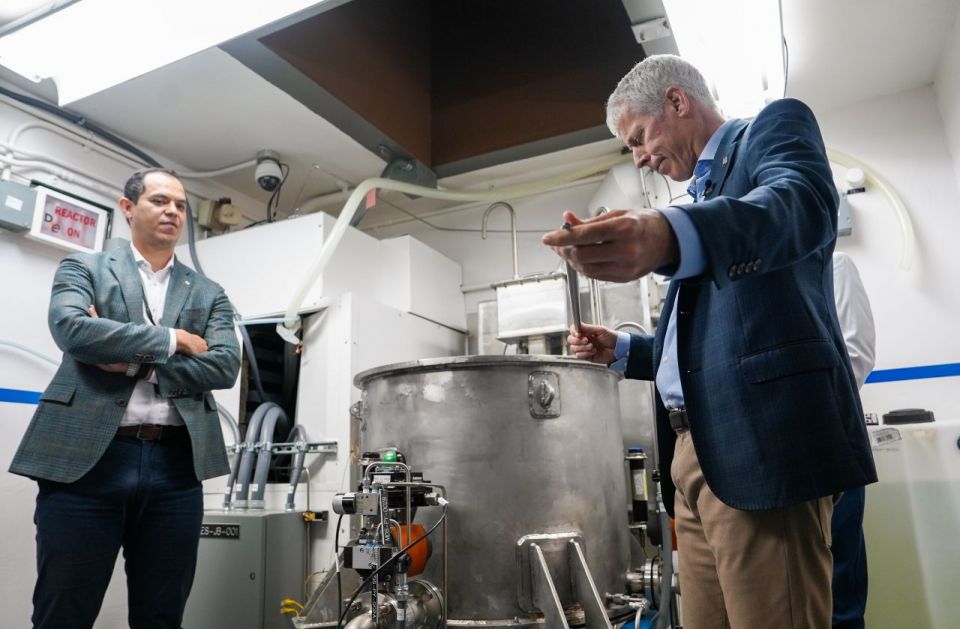
Created under one of four nuclear-focused executive orders issued in May 2025, the Reactor Pilot Program was intended as a new pathway for advanced reactor demonstrations. But despite its claim to fast-track commercial licensing, it’s essentially a diversion from adding meaningful new nuclear capacity.
The Reactor Pilot Program is not a substitute for approval from the NRC. The program has accelerated some test project timelines but does not offer a clear pathway to grid connection. And most of the pilots are for microreactors—a worthwhile technology but not a sizable contribution to the 300 GW of new nuclear that the country needs.
Both the July 4 deadline and the achievement of criticality are arbitrary. But as the nuclear industry faces a transformative moment, we see a real path forward.
In April, Third Way published its nuclear landscape assessment. Getting More for Your Money: The State of Play for US Nuclear in 2026 is a first-of-its-kind look at 22 new nuclear projects in the United States. Leaders in this pack have made huge strides with commercial projects and project financing. From this analysis, we learned important lessons.
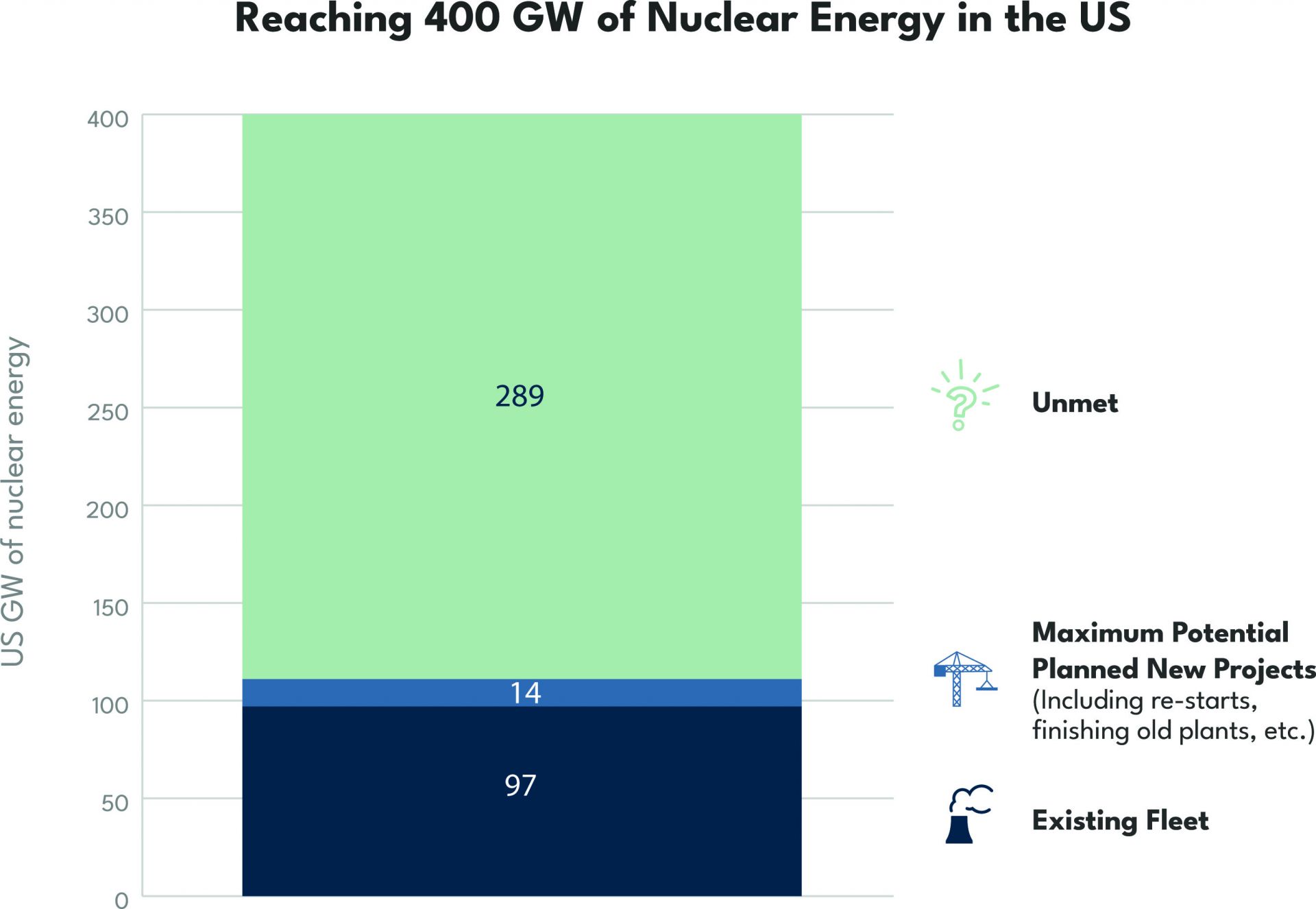
This graph charting progress toward 400 GW includes existing reactors operating on the grid (97 GW); maximum planned capacity of all currently active new nuclear projects, plus restarts (14 GW); and remaining unmet capacity (289 GW). (Source: IAEA and authors’ data collection, via Freed et al., Getting More for Your Money: The State of Play for US Nuclear in 2026, Third Way, April 30, 2026.)
The path to 400 GW—or anywhere close—will be through more focused investment, consistent and clear regulatory processes, and with commercialization as the North Star of nuclear development.
We need strong engagement between companies and the NRC, a combination of technologies at scale, financing mechanisms to derisk new projects, and an emphasis on offtakers and market prospects.
We cannot be afraid of the field narrowing, and we can learn from the most advanced projects’ approaches to offtake, federal support, and project development.
And more than splashy headlines, we want to see durable and consistent federal support.
This is the moment to get it right. Nuclear energy is one of the few issues that both Democrats and Republicans are championing. The support and the number of players were unimaginable 10 years ago. Nuclear energy has become an economic, security, and climate imperative.
As we mark America’s 250th year, let’s foster a nuclear landscape truly worth celebrating.
Josh Freed is senior vice president for climate and energy at Third Way, a national think tank and advocacy organization.