The will to lead the way

April 14, 2026, 7:13AMNuclear NewsHash Hashemian

Hash Hashemian (president@ans.org), proud grandfather of 1-year-old Vera Rose Sizemore.

With the 2026 ANS Annual Conference right around the corner, planning is well underway, with many exceptional speakers who will explore how fusion and fission can turn breakthrough innovation into real, scalable power that drives our clean energy future. I am looking forward to seeing the nuclear community in Denver in June.

If you want to hear some of my thoughts on the current state of nuclear power before the conference, you can watch or listen to the March 3 episode of the Blockspace podcast, on which I was a guest (blockspace.media/podcast/americas-nuclear-revival-is-here-w-dr-hash-hashemian/). There, I aimed to both reach a broader audience and promote the peaceful uses of nuclear science and technology.

The episode contains a wide-ranging discussion about the current state of nuclear energy in America, touching on regulatory reform, surging electricity demand, and what it will take to maintain U.S. leadership in nuclear development.
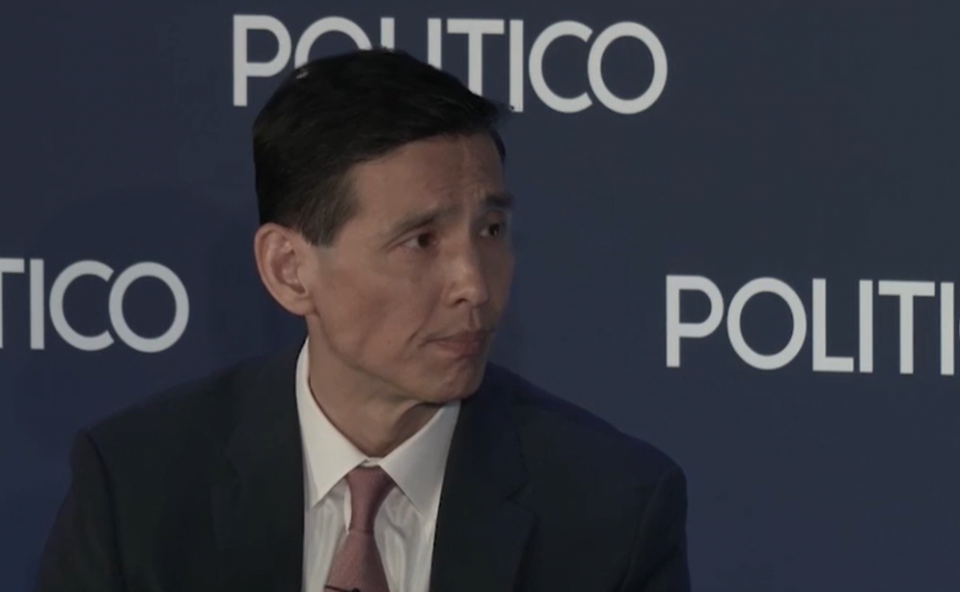
I also delved into the environmental case for nuclear, which has never been stronger. Two years ago, when I was at COP28, world leaders declared that global nuclear energy production must triple to meet our collective decarbonization goals. That signal, combined with AI- and electrification-driven power demands, has created a convergence that this industry has not seen in decades. As I have said plainly, if you want to power AI, if you want ChatGPT and everything that comes with it, there is no other choice. Nuclear is an essential source of firm power.

The regulatory environment is finally catching up to that reality. The ADVANCE Act and the Trump administration’s executive orders are already cutting red tape without jeopardizing safety. There is a meaningful difference between rigorous safety oversight and unnecessary paperwork, and we are finally drawing that line clearly.

Restarting idled assets like Three Mile Island-1 (now Crane), Palisades, and Duane Arnold is the right near-term move. It is faster than new construction and could add a combined 2,227 MWe to the grid by the end of the decade. In the long term, building new small and advanced reactors is essential, but if the United States is serious about not falling behind China, we need to commit real capital. Not $10 billion or $20 billion here and there. We are talking $500 billion to $1 trillion to build the kind of industrial foundation that makes American nuclear leadership durable and competitive.

Tennessee is showing what serious commitment looks like, with $12 billion already committed in Oak Ridge, new enrichment capacity in the future, and a governor who put $100 million behind a coordinated nuclear strategy. These investments were noted in the January issue of Nuclear News, where Tennessee was ranked first in the nation for nuclear development and deployment. We are looking at a bright future for nuclear. The question now is whether the United States has the will to lead it.


Related Articles

NRC adopts ROP updates

March 30, 2026, 3:14PMNuclear News

The Nuclear Regulatory Commission has approved a significant overhaul of its Reactor Oversight Process (ROP) baseline inspection program that stresses a leaner, more risk-focused inspection...