Biochemistry research could have implications in nuclear waste remediation
September 22, 2021, 9:30AMRadwaste Solutions
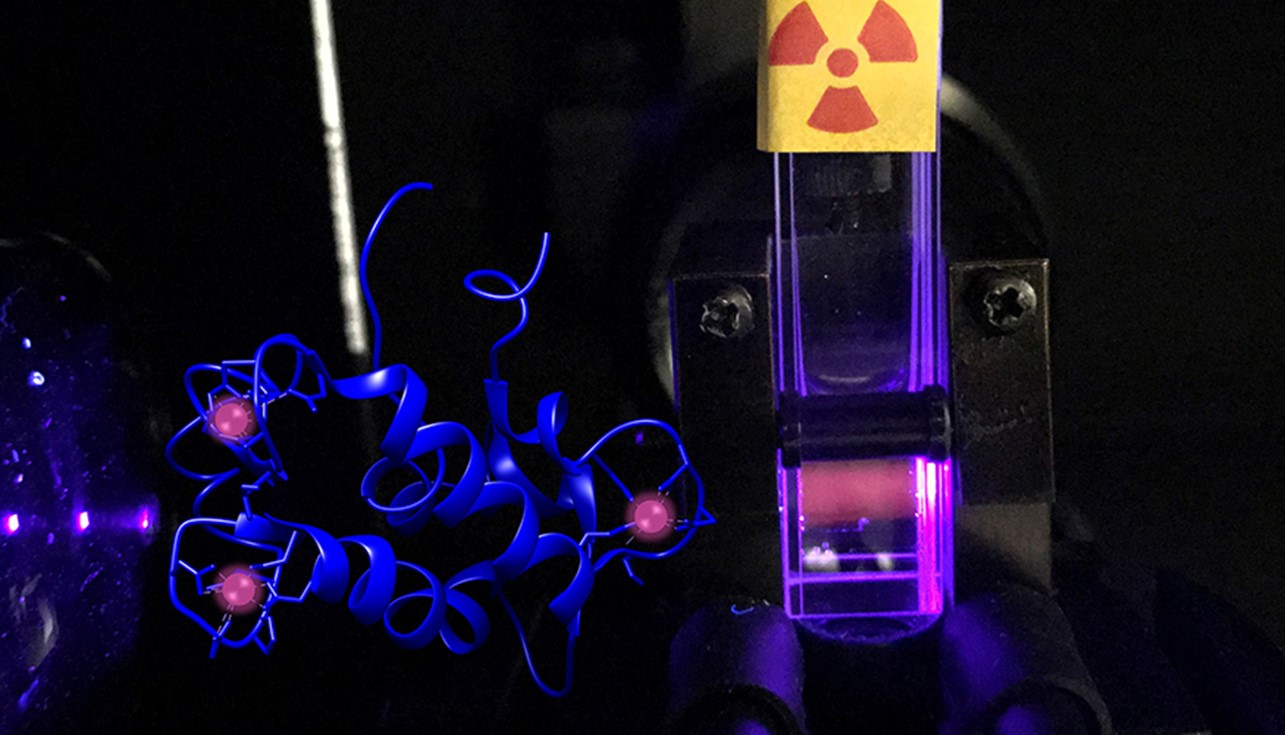
During a fluorescence spectroscopy experiment at LLNL, the protein lanmodulin makes radioactive curium glow when exposed to UV light in the sample to the right. The schematic (left) represents the structure of the curium-protein complex, with three curium atoms bound per molecule of protein. (Photo: LLNL)
Scientists at Lawrence Livermore National Laboratory, working in collaboration with researchers at Penn State University and Harvard Medical School, have discovered a new mechanism by which radionuclides could spread in the environment.
The research, which has implications for nuclear waste management and environmental chemistry, was published in the Journal of the American Chemical Society on September 20.
To continue reading, log in or create a free account!