Including the provincial government’s previous investment of C$18 million for expanding the research reactor’s activities, Ontario has provided C$26.9 million (about $19 million) to the MNR, increasing research capacity by 300 percent and enabling production of enough radioisotopes for 84,000 cancer treatments every year.
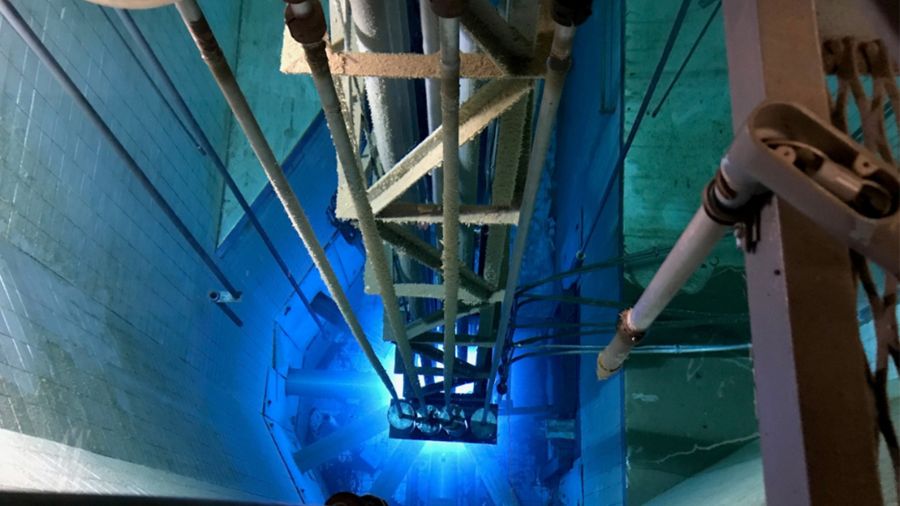
About the reactor: The MNR, located on McMaster University’s Hamilton, Ontario, campus, has been in operation since 1959 and is the most powerful research reactor at any Canadian university. It is a 5-MW multipurpose, open pool, medium flux materials test reactor with a maximum thermal neutron flux of 1 x 10¹⁴ neutrons/cm2 and a thermal power of 3 MW. The reactor has a core of low-enriched uranium fuel that is moderated and cooled by light water.
The reactor produces about 60 percent of the world’s supply of iodine-125, a radioisotope that is widely used in the treatment of prostate cancer as well as other types of cancer. Hundreds of doses of I-125 are produced every week with the MNR. In addition, it is used for hundreds of thousands of neutron irradiations every year in support of mining exploration, environmental sampling, and other industry activities.
Global leader in nuclear medicine: Nolan Quinn, Ontario’s minister of colleges, universities, research excellence, and security, said, “Ontario is proudly leading the development of innovative solutions that save lives and make a meaningful difference for our loved ones. This investment will ensure that Ontario families continue to have access to cutting-edge, homegrown treatments, while strengthening and protecting Ontario’s position as a global leader in nuclear medicine.”
Stephen Lecce, Ontario’s minister of energy and mines, added, “With two in five Canadians expected to be diagnosed with cancer in their lifetime, increasing the capacity of the McMaster Nuclear Reactor means increasing hope for patients. Ontario has a plan to double medical isotope production by 2030, with this investment expanding production capacity, accelerating world-class research and strengthening our position as a global leader in nuclear innovation.”