Quantum physics research at Idaho National Laboratory. (Photo: INL)
Scientists at Idaho National Laboratory have discovered that plutonium hexaboride (PuB6) displays a type of unusual quantum property called a topological Kondo insulating state. Materials with this property are neither typical electricity conductors nor regular insulators. Rather, they have exterior surfaces that strongly conduct electricity and interiors that block electricity.
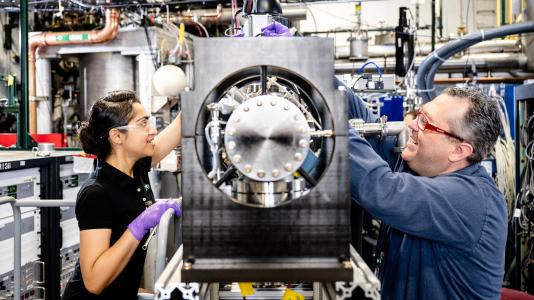
Argonne scientists adjust the AMIS beamline prior to its commissioning. (Photo: Argonne)
Argonne’s newest beamline uses heavy ions to degrade a material’s properties as much in a day as a nuclear reactor does in a year, without introducing radioactivity. That’s according to an article published January 16 by Argonne National Laboratory. The Argonne Tandem Linac Accelerator System (ATLAS) now boasts a new beamline—the ATLAS Material Irradiation Station, or AMIS—that uses the accelerator’s lowest high-energy beams to displace atoms and mimic the degradation of materials inside an operating reactor over time. AMIS makes it easier and faster to test candidate fuel and structural materials for existing and future reactors.
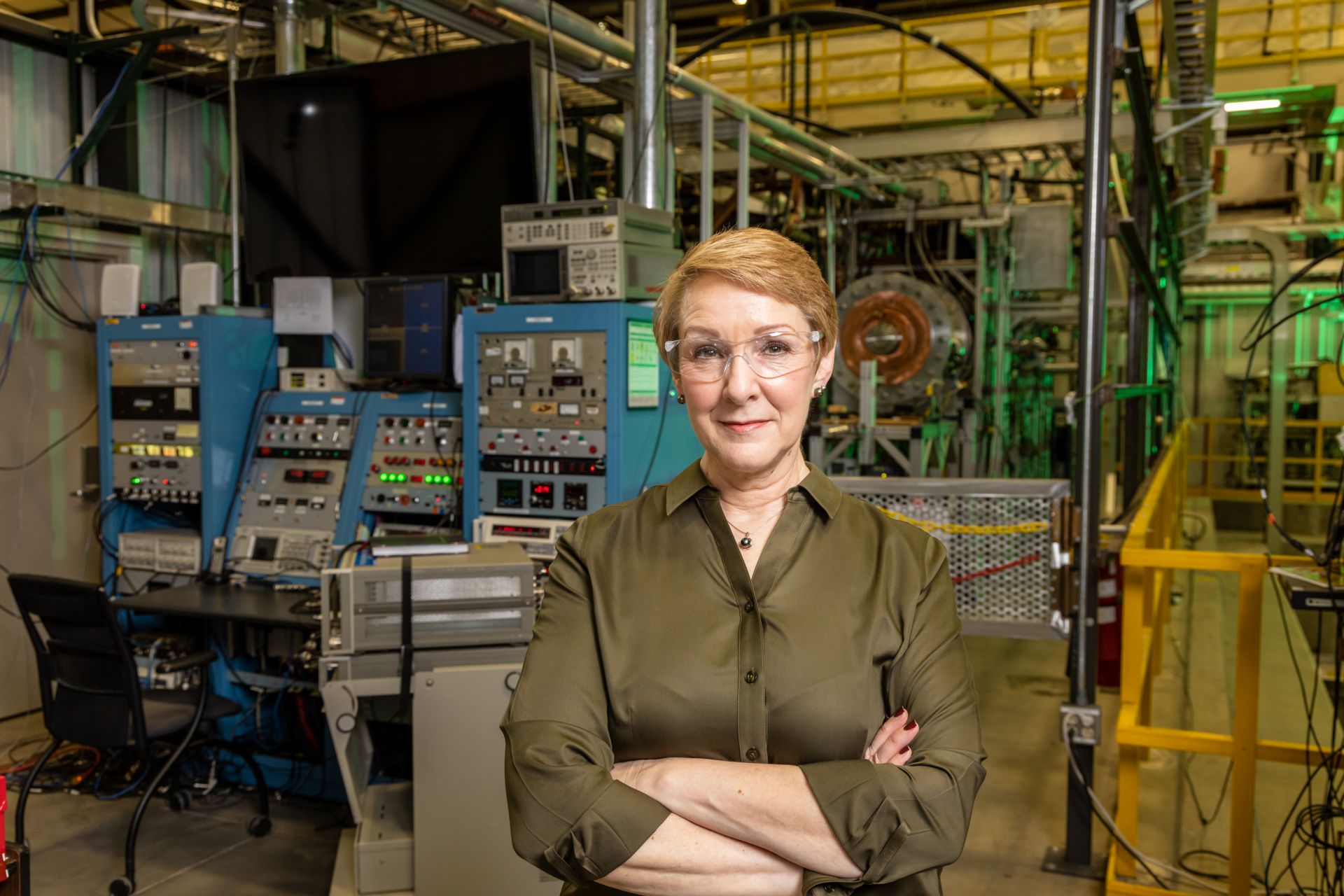
ORNL associate laboratory director Kathy McCarthy at the prototype which led to the Material Plasma Exposure eXperiment (MPEX), a device that will support fusion materials research. Photo: ORNL
Oak Ridge National Laboratory has a long record of advancing fusion and fission science and technology. Today, the lab is focused more than ever on taking advantage of that spectrum of nuclear experience to accelerate a viable path to fusion energy and to speed efficient deployment of advanced nuclear technologies to today’s power plants and future fission systems.

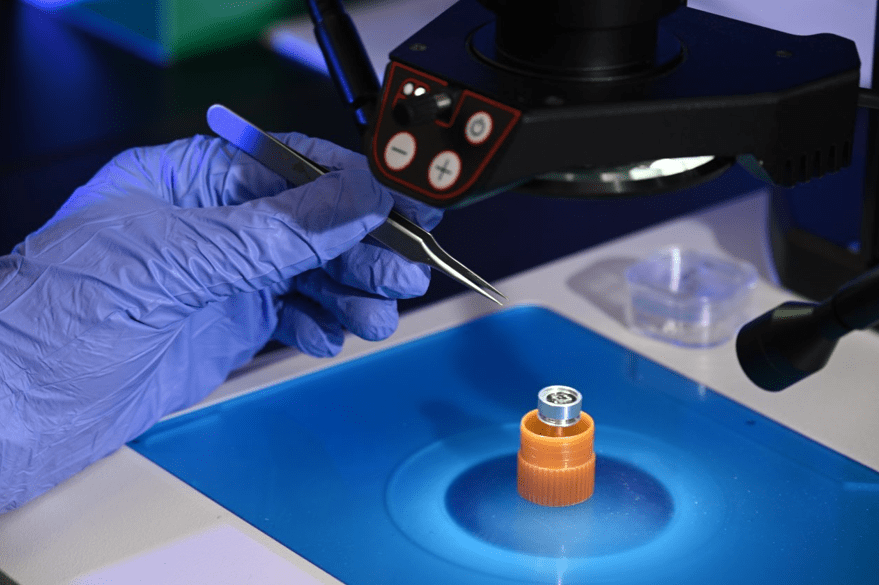
 Two teams of guest editors from Idaho National Laboratory have announced plans for special issues of the American Nuclear Society's Nuclear Science and Engineering, the nuclear community’s longest-running technical journal. Abdalla Abou Jaoude and Abderrafi M. Ougouag are leading the NSE issue Technical Challenges and Opportunities in the Development and Deployment of Microreactors, while Joseph Nielsen and Piyush Sabharwall are organizing the NSE issue Irradiation Experiments Supporting Advanced Nuclear Technologies.