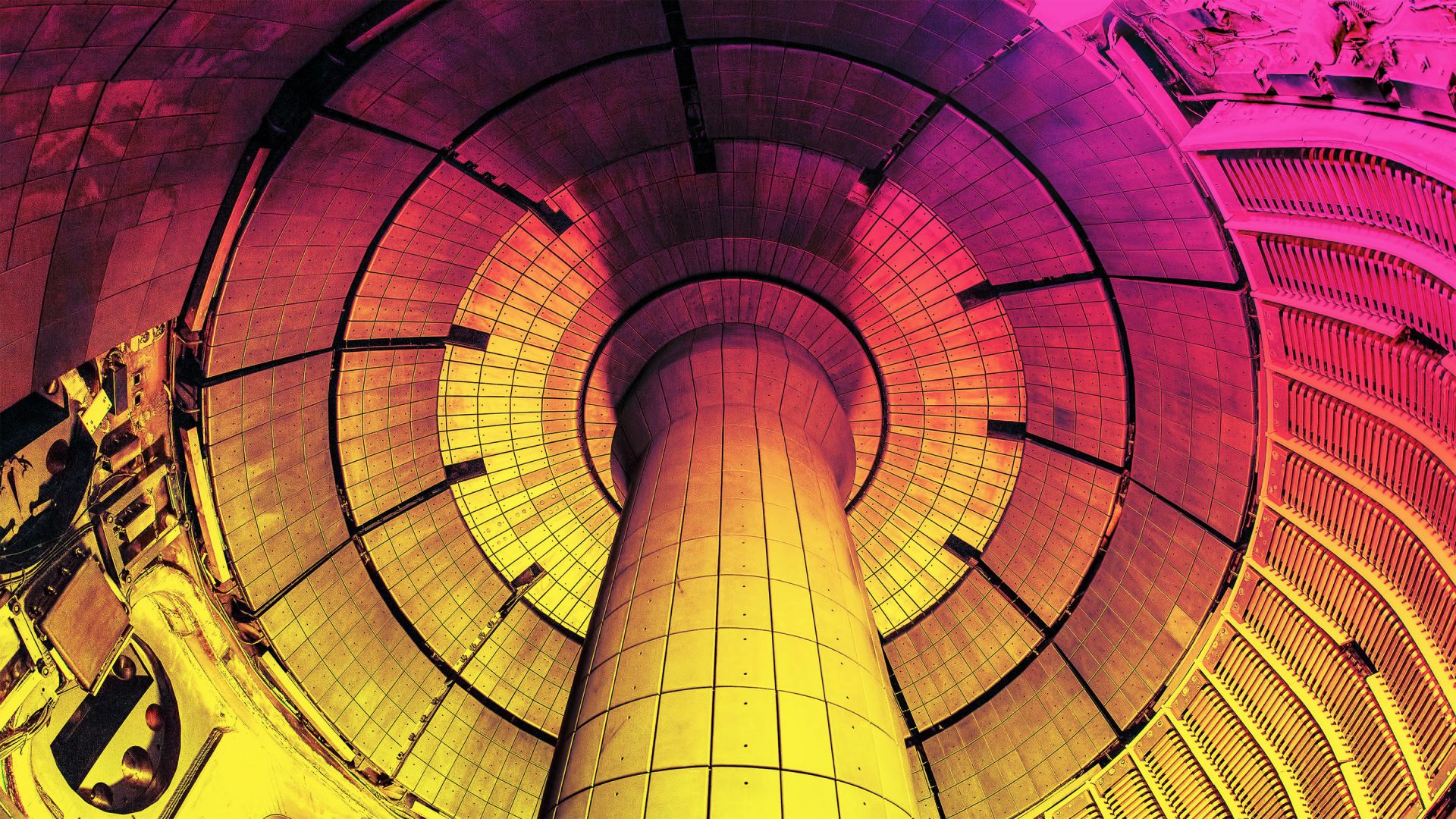
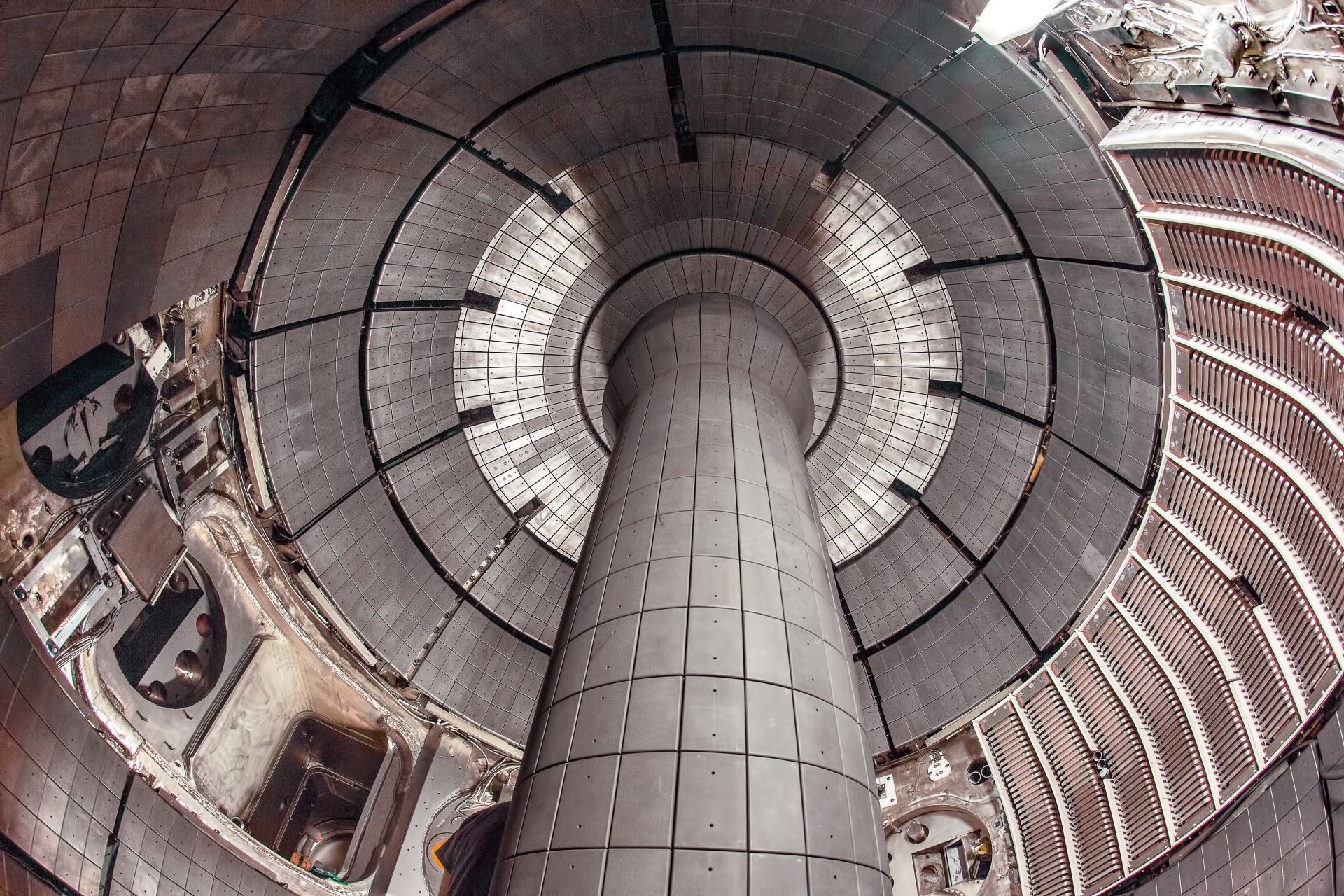
A colorized photo of the inside of PPPL’s NSTX-U. (Image: PPPL)
Princeton Plasma Physics Laboratory is leading a new initiative with the goal of using AI technology to accelerate the development of fusion energy research through high-fidelity computer simulations. The project includes national laboratories, universities, technology companies, and other partners.
Simulation, Technology, and Experiment Leveraging Learning-Accelerated Research enabled by AI (STELLAR-AI) has been developed as part of the Department of Energy’s Genesis Mission, which was established by presidential executive order last year to speed up the application of AI in scientific research.
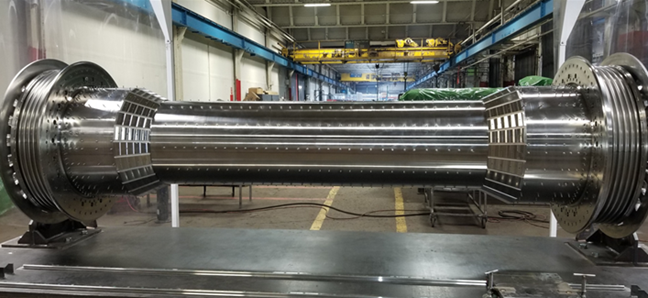
The center stack casing staged horizontally at Holtec’s manufacturing division in East Pittsburgh. (Photo: Holtec)
A key component needed for the National Spherical Torus Experiment–Upgrade (NSTX-U), the flagship fusion facility currently under repair at the Department of Energy’s Princeton Plasma Physics Laboratory (PPPL), has been delivered to the lab’s New Jersey campus.
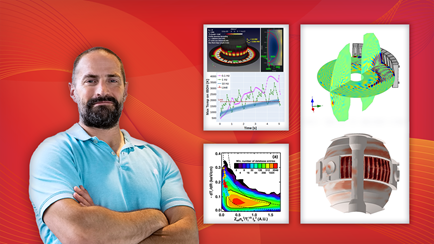
PPPL physicist Walter Guttenfelder with figures from the paper he coauthored with members of the NSTX-U team and 23 collaborative institutions worldwide. (Photo: Elle Starkman/PPPL Office of Communications. Collage: Kiran Sudarsanan)
According to the Department of Energy’s Princeton Plasma Physics Laboratory, recent simulations and analysis demonstrate that the design of its flagship fusion facility, the National Spherical Torus Experiment Upgrade (NSTX-U), which is currently under repair, could serve as a model for an economically attractive next-generation fusion pilot plant.