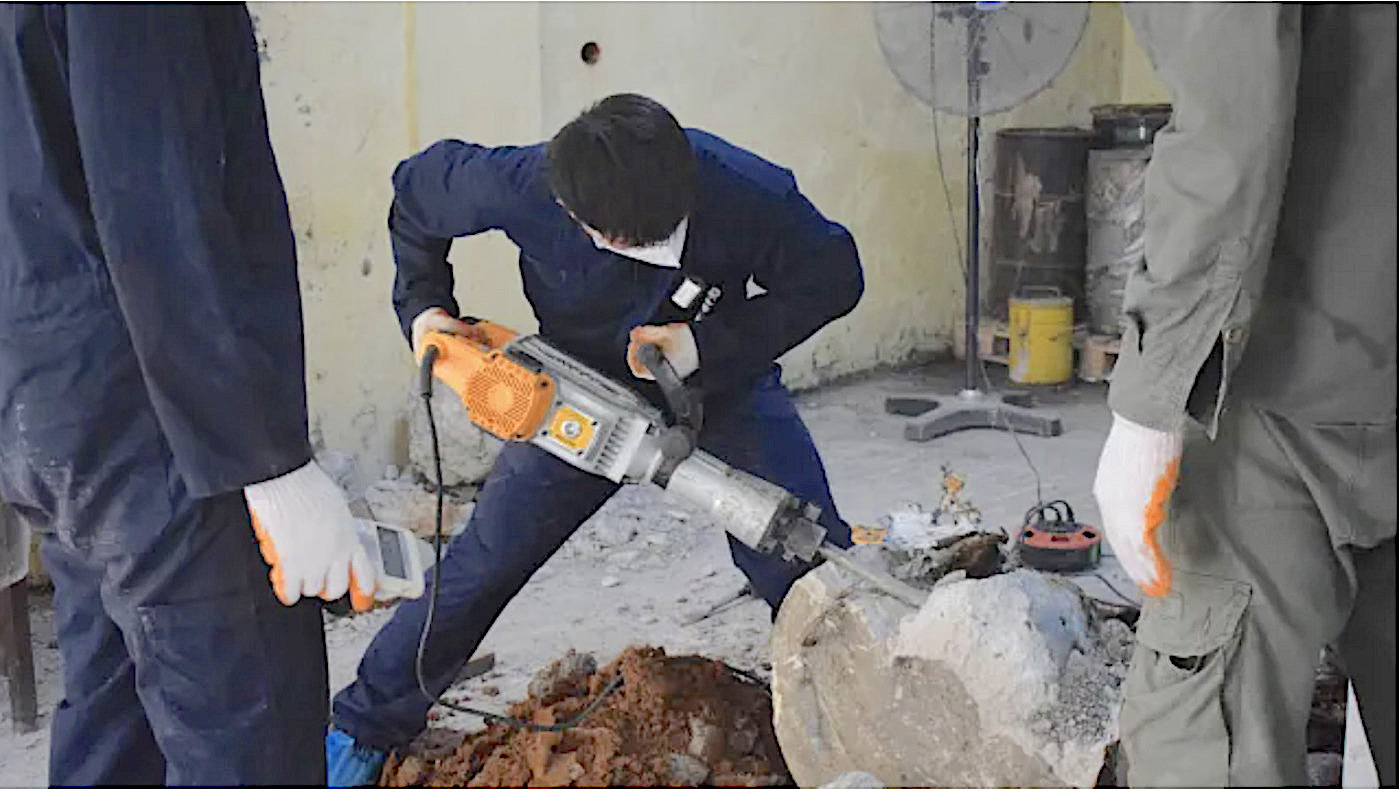
A worker recovers legacy Ra-226 sources that had been conditioned in cement during an IAEA expert mission to the Philippines. (Photo: Philippine Nuclear Research Institute)
The International Atomic Energy Agency has reported that, to date, 14 countries have made 14 transfers of disused radium to be recycled for use in advanced cancer treatments under the agency’s Global Radium-226 Management Initiative. Through this initiative, which was launched in 2021, legacy radium-226 from decades-old medical and industrial sources is used to produce actinium-225 radiopharmaceuticals, which have shown effectiveness in the treatment of patients with breast and prostate cancers and certain other cancers.
Radioisotopes target cancer, improve imaging, and have myriad other medical uses
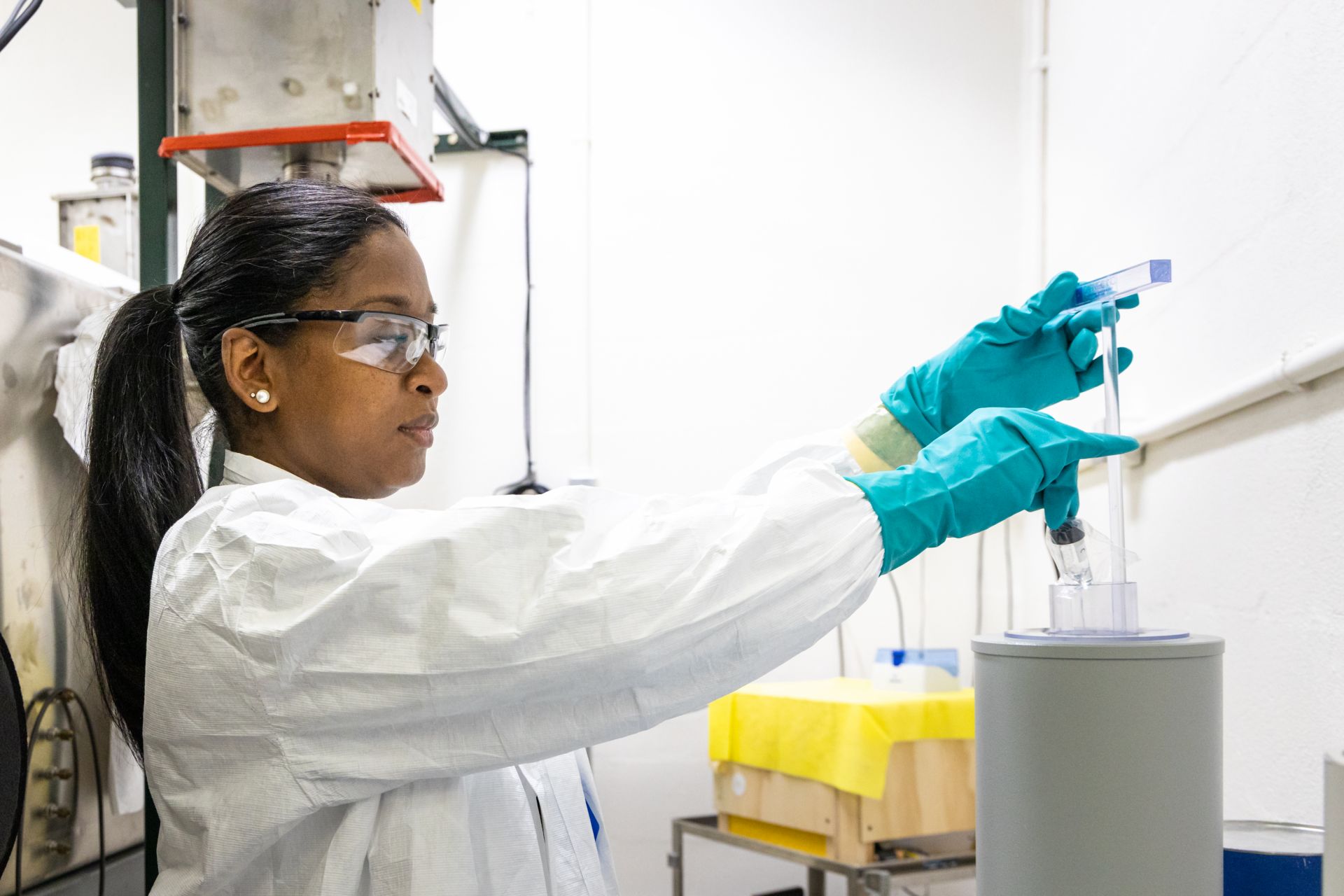
ORNL radioisotope manufacturing coordinator Jillene Sennon-Greene places a shipment vial of actinium-225 inside the dose calibrator to confirm its activity is within customer specifications. (Photo: Carlos Jones/ORNL, DOE)
On August 2, 1946, 1 millicurie of the isotope carbon-14 left Oak Ridge National Laboratory, bound for the Barnard Free Skin and Cancer Hospital in St. Louis, Mo.
That tiny amount of the radioisotope was purchased by the hospital for use in cancer studies. And it heralded a new peacetime mission for ORNL, built just a few years earlier for the production of plutonium from uranium for the Manhattan Project.
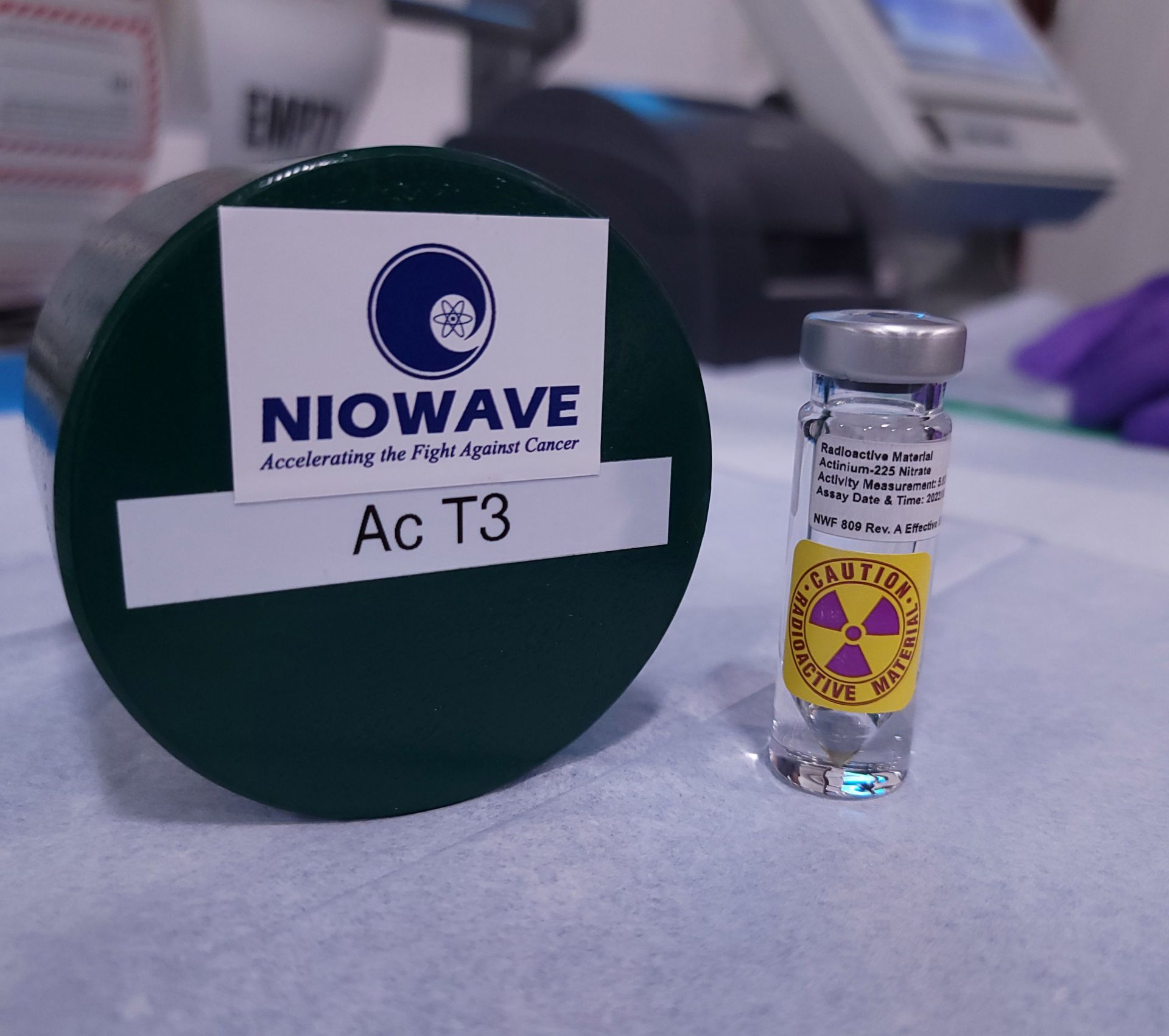
A vial of Ac-225 produced by Niowave stands next to its lead shipping pig. (Photo: Niowave)
According to the Council on Radionuclides and Radiopharmaceuticals, more than 82,000 nuclear imaging procedures using nuclear medicine are performed throughout the world every day. To administer these vital medical procedures, radiopharmaceutical companies and hospitals rely on a handful of producers of medical radioisotopes.
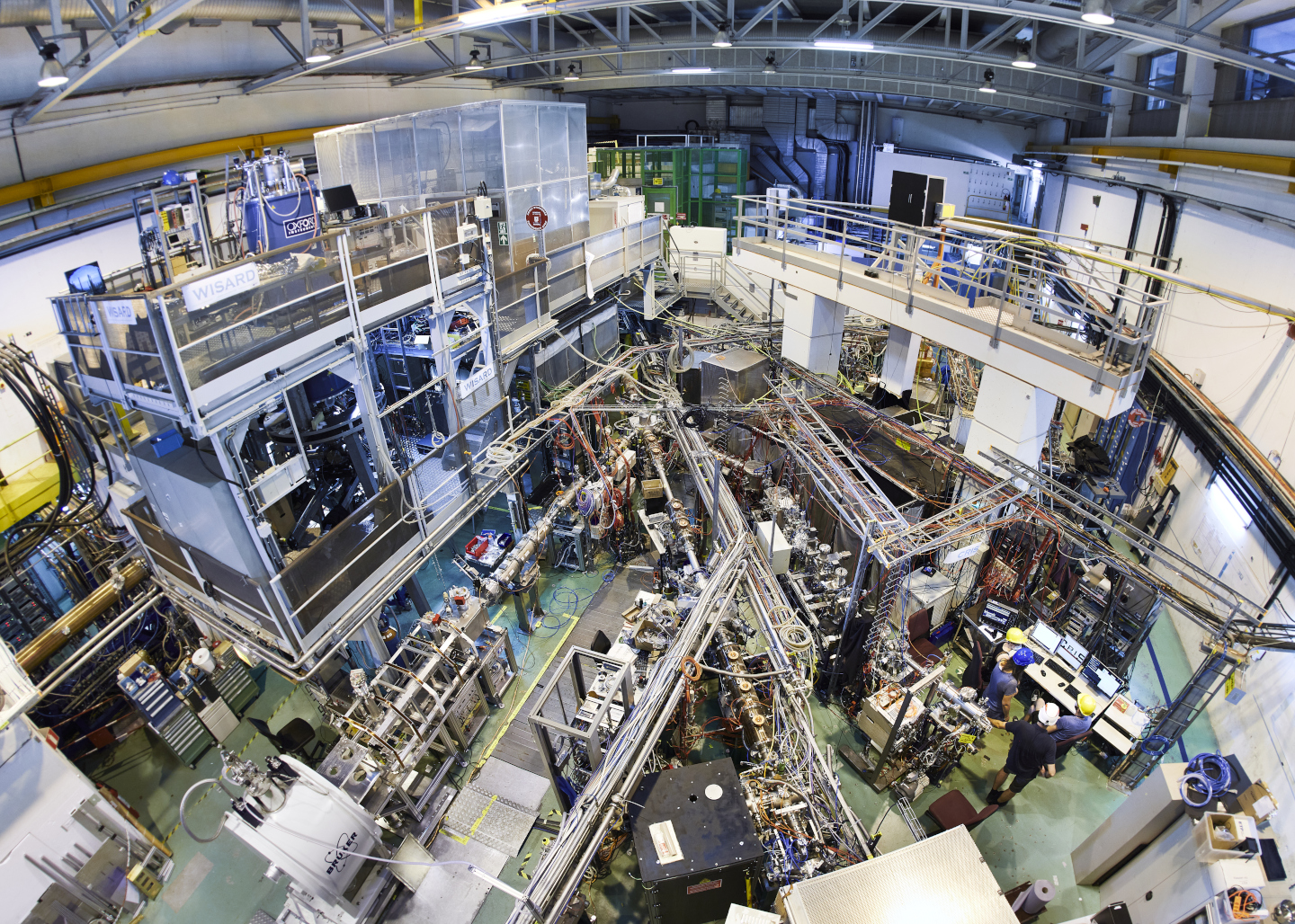
The ISOLDE facility. (Photo: CERN)
Today’s atomic clocks are exceptional timepieces that won’t lose or gain a second in 30 billion years. But if you’re looking for even more precision, you’ll be glad to learn that physicists at CERN’s ISOLDE nuclear physics facility have observed the decay of thorium-229 nuclei trapped in a crystalline structure and confirmed the potential for a nuclear clock. CERN announced the news on May 24.
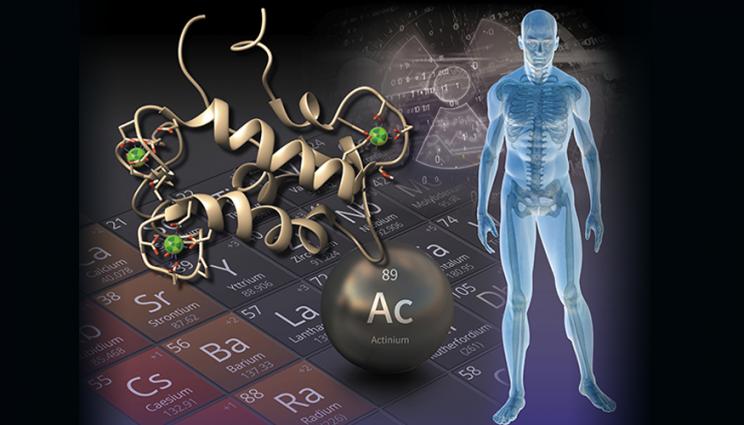
LLNL and Penn State researchers developed a new approach to study and purify medical isotopes, including actinium. (Image: Thomas Reason/LLNL)
Scientists at Lawrence Livermore National Laboratory and Pennsylvania State University have demonstrated that a natural protein found bonded to rare earth elements can be recovered and used as a tool to purify and effectively manage radioactive metals that show promise for cancer therapy and the detection of illicit nuclear activities.