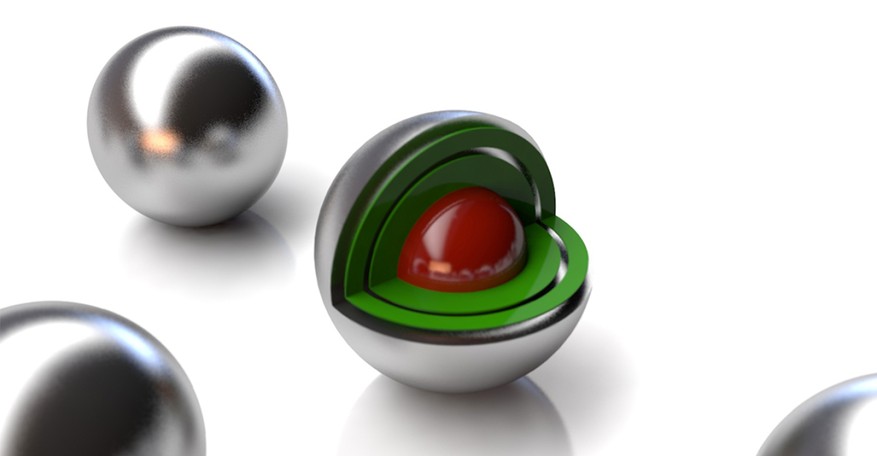
Together, LLNL and Ampera intend to enable the “resilient, cost-effective and sustainable manufacturing” of TRISO particle fuel for use in advanced nuclear reactors, the company said.
LLNL weighs in on thorium: Thorium offers potential advantages over uranium in nuclear fuel applications. As explained by LLNL, thorium “is abundant, produces a less persistent waste stream, and is more difficult to weaponize, adding a layer of proliferation resistance.”
Th-232 itself cannot sustain a fission chain reaction, but it decays into fissile uranium-233 when it absorbs a neutron, breeding its own fuel during operation, LLNL said.
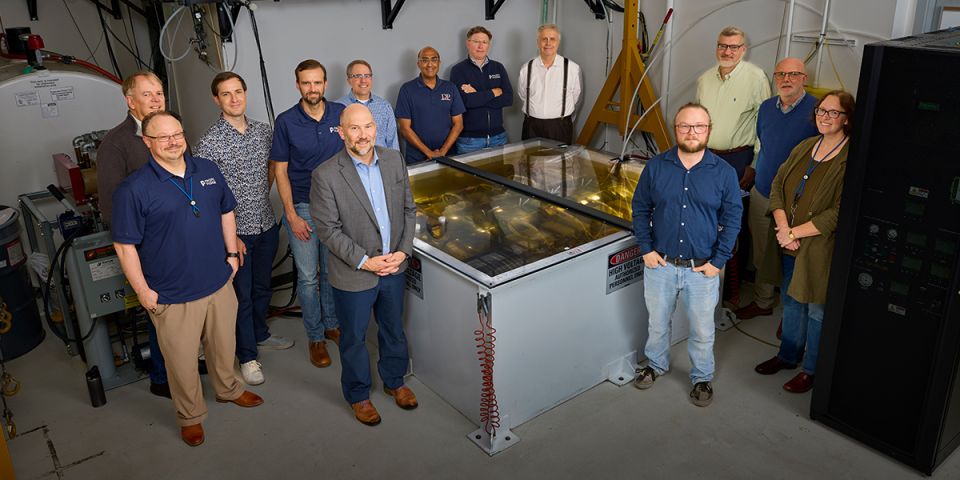
More about THUNDER: The THUNDER project builds on LLNL’s research in advanced materials and manufacturing being led by research engineer and principal investigator Viktor Sukhotskiy.
In a 2023 project called PowderJet, Sukhotskiy and his team created a new particle production prototype using “droplet-on-demand” liquid metal–jetting technology. Through this technology, highly spherical, size-controlled metallic particles can be produced.
According to Sukhotskiy, “Working with Ampera gives us the opportunity to apply joint expertise to a challenging nuclear fuel problem while also continuing to mature liquid metal jetting as an advanced manufacturing technology. That combination, balanced with scientific progress, technology transition, and national security relevance, is what makes the collaboration so exciting.”
Ampera founder and CEO Brian Matthews noted that LLNL “has a long and distinguished record of translating advanced science into technologies of national importance. Developing a scalable domestic capability to manufacture advanced nuclear fuel is fundamental to Ampera’s strategy. We believe this collaboration can accelerate the technical foundation required to vertically integrate our fuel supply, reduce cost and supply-chain risk, and support the deployment of our compact subcritical nuclear energy systems.”
Other news: The partnership with LLNL is the latest in a series of developments that Ampera has announced this summer. In June, the company announced that it had established a subsidiary in Australia to secure a thorium supply for its technology. In July, Ampera produced a full-scale, additively manufactured model of its nuclear core architecture—a spherical, monolithic gyroid structure that was 3D printed in silicon carbide.
Ampera was founded in 2025 and is based in Palm Beach Gardens, Fla.