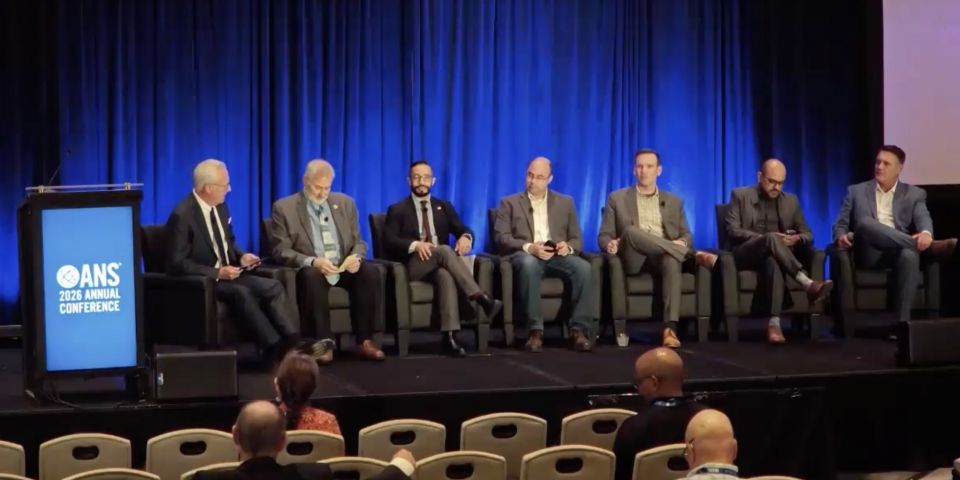
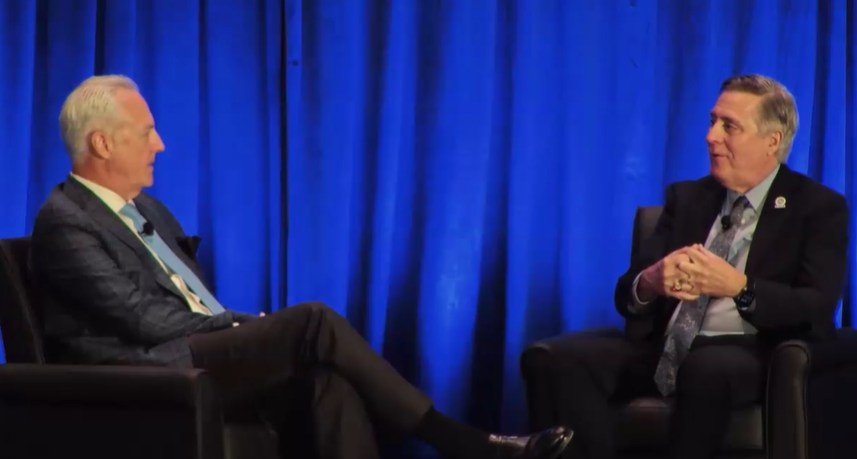
Starting off: Piercy kicked off the conversation by explaining that “four years ago, the conversation about nuclear in Utah looked very different than it does today. It was largely focused on the UAMPS Carbon Free Power Project, a project that ultimately fizzled due to a lack of local energy purchase commitments. But here we are today . . . and Utah is talking about advanced reactors, fuel cycle, workforce, manufacturing, even isotope production, and the broader nuclear life cycle. So, what changed, and why is the situation so different today?”
For Piercy, the complex answer to that multipronged question holds some important lessons for other states—and for the country as a whole. To answer them, he first turned to Lesofski to get some perspective from the state government.
Lesofski explained that the change in Utah reflects a broader shift on both the national and international stages, citing the war in Ukraine as a key driver bringing energy security to the forefront of many countries’ minds while electrification demands continue to rise.
From her perspective and that of Gov. Cox, nuclear is an “absolute nonnegotiable for the future of our state and our country,” she said, adding that Cox frequently says, “‘If you're serious about clean energy, you have to be serious about nuclear.’”
Diving deeper: After Hayter and Richardson gave overviews of their companies, Piercy asked the group for a rundown of all the currently progressing generation projects in the state. Aside from siting discussions that are underway with multiple potential partners, Lesofski mentioned the state’s plans to restart the currently shut-down, coal-fired Inner Mountain Power plant and the restart startup of Valar Atomics’ Ward-250 reactor project at Utah San Rafael Energy Lab.
Hayter gave a brief explainer on Blue Castle, a dormant nuclear power plant project in Green River, Utah, that was first developed almost 20 years ago. Originally, Blue Castle was slated to have two Westinghouse AP1000s, and some early siting work was accomplished at the site. For a variety of reasons—which have been previously chronicled on Newswire—the project failed to come to fruition.
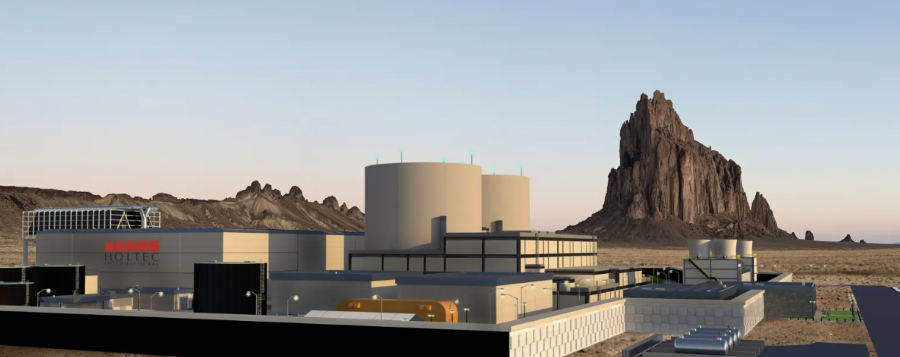
Now, Hayter is working to leverage the work already done on the project, from core boring to local engagement with the public, into the deployment of two to four Holtec SMR-300s. Hayter also mentioned the company’s ongoing work in Brigham City, where it is similarly planning to deploy SMR-300s, along with advanced manufacturing and workforce development projects. In a further development, he publicly revealed for the first time that the company is currently in engagement with two other communities in Utah, bringing its total project count in the state up to four. Outside of Utah, Hi Tech Solutions is also developing projects in Idaho and Wyoming.
Piercy then turned to Richardson to ask for his perspective on the importance of a Nuclear Energy Lifecycle Campus potentially coming to Utah. Richardson responded that if the promised growth in nuclear generation capacity comes to Utah, a broader infrastructure will need to be built to support it.
“It’s a great problem to have,” he said, but still one that needs to be solved. A Lifecycle Campus, to Richardson, represents an opportunity to create a “flywheel effect of investment, nuclear technology, nuclear supply chain, workforce development, and training,” all of which will go a long way in supporting new generation projects.
Learn more: To hear all of these subjects and more discussed in much greater detail, the full conversation is available on the ANS YouTube channel.