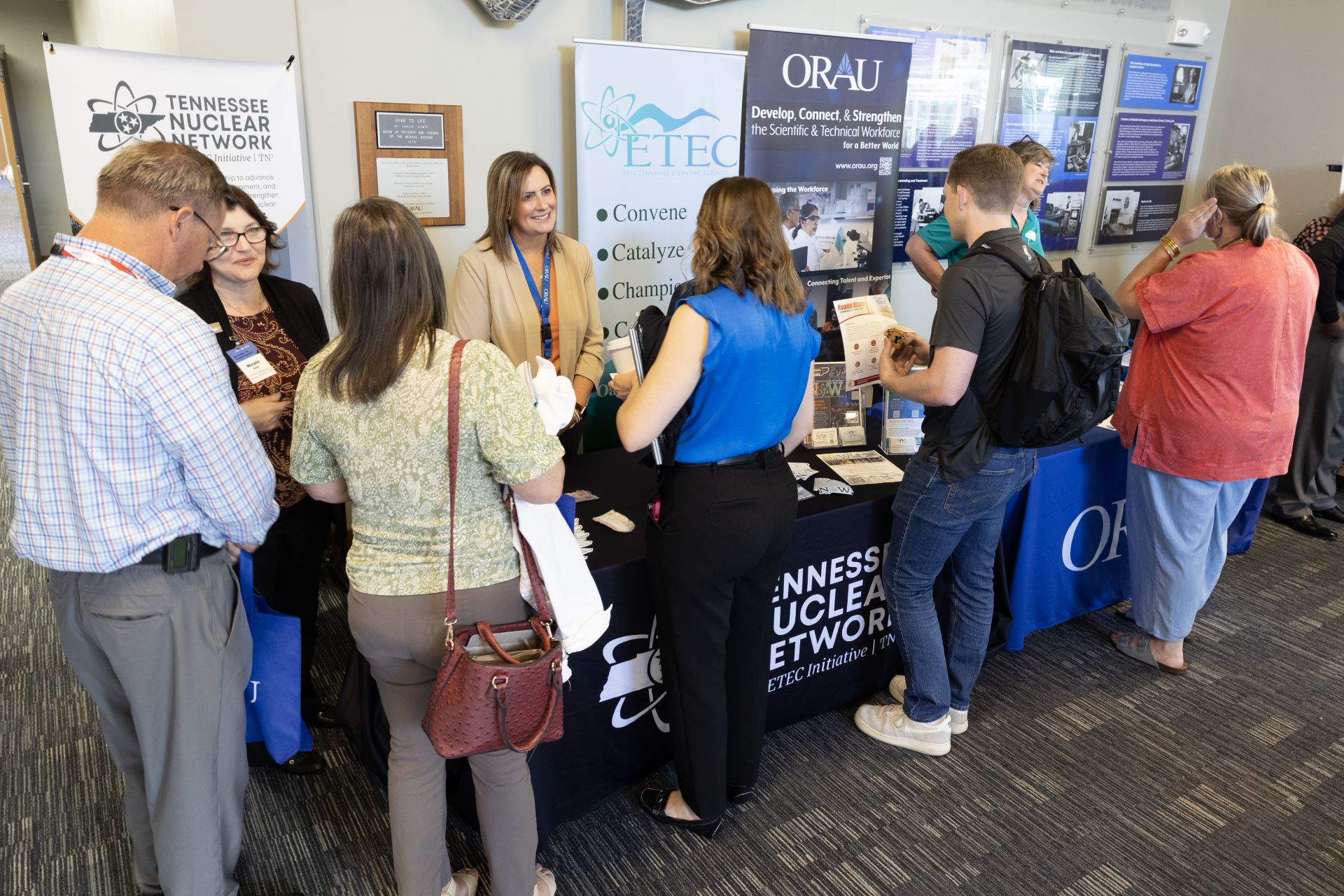
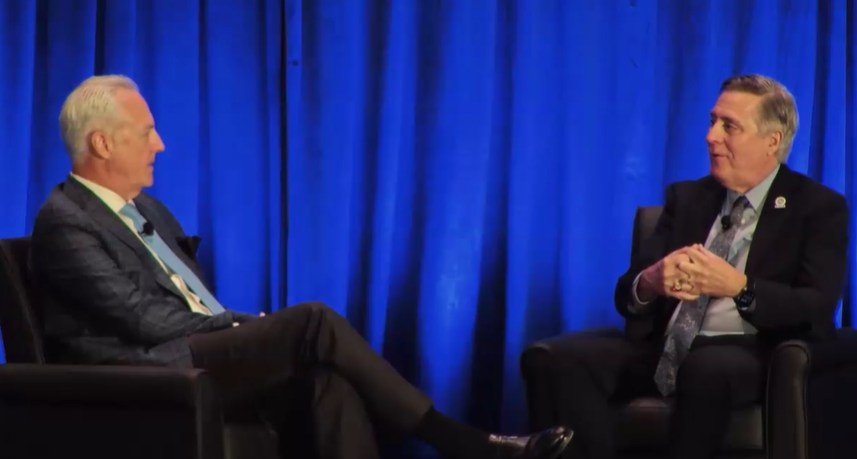
Leaders from industry, education, labor, government, workforce development, and community organizations attended the summit, where they were challenged to identify actions that their organizations could take within the next year to strengthen workforce pipelines and remove barriers to workforce entry. Although the meeting highlighted the nuclear workforce and advanced manufacturing issues in eastern Tennessee, its themes could be applicable throughout the United States.
On the agenda: Several keynote speakers and panelists stressed the need for coordinated, cooperative actions by industry, unions, educational institutions, and community organizations to create accessible, scalable career pathways. Workforce readiness, including in advanced nuclear technologies and infrastructure development, they stressed, will be the determining factors in the ability of Tennessee and the nation to meet their economic and energy potentials.
Among the topics discussed were the enhancement of nuclear career awareness, the strengthening of recruitment and support programs for veterans and emerging talent, the integration of nuclear career awareness into STEM and career and technical education programs, the fostering of community and industry engagement, the support of pipeline and pathway development, the establishment of apprenticeship programs, the engagement of government partners, the optimization of academic resources through collaboration, and the formation of interinstitutional partnerships.
ORAU president and CEO Meghan Millwood observed that the “scale of energy and nuclear development over the next decade will demand a skilled trades workforce that we do not currently have at the level we will need.” Calling the issued a “shared responsibility” among stakeholders, she said, “Our goal is not just conversation, it’s coordination. If we get this right, we don’t just build jobs, we create lasting careers, strengthen families, and secure the future of this region.”
Michelle Scott, acting deputy assistant secretary for strategic crosscuts at the Department of Energy’s Office of Nuclear Energy, said, “People are, by far, the foundation of how we are going to support the nuclear renaissance” when it comes to reaching the country’s goal of 400 gigawatts of nuclear capacity by 2050. She added that the nuclear industry anticipates the creation of 375,000 new jobs throughout the United States from the deployment of advanced nuclear reactors.
In Oak Ridge alone, according to speakers and panelists, thousands of workers are needed right now to meet the current demands of the nuclear sector. U.S. Rep. Chuck Fleischmann (R., Tenn), who represents the district that includes Oak Ridge, emphasized the urgency of this “once-in-a-generation opportunity” to expand U.S. energy capacity with nuclear power while simultaneously strengthening U.S. national security and economic competitiveness.
About ORAU: ORAU is a nonprofit with a consortium comprising more than 170 academic and educational institutions that manages the Oak Ridge Institute for Science and Education on behalf of the DOE.