New X-ray imaging for ITER-supporting tokamaks
As researchers continue to seek ways to better understand the plasma inside fusion machines to fully harness fusion energy, Princeton Plasma Physics Laboratory is leading a project to provide new X-ray imaging systems to two international tokamak projects: WEST, in southern France, and JT-60SA, in Japan—both of which are designed to support the development of ITER.
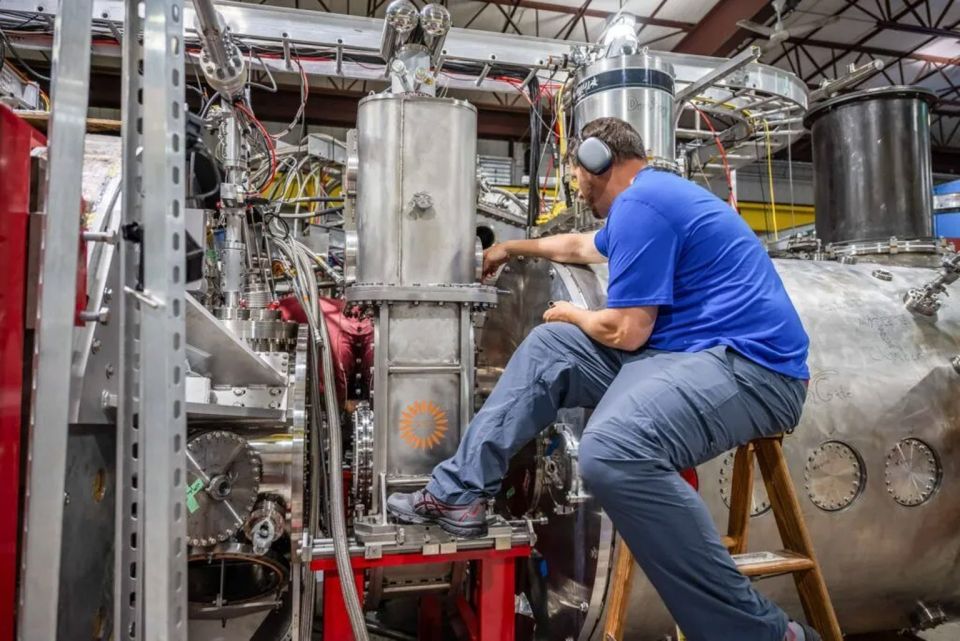
PPPL is making X-ray imaging crystal spectrometer (XICS) systems for both tokamaks. XICS measures X-rays emitted by plasma to determine critical information, including temperature, speed, and the direction of flow of the plasma particles, as well as the density of particles that can cool the plasma, which must be carefully monitored to achieve maximum efficiency. These measurements are essential to keeping the fusion reaction stable.
According to PPPL, XICS’s advanced calibration system consistently provides highly accurate measurements, whereas the accuracy of comparable systems tends to be vulnerable to temperature shifts.
PPPL, in partnership with the Massachusetts Institute of Technology, will be adding two new XICS systems to WEST, which broke the record for plasma duration for a tokamak just over one year ago.
WEST is a magnetic confinement fusion tokamak operated by the French Alternative Energies and Atomic Energy Commission in partnership with the EUROfusion consortium. It has been designed to obtain plasmas with characteristics that are similar to those of ITER, serving to accelerate the development of ITER’s divertor.
It already has a system that looks through the center of the plasma, and the two XICS systems will target the top and bottom of the plasma, providing researchers with a view of the plasma from more angles and with greater precision.
“If you think of the plasma like a human body, if you only look at the belly button, then you don’t know what’s happening with the head or the feet,” said PPPL’s head of advanced projects, Luis Delgado-Aparicio, who is leading the project. “Now we will be completing the picture, so we can study the entire body.”
According to PPPL, the two off-axis XICS systems will show how temperature, rotation, and tungsten impurity levels vary across the entire plasma—from core to edge.
“This is crucial information for all heat, momentum, and impurity transport studies,” said John Rice, a senior research scientist at MIT’s Plasma Science and Fusion Center.
PPPL has also designed an XICS system for the world’s largest operational tokamak, JT-60SA, which is operated by Japan’s National Institutes for Quantum Science and Technology in collaboration with Europe’s Fusion for Energy.
JT-60SA’s XICS system will be installed and tested over the next two years, with the first data expected in September 2026.
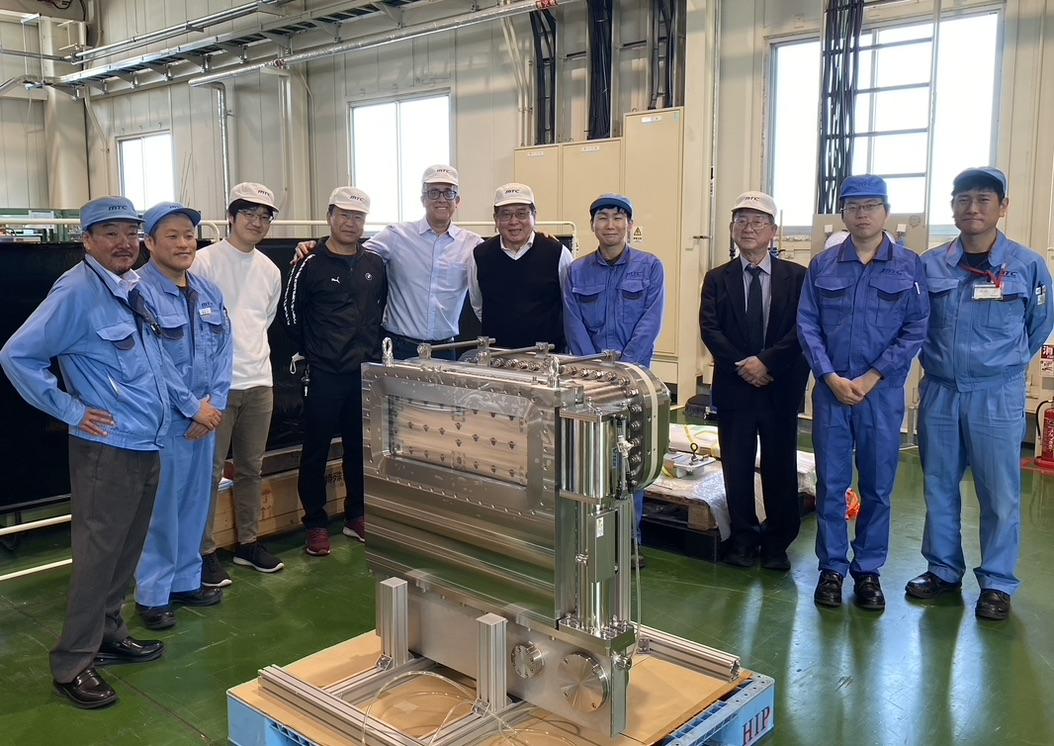
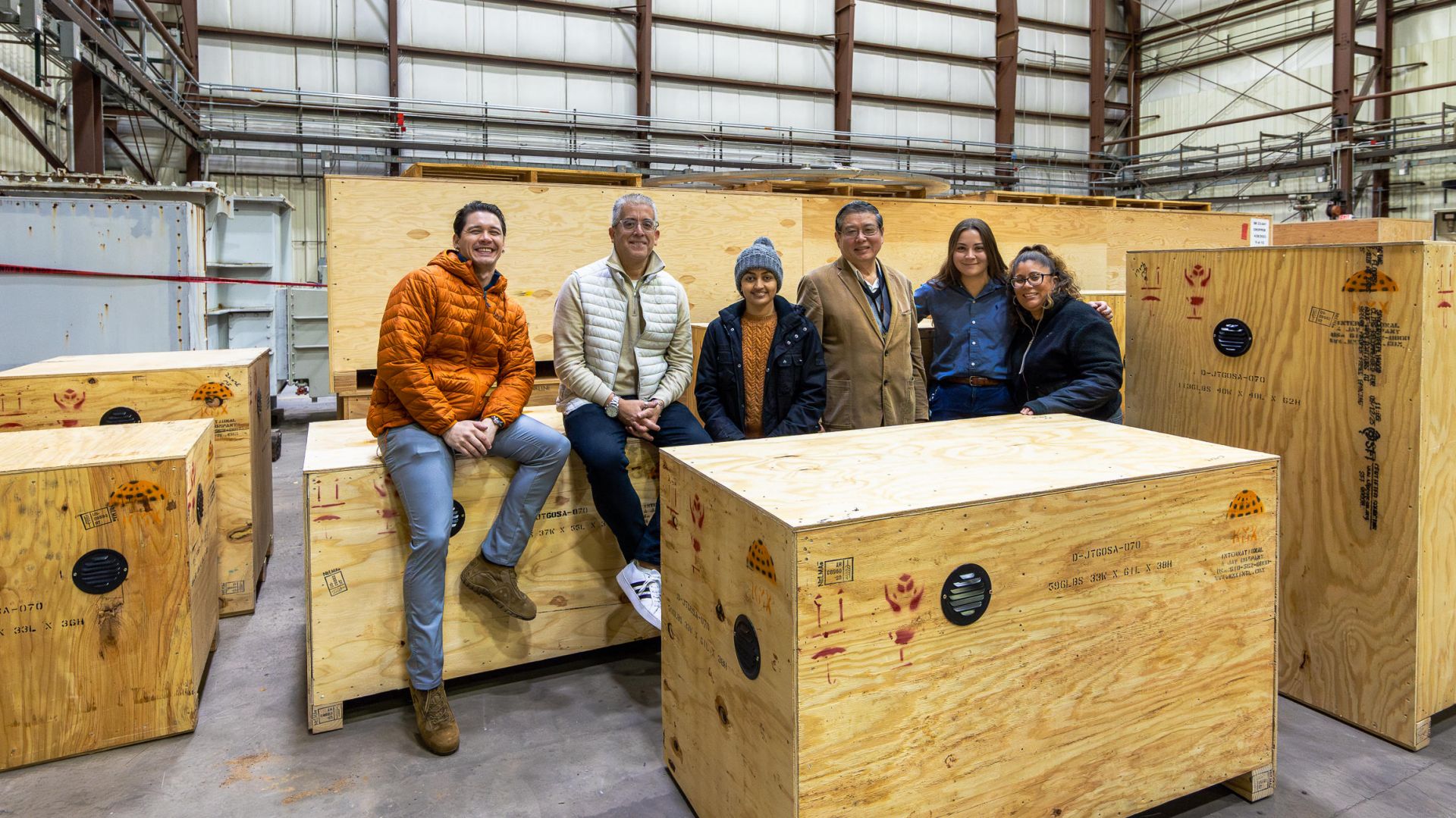
The valve that will connect the XICS system to the JT-60SA is manufactured by Metal Technologies Company of Japan. (Photo: Luis F. Delgado-Aparicio/PPPL)
“This project ties together what we learn on WEST and JT-60SA and feeds it directly into PPPL’s broader tokamak program,” said Rajesh Maingi, head of tokamak experimental science at PPPL. “It’s a model for how U.S. laboratories can contribute high-impact diagnostics to international facilities.”
Advancing U.S. fusion objectives: “This investment marks a critical step toward advancing our U.S. Fusion Science & Technology Roadmap and the Genesis Mission,” said Jean Paul Allain, director of the Office of Fusion at DOE. “The high-quality data generated will be invaluable for model validation and verification, while also advancing our efforts to converge artificial intelligence and fusion data, supporting the DOE’s Genesis Mission through the AI-Fusion Digital Convergence Platform.”