-3 2x1.jpg)
State news: Microreactors, legislation, executive orders, and more

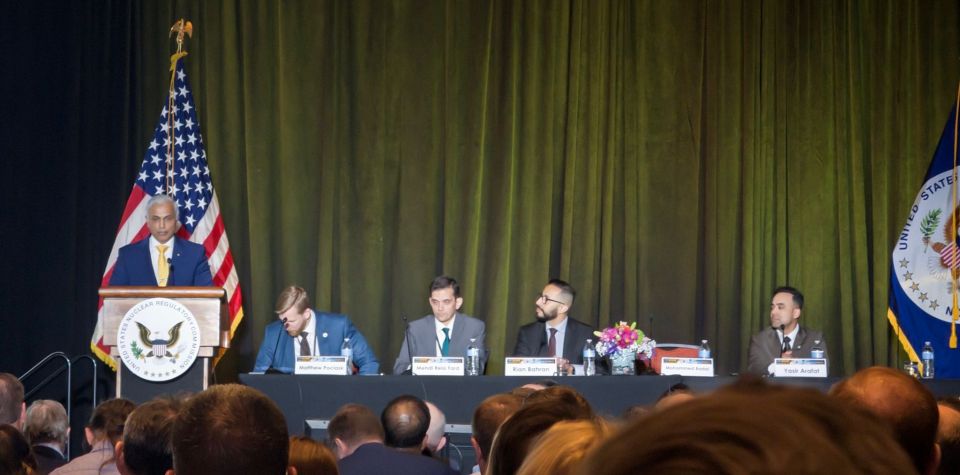
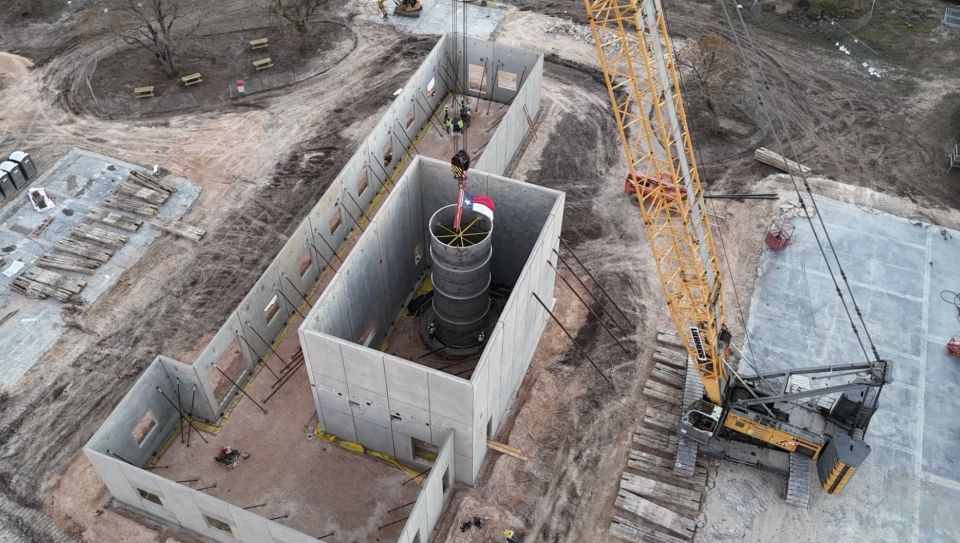
Discussions and actions on nuclear energy have penetrated several state capitol buildings, congressional hearings, and industry gatherings across the United States this month, including in Alaska, Connecticut, Louisiana, Massachusetts, Minnesota, and New York.
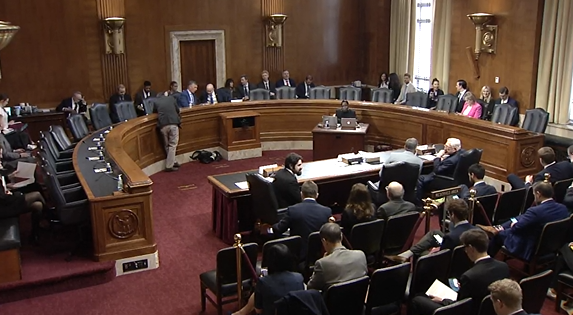
Alaska: The March 19 U.S. Senate Energy and Natural Resources (ENR) Committee hearing focused on the Department of Energy’s nuclear energy expansion efforts, ranging from advanced reactors to fuel fabrication.
At the hearing, Sen. Lisa Murkowski (R., Alaska) said microreactors could benefit her state immensely, whether at military installations or in isolated communities. Murkowski reaffirmed her interest in U.S. Air Force plans to deploy a microreactor at Eielson Air Force Base. Those plans date back to 2018 but could be aided by the DOE’s Reactor Pilot Program.
DOE Assistant Secretary for Nuclear Energy Theodore Garrish agreed with the Alaska lawmaker.
“These are perfect products for Alaska,” he said. “The thing we really need to do is look for opportunities in Alaska to demonstrate them. In these remote areas, this is really the answer a lot of communities are looking for.”
Connecticut: The time to act is now if Connecticut wants to expand nuclear energy in the long term, Department of Energy and Environmental Protection Commissioner Katie Dykes said at a March 5 public hearing of the state legislature’s Energy and Technology Committee.
“It is a long journey, but we have to start somewhere because we will need new power sources, particularly as we get later into the next decade,” she said.
The commissioner also voiced her support of H.B. 5336, which would require the state to study labor and education demands in the advanced nuclear industry workforce.
“It is important for Connecticut to have the engineers, technicians, construction workers, and operators needed to safely deploy and sustain advanced nuclear and other clean energy technologies while maximizing in-state economic benefits,” she testified.
The state agency is hosting a series of informational sessions to inform the public about nuclear technology and capacity; Dykes said they have hosted two of six meetings already.
Dykes mentioned the year 2035, which happens to be when the extended operating license for Millstone-2—one of two pressurized water reactors at Connecticut’s only nuclear power plant—expires. The license for Millstone-3 expires in 2045.
Louisiana: This week at the energy-focused CERAWeek conference in Houston, Louisiana Gov. Jeff Landry announced the launch of the state’s Nuclear Strategic Framework and a $45 million federal funding renewal for its Future Use of Energy in Louisiana (FUEL) initiative.
“From advancing nuclear development to scaling new technologies, we have the resources, the infrastructure, and the workforce to power America’s future while creating opportunity here at home,” Landry said.
The framework is a joint effort between Louisiana Economic Development (LED) and the Louisiana Department of Conservation and Energy. According to an LED press release, the framework prioritizes four areas for development:
Nuclear manufacturing and component production.
Expansion of nuclear generation.
Uranium fuel conversion.
Fuel enrichment capabilities.
Massachusetts: Gov. Maura Healey signed an executive order on March 16 committing to bring 10 GW of new power capacity on line, under contract, or under development by the end of 2035. The order said the state has the “opportunity to leverage relatively untapped energy resources,” including nuclear fission and fusion technologies. The order, though, did not explicitly list how much of that added capacity is expected to come from nuclear sources.
Among the directives listed in the executive order, Healey said Massachusetts must take steps to support nuclear energy, such as to “expedite existing and planned initiatives to sustain the region’s existing nuclear generation, advance the recommendations made in the Advanced Nuclear and Fusion Energy Roadmap Report, and work with other New England states and Canadian partners.”
Minnesota: The bipartisan coalition Minnesota Nuclear Energy Alliance urges state lawmakers to repeal Minnesota’s long-standing moratorium on new nuclear construction.
At a March 17 Nuclear Energy Education Day event at the state capitol, several people spoke in support of lifting the moratorium, especially as a 2023 state law mandates Minnesota be carbon free by 2040.
“We have just 14 years now, under the 2040 bill, to build a carbon-free power grid, yet at the same time, be sure that it provides reliable power under all weather conditions and at all times of the day,” said Minnesota Rural Electric Association CEO Darrick Moe.
The Minnesota Nuclear Energy Alliance is a group of more than 60 organizations representing utilities, electric cooperatives, labor unions, local governments, and other interested parties.
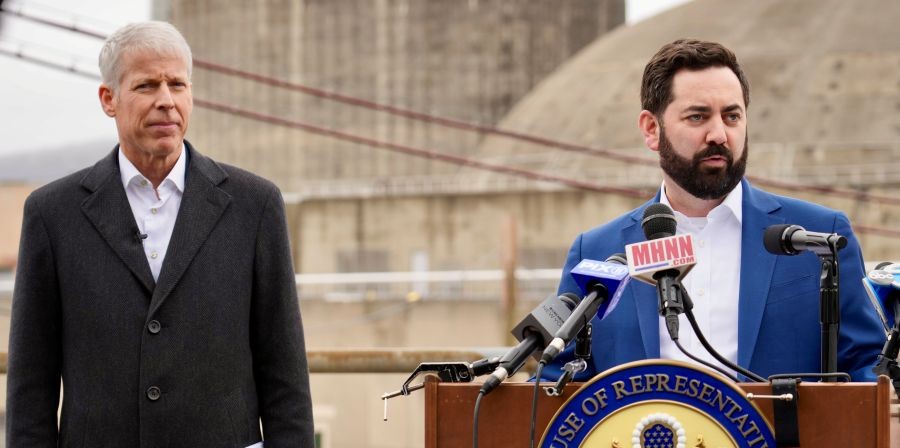
New York: Multiple news outlets have reported that Gov. Kathy Hochul opposes the reopening of the Indian Point power plant, which closed in 2021. Discussions on the plant’s fate resurfaced in March after DOE Secretary Chris Wright and U.S. Rep. Mike Lawler (R., N.Y.) gathered at the plant and called for its reopening.
Hochul’s opposition is in contrast to her call to develop 5 GW of new nuclear power in the state, including at least 1 GW in upstate New York. According to the New York Power Authority, eight upstate communities and 23 developers have expressed interest in developing advanced nuclear reactors in upstate New York following a first round of solicitations last fall.
However, Politico reported last week that state Sen. Kevin Parker (D., 21st district) plans to back a two-year moratorium on new nuclear energy.
“We’re going to put the bill in and hope we can spark a healthy debate. I’m concerned about the safety and health of surrounding communities. I’m concerned about the cost,” said Parker, who chairs the state’s Senate Energy and Telecommunications Committee.