-3 2x1.jpg)
Oregon bill would create new feasibility study
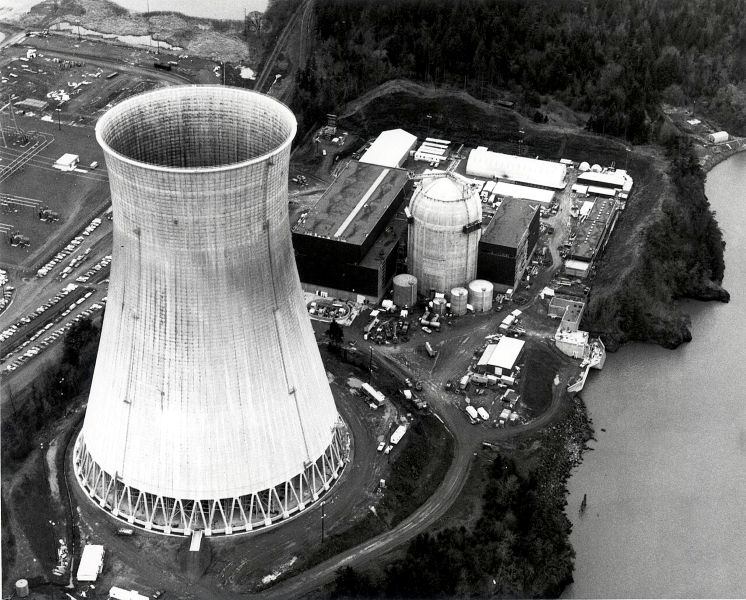
Historical photo of Trojan nuclear power plant, ca. 1974. (Photo: DOE)
As concerns over growing energy needs persist, yet another state is reconsidering nuclear power. A piece of legislation is currently progressing through Oregon’s legislature that would direct the Oregon Department of Energy (ODOE) to conduct a study to assess the feasibility of deploying new power reactors in the state.
State background: Oregon hasn’t operated a nuclear power plant since the shutdown of Trojan, a 1,095-MWe pressurized water reactor that came on line in 1976. Four years later, Ballot Measure 7 was approved by Oregon voters by a slim majority. That measure required that any nuclear power plant certification in the state have both voter approval and the existence of a federally licensed permanent disposal facility for nuclear waste. Because no such disposal facility exists, Oregon maintains an effective moratorium on new development.
Trojan was shuttered in 1992 after needed repairs were deemed too costly by owner Pacific Gas & Electric. With new permitting restrictions in place per Ballot Measure 7, no nuclear power plants have been built in the state since.
In the ensuing years, there have been several unsuccessful attempts by some in the public and the legislature to bring nuclear power back to Oregon, including the below in 2025 alone:
A new ballot measure was submitted to repeal the requirements established by Ballot Measure 7. However, this measure has not been added to a ballot, and there are currently no indications that it will be.
At least 10 bills have been introduced in the State House and Senate, though none ultimately passed. Notable highlights included S.B. 215, which would have repealed elements of the effective moratorium; H.B. 2410, which would have created an exception to allow a small modular reactor demonstration project to be built in Umatilla County; and H.B. 2038, which would have directed the ODOE to conduct a nuclear feasibility study.
Bill details: H.B. 4046 advances many of the same goals as last year’s H.B. 2038, though the new bill is significantly more detailed. It directs the ODOE to conduct a study examining the landscape of reactor designs; the feasibility of building advanced nuclear reactors in Oregon; and the time, cost, safety considerations, risks, benefits, financing and ownership models, and existing roadblocks associated with a new project.
Notably, the legislation takes a vague position on the definition of advanced reactor, saying that it can include large, small, and micro sizes, along with water, gas, salt, or other coolants. Perhaps as an acknowledgment of this vagueness, the bill also directs the ODOE to generate terminology recommendations for referencing advanced reactors in future statutes or regulations.
After being first read on February 2 in the Oregon House, the bill was referred to the House Committee on Climate, Energy, and Environment. After being adopted there, it was referred to the Ways and Means Committee on February 17.
One of the bill’s chief sponsors, Rep. Gerald “Boomer” Wright (R., 9th Dist.), reportedly said that “nuclear energy has the potential to be a significant source of clean energy here in Oregon,” and that this siting study will “help the public and policymakers have informed conversations about whether nuclear could be a viable and reasonable compliment [sic] to renewables in our state.”