Report weighs prospects for aging High Flux Isotope Reactor

October 5, 2020, 7:00AMANS Nuclear Cafe
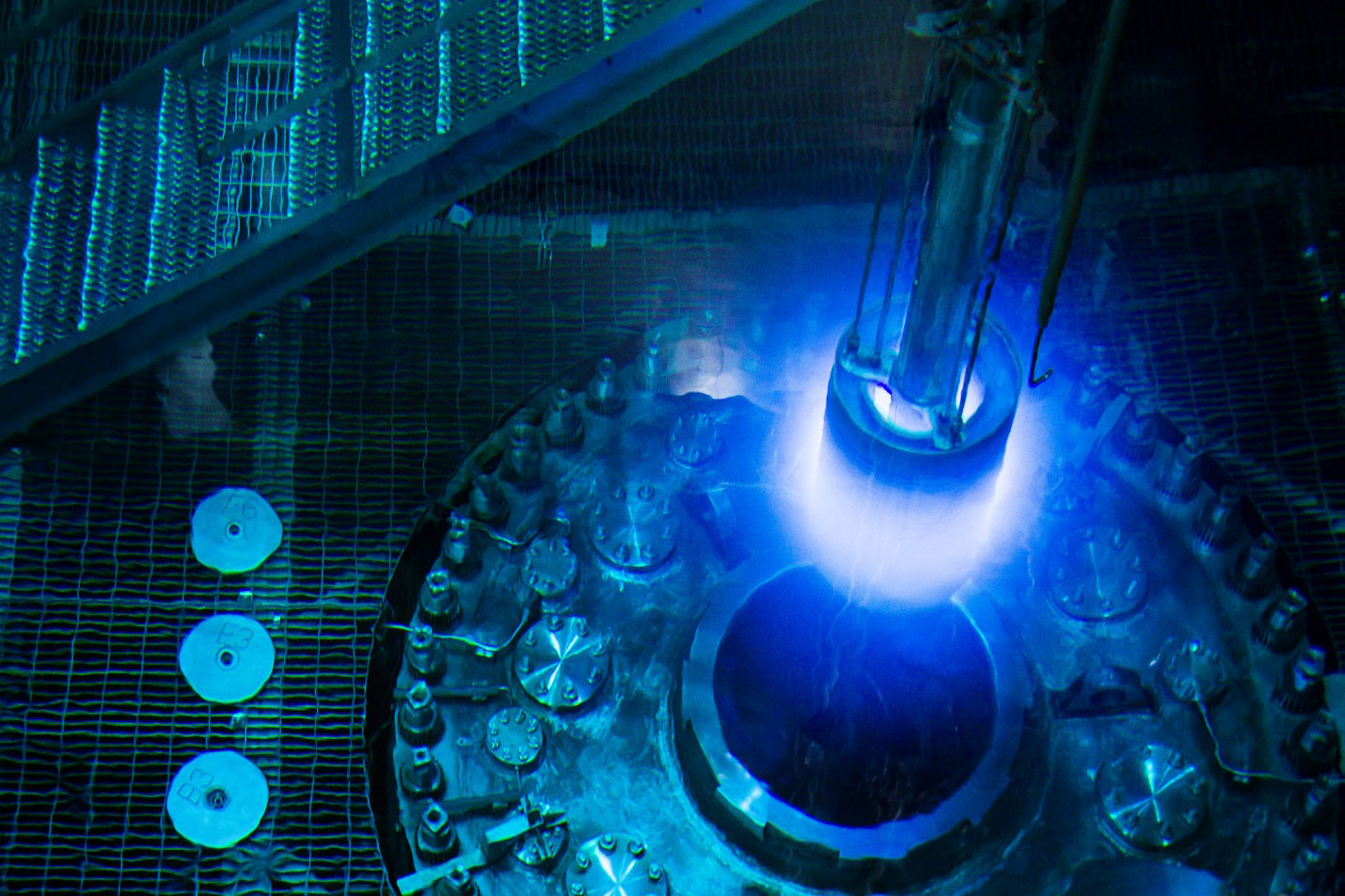
Routine refueling of the HFIR in July 2015. Photo: Genevieve Martin/ORNL

This summer, the Department of Energy’s Basic Energy Sciences Advisory Committee (BESAC) completed a report, The Scientific Justification for a U.S. Domestic High-Performance Reactor-Based Research Facility, that recommends the DOE begin preparing to replace the pressure vessel of the High Flux Isotope Reactor (HFIR) at Oak Ridge National Laboratory and to convert the facility to use low-enriched uranium fuel. It also recommends that work begin that could lead to a new research reactor. An article published on the American Institute of Physics website summarizes the report, which was requested by the DOE in 2019.

HFIR is an important source of medical radioisotopes, including actinium-227, and is one of two U.S. government reactors used for neutron scattering research. First criticality was achieved in August 1965, and while HFIR could potentially operate for several more decades without a major renovation, the report points to an opportunity to simultaneously replace its pressure vessel, implement upgrades, and convert it from the use of high-enriched uranium to low-enriched uranium fuel.

ORNL recently completed a study, which is included as an appendix to the report, that concludes that HFIR can be converted to use uranium silicide dispersion fuel that would fall just under the classification of high-assay low-enriched uranium. The BESAC report endorsed that proposal.


Related Articles

Congress passes new nuclear funding

January 20, 2026, 3:37PMNuclear News

On January 15, in an 82–14 vote, the U.S. Senate passed an Energy and Water Development appropriations bill to fund the U.S. Department of Energy for fiscal year 2026 as part of a broader...

INL to host Center for Used Fuel Research

January 15, 2026, 12:35PMNuclear News

The Department of Energy’s Office of Nuclear Energy announced the establishment of the Center for Used Fuel Research (CUFR), to be hosted at the Idaho National Laboratory and focused on...