Ageing nuclear assets don't have to mean higher maintenance costs. Discover how HVTS® cladding helps extend the life of PWR secondary system components, reduce outage duration, support ALARA principles, and protect against FAC, erosion-corrosion and other degradation mechanisms. Learn more.
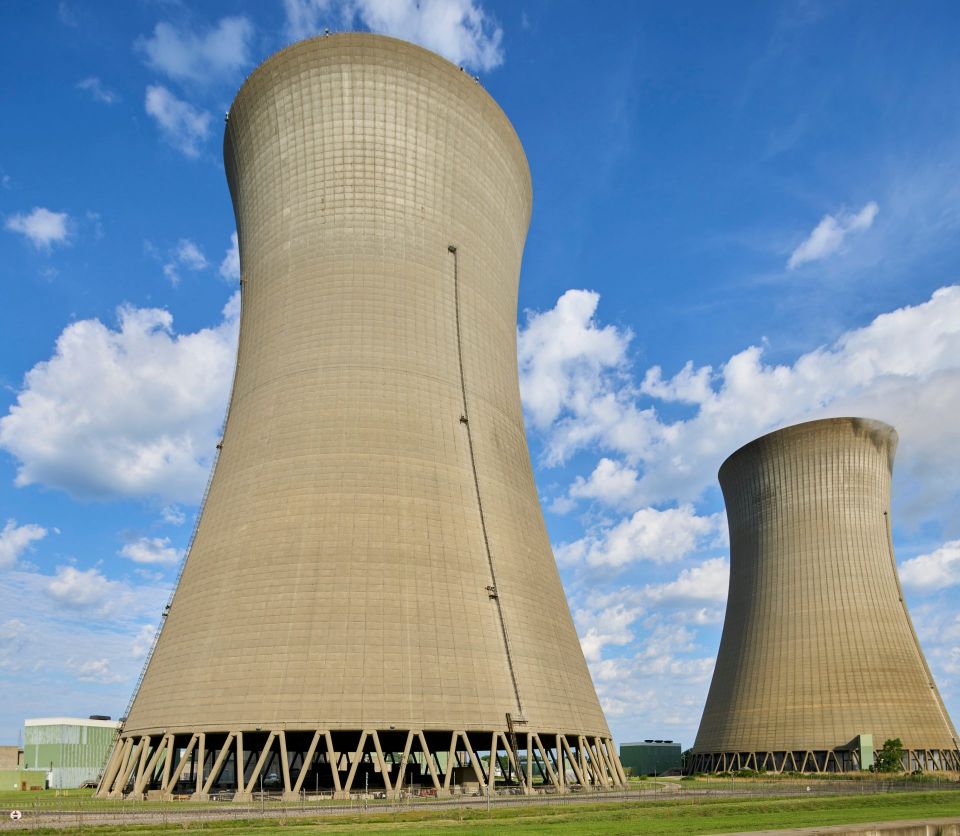
The Davis-Besse nuclear power plant, operated by FirstEnergy Nuclear Operating Company, is located on the shores of Lake Erie about 20 miles east of Toledo, Ohio. The 908-MWe pressurized water reactor came online on July 31, 1978.
On October 1, 2011, the plant shut down so that a new reactor vessel head could be installed. During preparations for installation, FirstEnergy identified cracks in the outermost shield building, the concrete structure that protects the steel reactor containment vessel from adverse outside conditions. The U.S. Nuclear Regulatory Commission has conducted numerous inspections of the shield building and determined that the cracks do not affect the integrity of the shield building, and that the plant is safe for continued operation.
This interesting video released by the NRC takes viewers inside Davis-Besse to see the installation of the new reactor head, and includes interviews with NRC inspectors who oversaw its installation and testing, and conducted the safety reviews of the reactor shield building.
FirstEnergy recently opened a $6 million advanced Emergency Operations Facility dedicated for Davis-Besse emergency training and exercises.
Davis-Besse is under consideration for a 20-year operating license renewal from the NRC. Despite the NRC's determination that the plant is safe for continued operation, the cracks in the shield building concrete remain a point of contention in regard to the license renewal, and the Atomic Safety and Licensing Board will hear oral arguments November 5-6 by intervenors on the issue.
The Nuclear Regulatory Commission’s proposed rule on modernizing reactor licensing, safety oversight, and siting practices ran over 550 pages when it was unveiled in July. To address the...
Within the past month, the Nuclear Regulatory Commission has signed memorandums of understanding to increase its cooperation with two U.S. maritime organizations. In late June, the NRC signed...
Make no mistake about it: the Nuclear Regulatory Commission’s proposed rulemaking on reactor licensing, safety oversight, and siting practices is expansive. When it was unveiled on July 1,...
A proposed rule from the Nuclear Regulatory Commission would update radiation protection regulations and remove “as low as reasonably achievable” (ALARA) language without changing specific...
On top of the many celebrations planned for America’s 250th birthday, the Trump administration wants to mark a nuclear milestone as well: achieving criticality for at least three advanced...
The Department of Energy announced the completion of a proof-of-concept demonstration of the use of Everstar’s AI tool to generate chapter 5 of an NRC license application from preliminary...
The Nuclear Regulatory Commission has taken the next step toward developing fusion regulations, announcing the opening of a 90-day comment period, ending May 27, on a proposed regulatory...
The Nuclear Regulatory Commission announced yesterday that it is launching a significant reorganization to streamline decision making, consolidate functions, and align with national goals for...
With last Friday's announcement regarding its vision for nuclear energy, Meta has entered into 20-year power purchase agreements (PPAs) for more than 2,600 MW of electricity from a combination...
WASHINGTON, D.C. — The American Nuclear Society (ANS) applauds the U.S. Senate’s confirmation of Douglas Weaver to serve as a commissioner of the U.S. Nuclear Regulatory Commission (NRC):...