-3 2x1.jpg)
NRC looks to leverage previous approvals for large LWRs
During this time of resurging interest in nuclear power, many conversations have centered on one fundamental problem: Electricity is needed now, but nuclear projects (in recent decades) have taken many years to get permitted and built.
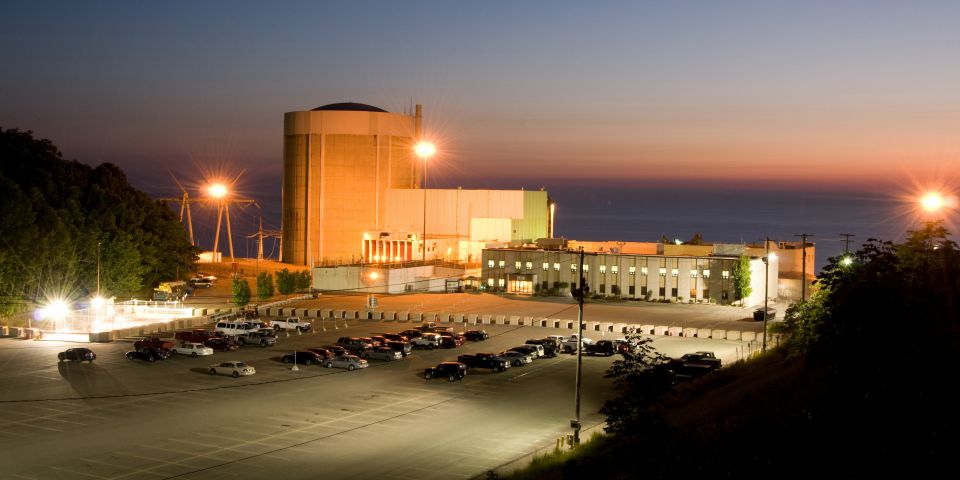
In the past few years, a bevy of new strategies have been pursued to fix this problem. Workforce programs that seek to laterally transition skilled people from other industries, plans to reuse the transmission infrastructure at shuttered coal sites, efforts to restart plants like Palisades or Duane Arnold, new reactor designs that build on the legacy of research done in the early days of atomic power—all of these plans share a common throughline: leveraging work already done instead of starting over from square one to get new plants designed and built.
Of course, building is only part of the story. Regulatory review can cause significant delays in project timelines. In recent years, spurred first by the ADVANCE Act and then by Executive Order 14300, the Nuclear Regulatory Commission has initiated a variety of reforms to simplify the U.S. regulatory landscape without compromising its safety mission. Recent examples include the NRC simplifying its Differing Views Programs, developing robust collaborative pathways with other federal agencies, and more broadly reexamining and overhauling its rules.
Now, the NRC has announced a new policy issue that looks to combine these two trends, expediting licensing and leveraging work already done by revisiting previously issued combined licenses (COLs), early site permits (ESPs), and design certifications (DCs).
Brief background: By issuing a DC, the NRC approves the design of a nuclear power plant independent of an application to construct or operate a specific plant. Currently, there are five active DCs: General Electric’s ABWR, Westinghouse’s AP1000, Korea Hydro and Nuclear Power’s APR1400, GE Hitachi’s ESBWR, and NuScale’s US600. Historically, DCs have been valid for 15 years before renewal—and that renewal process took several years for the AP1000. However, in 2025, the NRC amended its regulations to extend the DC duration to 40 years for both current and future DCs.
By issuing an ESP, the NRC approves a site for a nuclear facility independent of an application for a construction permit (CP) or COL. ESPs remain valid for 10–20 years and also can be renewed.
By issuing a COL, the NRC authorizes the applicant to construct and operate a nuclear power plant. COLs are valid for 40 years and can be renewed. Often, but not necessarily, COL applications (COLAs) reference and build on previously granted ESPs or DCs.
The announcement: The NRC’s new policy issue, “NRC Regulatory Pathways and Licensing Readiness for Near Term Large Light-Water Reactor Deployment,” provides an overview of the commission’s plans to streamline both the DC amendment process for the AP1000 and COL application reviews that involve an approved plant design, with a particular “emphasis on licensing activities related to the AP1000.”
According to the document, “The NRC has previously issued multiple [COLs] and [ESPs] for large LWRs. In addition, the NRC has previously reviewed and certified by rule four large LWR designs . . . . These various decisions can be leveraged for future licensing and construction of a large LWR.”
AP1000 focus: The NRC clearly indicates throughout the document that its efforts will be focused on new AP1000 deployments. (Not explicitly mentioned here but extremely relevant to this discussion is Westinghouse’s ambitious plan to deploy a U.S. fleet of 10 new AP1000s.)
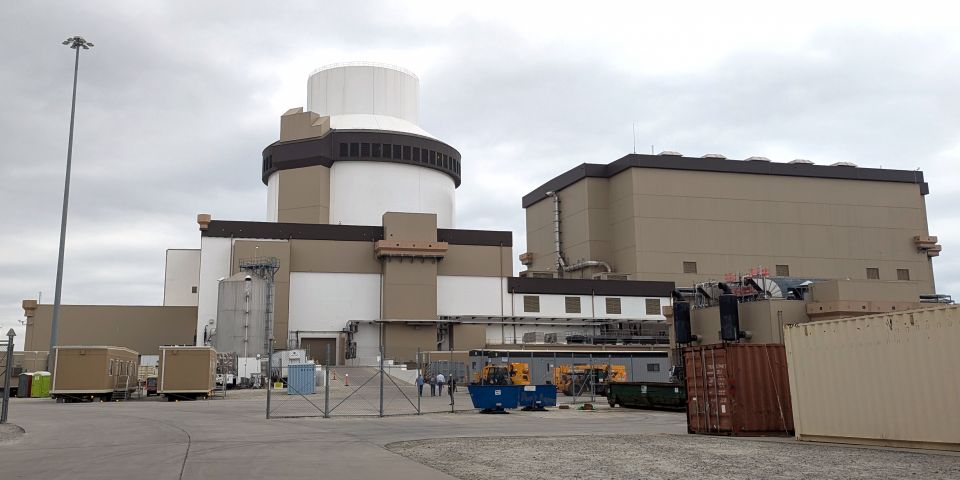
So far, two AP1000s have been deployed in the United States: Vogtle-3 and -4 in Georgia in 2023 and 2024, respectively. While the AP1000 DC remains valid, it is currently outdated. The lessons learned by both Westinghouse and the NRC from the Vogtle project will be invaluable in reducing both cost and time demands for future deployments. However, those lessons—which frequently took the form of NRC-approved license amendments—are yet to be officially incorporated into a revised AP1000 design control document (DCD). (A DCD is an extremely extensive set of documents, numbering in thousands of pages, that details every aspect of a plant’s design.)
The NRC anticipates that Westinghouse will soon submit a DCD revision incorporating the lessons learned from Vogtle and further anticipates new interest in AP1000 construction after this revision is implemented.
With these factors in mind, the commission plans to approve a new AP1000 DC amendment that incorporates “few, if any, new changes because the purpose of the amendment is to reflect the as-built condition of the Vogtle units.”
The NRC also anticipates “that licensing reviews of future applications referencing the updated AP1000 DCD will demonstrate the efficiencies that can be achieved for ‘Nth-of-a-kind’ large LWR licensing activities.”
Leveraging ESPs and COLs: There is a complex list of NRC licensing activities at as-of-now unbuilt sites that includes the following:
Two active AP1000 COLs for four total units.
Two active ESBWR COLs for two total units.
Two terminated AP1000 COLs for four total units.
One terminated ABWR COL for two total units.
One suspended US-APWR COLA for two total units.
One suspended AP1000 COLA for two total units.
Four withdrawn US-EPR COLAs for four total units.
Three withdrawn ESBWR COLAs for four total units.
One withdrawn AP1000 COLA for two total units.
And six currently active ESPs.
To leverage these divergent activities, the NRC has established four categories of future licensing pathways. Category one deals with issued COLs—both active and terminated—where construction has not been initiated. In this category, the licensee will have the opportunity to begin construction on its project after some engagement with the NRC. Crucially, licensees also will have the opportunity to submit a license amendment request changing which large-scale LWR design they plan to build at their site.
Category two pertains to sites with an issued COL where construction began but was later suspended. This category only applies to V.C. Summer-2 and -3. Here, the NRC states that if the applicant wishes to complete the AP1000s at the site, they must submit a new COLA that references the facility’s current status.
Category three pertains to COLAs that were withdrawn or suspended prior to issuance. In this case, an applicant will submit a new COLA under 10 CFR Part 52 building on their previously submitted materials.
Category four pertains to sites with an ESP but no COLA. Here, the NRC recommends that an applicant leverage an already certified plant design in their COLA and says that site-specific reviews will be limited “because the NRC staff will rely on the findings and conclusions from the existing ESP.”
Finally, in addition to this work to expedite licensing, this new document also looks at expediting construction, identifying opportunities for enabling applicants “to build or install structures, systems, and components for which construction does not have a reasonable nexus to safety” prior to the issuance of a COL or CP.
In all, the NRC aims for these wide-ranging changes to “maximize the use of experience from previous reviews to improve licensing efficiency” while still meeting all statutory and regulatory requirements.