The amendments include changes to the definitions of “fusion machine,” “particle accelerator,” and “byproduct material,” as well as changes to requirements related to content-of-application, recordkeeping, inspection, intruder assessment for waste disposal sites, and environmental reports.
The intention is to provide a technology-neutral framework that covers all fusion approaches currently under development. In a rapidly evolving landscape, the NRC may impose case-by-case requirements, if needed, for fusion machines with unanticipated safety and security elements.
Background: This is the continuation of a process that began in 2009, when the NRC stated that it had regulatory jurisdiction over commercial fusion energy devices. With about 30 U.S. fusion companies now in play and some fusion machine concepts aiming for commercial deployment within the next decade, the NRC is aiming to provide a framework that offers consistency and expediency. The 2019 Nuclear Energy Innovation and Modernization Act (NEIMA) required the NRC to “establish a technology-inclusive regulatory framework for optional use by commercial advanced nuclear reactor applicants by December 31, 2027,” and included fusion in the definition of advanced nuclear reactors.
Leading the charge: While the NRC finalizes its regulatory changes, fusion is moving forward through Agreement States. Commonwealth Fusion Systems, Helion Energy, and Type One Energy are in various stages of developing fusion power facilities in Virginia, Washington, and Tennessee, respectively, having identified specific sites for future fusion power plants.
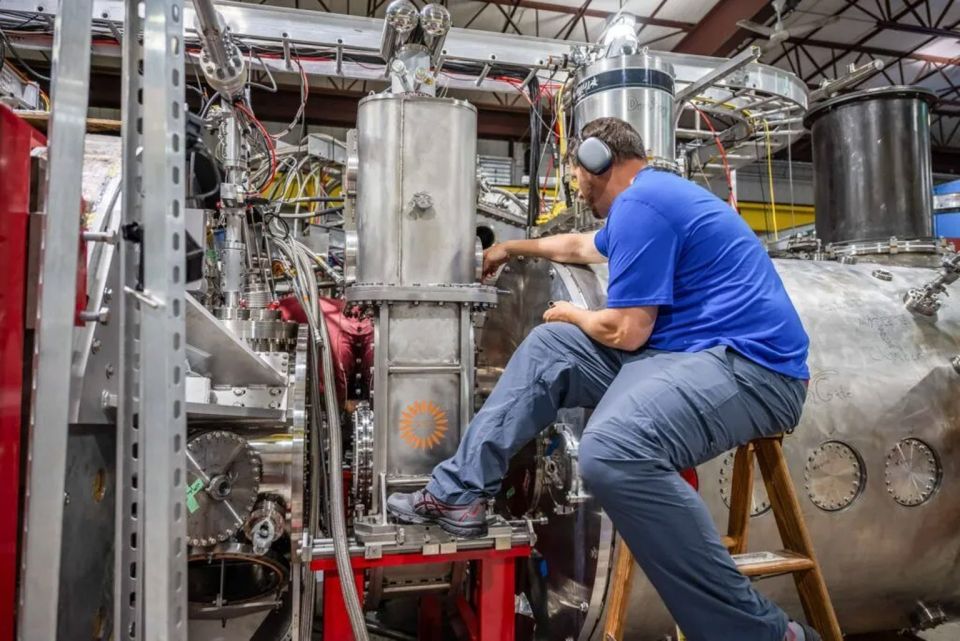
Among other recent developments, Type One Energy submitted a byproduct material license application in late January to the Tennessee Department of Environment and Conservation for an in situ stellarator test bed, which aims to evaluate the performance of their high-temperature superconducting magnet, exhaust efficiency, and aspects of plasma performance.
Chime in: The NRC encourages electronic comment submission (include Docket ID NRC-2023-0071 in comments) and has highlighted six items it is particularly interested in receiving public comments on.
- Regulations around tritium accounting and a potential increase in the threshold for reporting missing materials.
- Proposed amendments to waste disposal options.
- The development of guidelines related to disposal of large volumes of low-activity fusion waste, including potential guidelines for reusing and recycling materials.
- The clarity of existing export control rules.
- The clarity of the licensing process.
- The potential for unintended consequences as a result of changing the definition of particle accelerator to include fusion machines.