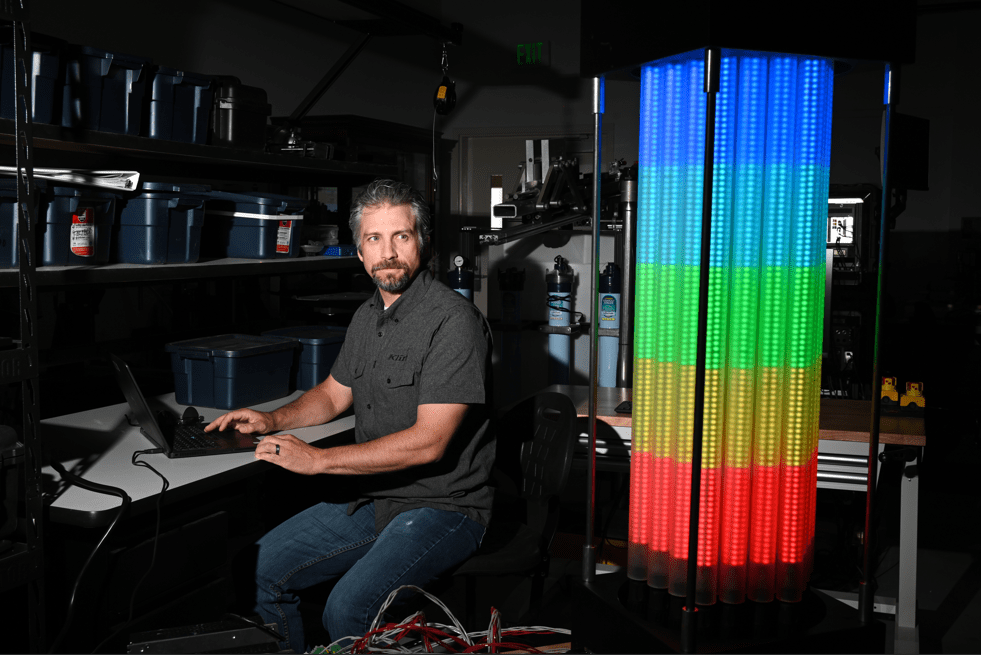
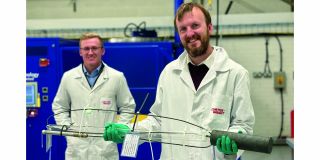
INL’s Tony Crawford designed and developed the MACS/ViBRANT systems. (Photo: INL)
At Idaho National Laboratory, researchers have built a bridge between computer models and the lab’s Microreactor Applications Research Validation and Evaluation (MARVEL) microreactor.
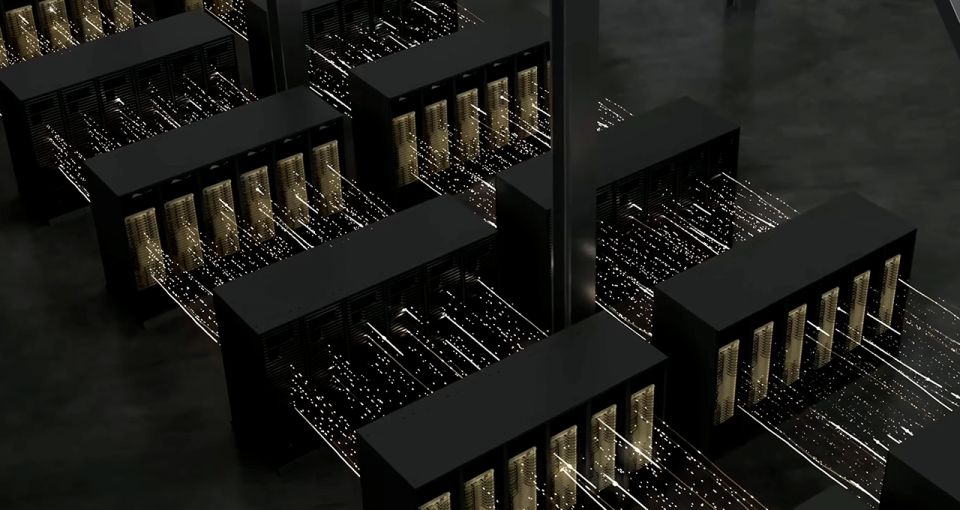
Tony Crawford, an INL researcher and MARVEL’s reactivity control system lead, designed a phone booth–sized surrogate nuclear reactor called ViBRANT, or Visual Benign Reactor as Analog for Nuclear Testing, which uses light instead of neutrons to show a “nuclear” reaction.
More than a light show: ViBRANT is controlled by MACS—the microreactor automated control system—which Crawford also designed and developed at INL. Together, MACS and ViBRANT can be used to enhance system understanding and accelerate reactor development, as researchers can use it to apply their detailed reactor physics models to simulate a real nuclear reactor core.
To watch a video of ViBRANT in action, click here.
In the case of MARVEL, the 85-kilowatt, sodium-potassium–cooled microreactor under development at INL, MACS/ViBRANT can do more than just closely mirror the microreactor—it can also vastly speed up processes, simulating in 10 minutes what would take MARVEL a full day. Crawford described MACS/ViBRANT as a “hybrid,” saying, “The actual actuators are the same technology that will be used in the MARVEL reactor.”
“The fuel, the hazardous reflector and absorber materials driving reactor physics are actually replaced by benign materials amenable to light physics,” he explained.
Accessible and flexible, ViBRANT and MACS let researchers see how reactor components function—without containment vessels and radiation shields getting in the way. It also makes it possible to fine-tune software and test and refine reactor systems in an iterative process. “By being accessible and as intuitive as watching a TV screen, nearly everyone in the reactor development process—from the modeler to the control system developer to the assembler—can get involved and learn,” Crawford said.
Next-gen testing: While MACS and ViBRANT are currently configured for MARVEL, the systems have been designed to test different reactors as well. Advanced reactors do not have the decades of development that back light water reactors, Crawford explained. “This is a way to interact with the control system and understand your physics and really appreciate the results,” he said.
The technology could help reduce risk for developers of new nuclear reactors, including those with designs that may use AI and machine-learning algorithms for autonomous or semiautonomous operations.

-3 2x1.jpg)