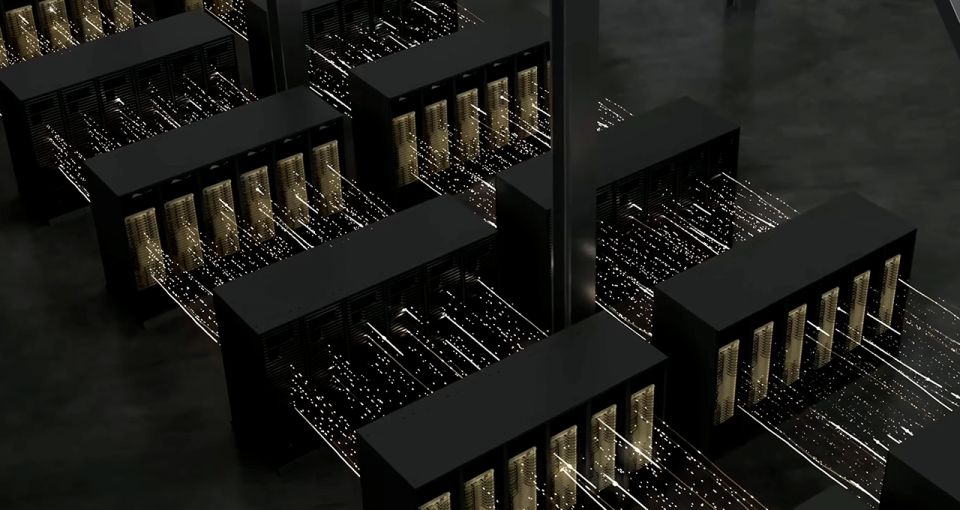
The digital twin will provide CFS with a “user-friendly way to run simulations, test hypotheses, and quickly compare the experimental results from the machine to the simulations,” CFS said. The company expects that this ability to rapidly analyze data will speed its efforts to make fusion energy a commercial reality.
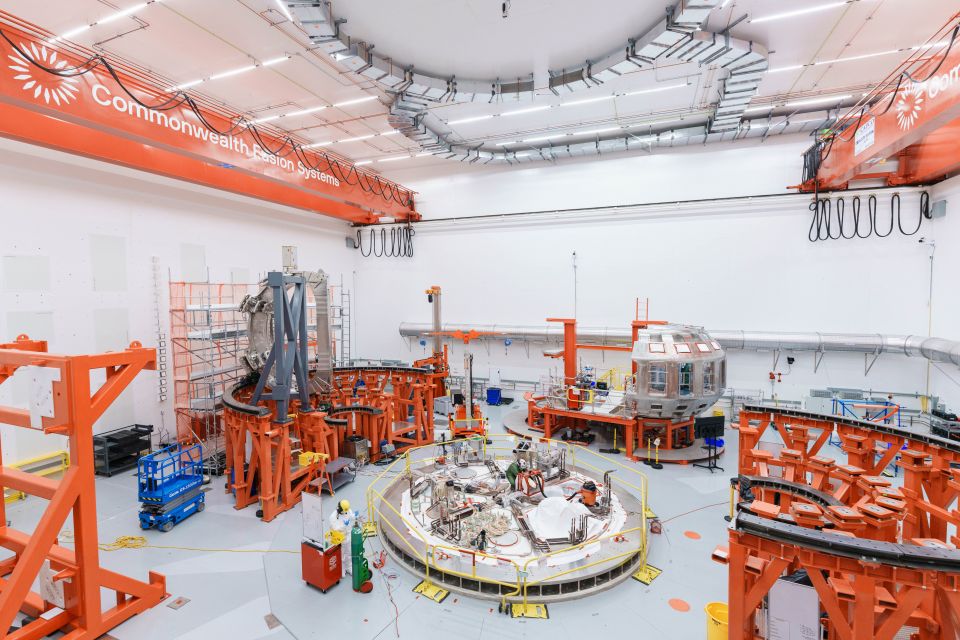
Commercially relevant: In 2027, according to CFS, SPARC will become “the world’s first commercially relevant fusion energy machine to produce more energy from fusion than it needs to power the process—a threshold called net energy generation or Q>1.” The SPARC device, which is being constructed at the company’s Devens campus, is a type of tokamak that is intended to demonstrate net fusion energy and refine the core technology that the company plans to use in the machine’s successor, ARC, which will “put power on the grid.”
The first ARC plant, which is to be sited in Chesterfield County, Va., will produce 400 MW of power when it is connected to the grid by the early 2030s, CFS said.
Development of digital twin: The development process for the SPARC digital twin will use data from the Siemens Xcelerator portfolio of industrial software, including the Designcenter NX for advanced product engineering and the Teamcenter product life cycle management tools. CFS intends to apply these designs and assemblies to its modeling and simulation workflows, including the layering of AI-enabled tools. In addition, CFS will use NVIDIA’s Omniverse libraries and OpenUSD to integrate data with both classical and AI-powered physics models during the digital twin development.
CFS is also using Siemens’s digital tools to improve the efficiency of the manufacturing processes and operations at its Devens factory. Bob Mumgaard, CFS’s cofounder and CEO, said that the digital twin will enable his company “to compress years of manual experimentation into weeks of virtual optimization using the digital infrastructure developed by NVIDIA and Siemens. Through this collaboration, we’re demonstrating how AI and integrated digital engineering can accelerate progress from design to grid power. This will allow us to transform how we build and operate fusion machines in the race to commercial fusion."
Del Costy, president and managing director for Americas, Siemens Digital Industries Software, called the collaborative effort the “future of industrial engineering,” saying, “By connecting Siemens Xcelerator with NVIDIA AI visualization libraries, we're demonstrating that end-to-end digital workflows aren't just efficient, they're transformative. . . . Fusion is complex, but data doesn't lie. When you aggregate real manufacturing intelligence, apply AI, and run thousands of scenarios, you remove guesswork and accelerate innovation.”
Agreements with Google: The collaborations with NVIDIA and Siemens represent the latest CFS’s business partnerships as it works toward the construction of SPARC and the commercialization of ARC. CFS has also partnered with Google to leverage AI in the advancement of plasma simulation and development of control strategies for SPARC and to reach an agreement on providing energy to Google from ARC.

-3 2x1.jpg)