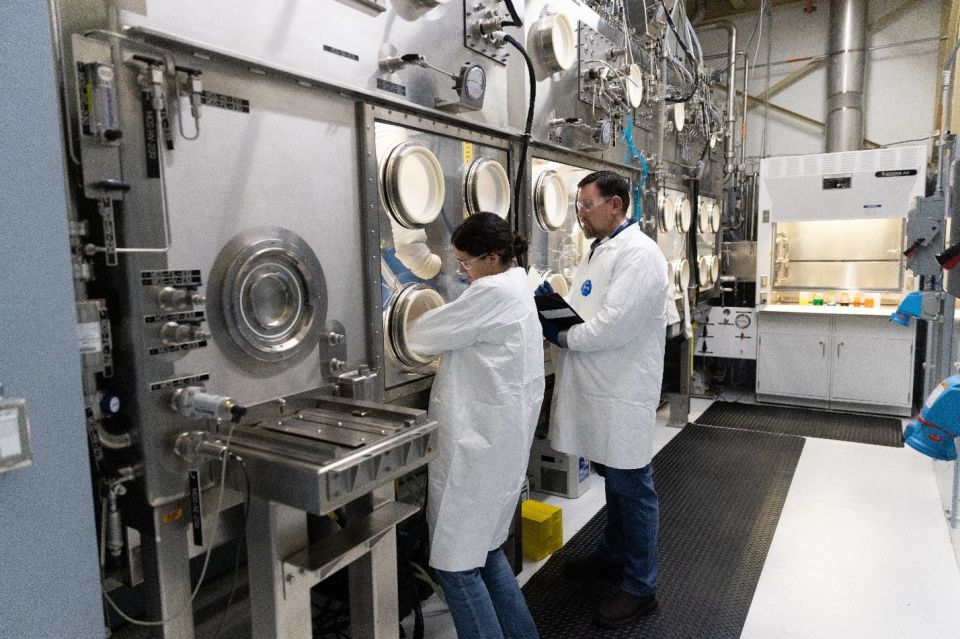
NEUP honors young ANS members with R&D awards
Each year, the Department of Energy’s Nuclear Energy University Program (NEUP) recognizes graduate and undergraduate students for their innovative nuclear energy research. The winners of the Innovations in Nuclear Energy Research and Development Student Competition (INSC) receive honoraria along with travel and conference opportunities, including the chance to present their publications at the annual American Nuclear Society Winter Conference & Expo.
In June, the DOE announced $33,000 in INSC awards for 14 students from 10 universities. Awards of Excellence were given to four graduate students, three of whom are ANS members: Joshua Dunbar, Colorado School of Mines, in the category of fuel cycle technologies; Lauren Fortier, Massachusetts Institute of Technology, in reactor development and plant optimization; and Jonathan Crozier, North Carolina State University, in nuclear engineering.
In addition, four other graduate students were given Special Recognition awards, including ANS members Mason Fox and Kyra Lawson (both from the University of Tennessee–Knoxville, for the category of nuclear engineering).
Among the undergraduates who were recognized with INSC awards, two are ANS members: Nicolas Fox (University of Wisconsin–Madison, in reactor development and plant optimization), and Jonathan Dromey (University of Utah, in fuel cycle technologies).
Nuclear News spoke with the winning ANS members to learn more about their work and plans.
NEUP and INL
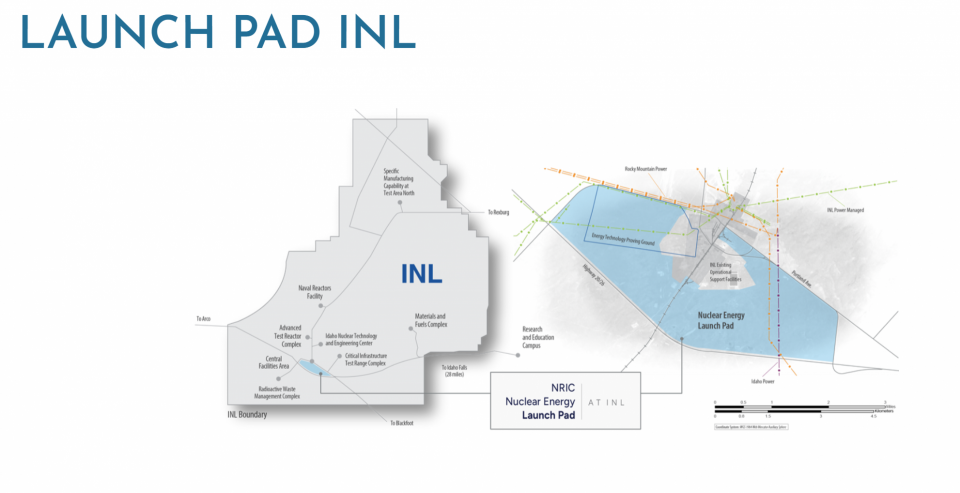
NEUP, which is part of the DOE’s Office of Nuclear Energy, is based at Idaho National Laboratory. It carries out several DOE-NE programs for students and schools as it seeks to align the nuclear energy research being conducted at U.S. colleges and universities with its mission and goals. The integration of all these programs at INL enables a collaborative environment and streamlined processes.
Among other NEUP programs is the Consolidated Innovative Nuclear Research (CINR) Research and Development program, which supports university-led projects that focus on DOE-NE needs and priorities, including the fuel cycle, reactor concepts, and other mission-supporting research. NEUP awards millions of dollars in research cooperative agreements each year through the CINR R&D program.
DOE-NE grants many scholarships and fellowships. The Requests for Applications for the University Nuclear Leadership Program (UNLP) seek undergraduate applicants for scholarships and graduate applicants for fellowships.
The undergraduate scholarship programs are the trade school and community college scholarship program and the four-year college/university undergraduate scholarship program. The former provides students receiving training as nuclear energy–related technicians with $5,000 toward the cost of tuition or other scholastic expenses. The latter provides students pursuing nuclear energy–related degrees with $10,000 toward the cost of tuition or other scholastic expenses.
UNLP graduate-level fellowships provide $175,000 over three years to support graduate research relevant to nuclear energy and include a 10-week internship at a DOE national laboratory or other approved facility.
The NEUP student competition program for both graduates and undergraduates is the INSC.
Competition basics
The Energy Research and Development Student Competition is designed to award graduate and undergraduate students for innovative nuclear energy research as demonstrated through their journal publications and conference proceedings. The competition also serves to demonstrate the commitment of DOE-NE to higher education in nuclear disciplines that are relevant to the DOE-NE mission, as well as to support communication between students and DOE representatives.
In any given year, the INSC may have several categories, which are subject to change. When students apply, their publications are automatically submitted into all categories for which they are eligible. They may submit works that have been published in journals or conference proceedings. An applicant can win only one competition per year.
Monetary awards for individuals range in value from about $1,500 to $3,500, though these values are also subject to change. Opportunities for travel, conference presentations, or other presentation venues may accompany the awards.
Eligibility requirements can be found online at neup.inl.gov/students/insc/, in the INSC Request for Applications.
Applications are reviewed by a panel of nuclear energy experts. The submitted publications are first evaluated to determine if they are relevant to DOE-NE’s mission. If so, they are then evaluated according to four main criteria, each worth a certain percentage of the final evaluation score. Innovation (30 percent) refers to the publication’s importance, novelty, impact, and answered questions. Communication skills (25 percent) judges student’s skills at disseminating research results and writing clearly. The applicant’s role in the research is valued at 30 percent of the score, and the quality of the journal or conference accounts for 15 percent.
Students are informed of the award results via email and with a press release on the NEUP website.
Awards of Excellence
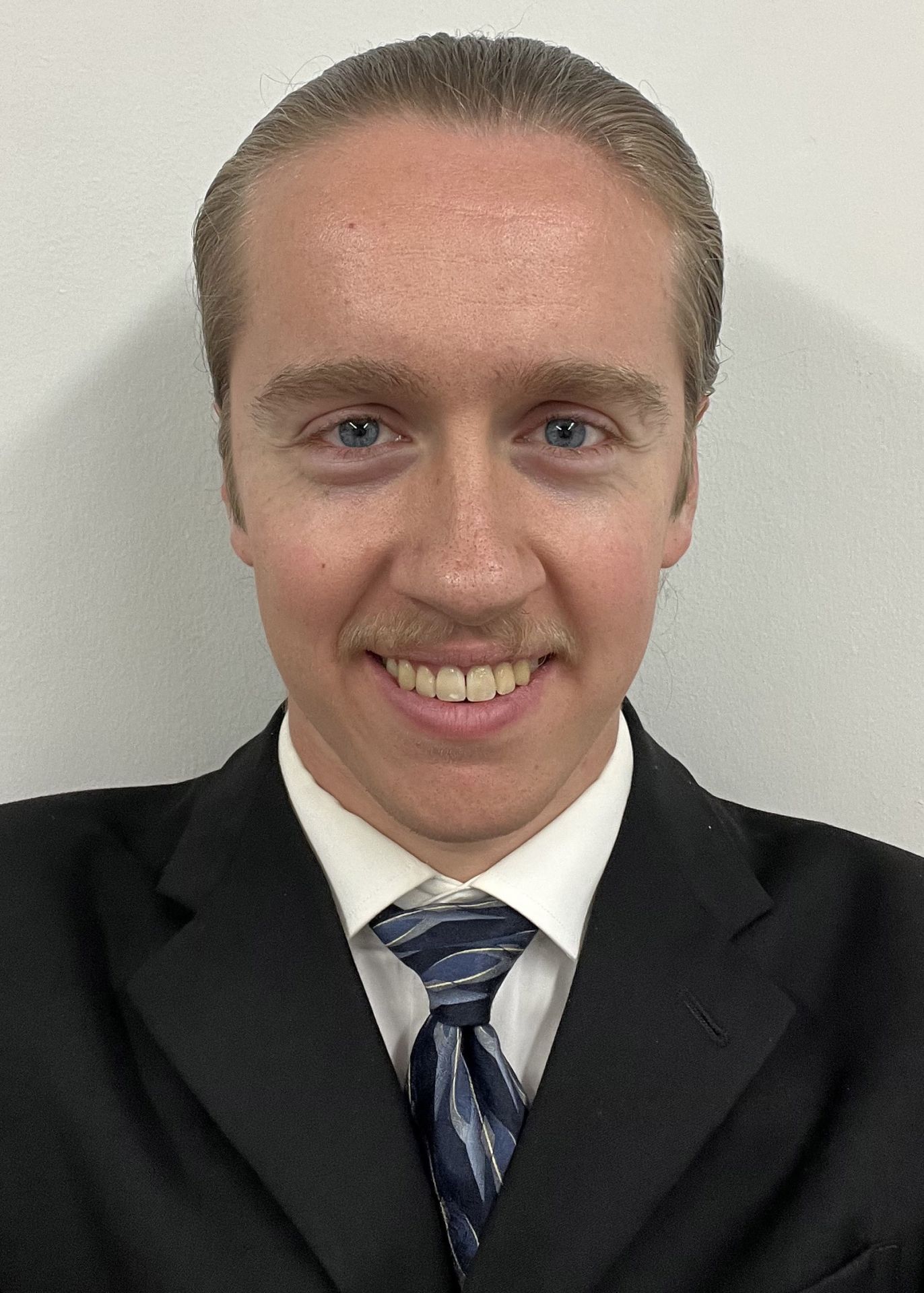
Dunbar
Joshua Dunbar—ANS member since 2022
Dunbar received a bachelor’s degree in chemistry from Wheaton College in Illinois in 2021. He was a summer research intern at Savannah River National Laboratory in 2019 and at INL in 2022–2023.
“I am currently a graduating Ph.D. student at the Colorado School of Mines, having completed my research in the field of nuclear fuel separations,” Dunbar told NN. “In August, he successfully defended his Ph.D. in applied chemistry.
His INSC award–winning research paper is titled “Influence of Di-n-butyl Phosphoric Acid on Cerium Redox and Speciation in Tri-n-butyl Phosphate.”
In summarizing his work, he said, “The research in the paper submitted for the INSC is about using cerium, a nonradioactive element, to more easily test how actinides like neptunium or plutonium will be affected by radiation breaking down chemicals during used nuclear fuel separations.”
Dunbar is looking forward to his career in nuclear research. “My short-term career plan presently is to obtain a postdoctoral research position in radiochemistry at a national laboratory or in industry. My long-term career plan is to continue in the field of nuclear research, ideally supporting efforts to establish a sustainable closed fuel cycle in the U.S. and furthering the adoption of nuclear power.”
ANS has played an important role in Dunbar’s academic life. “My involvement with ANS at the Colorado School of Mines began with participating in meetings, as well as the fun field trips the club organized. Later, I was elected secretary of the board [of the school’s ANS student section] and helped plan events and a trip to the Fort St. Vrain nuclear power plant site in Colorado. This participation led me to be elected as president the next year. While president, I planned and put on a ‘Hands-On Nuclear Science Laboratory’ event for high school students to visit the CSM campus and engage in hands-on lab activities that taught about shielding and detection, solvent extraction separations for fuel recycling, and heat-to-electricity conversion.”

Fortier
Lauren Fortier—ANS member since 2023
Fortier, currently in her third year as a graduate student at MIT, earned her M.S. in nuclear science and engineering in May. “The INSC award recognizes the research I conducted during my master’s program,” she said. “I am now focused on my Ph.D. research, which builds on the foundation laid by my master’s studies. Before starting at MIT, I served on active duty as a nuclear surface warfare officer in the U.S. Navy. I’m currently on sabbatical to complete my doctorate and will return to active duty once I complete my Ph.D.”
She added, “In addition to my work as a graduate research assistant at MIT, I contribute part time as an advanced operations and engineering researcher at Westinghouse Electric Company, where I support procedure development for the eVinci microreactor. I am an active student member of ANS and regularly engage in ANS conferences and events hosted by MIT’s student section.”
Fortier was also a summer intern at INL in 2024, working with the lab’s nuclear reactor simulator and automation technologies. In 2016–2017, she was a research assistant at SpaceICE in Evanston, Ill.
Fortier’s INSC award–winning research is “Autonomous Operations for Advanced Reactors Utilizing Supervisory Control.”
She explained that her work aims to help reduce the reliance on human operators for advanced reactor operation. It investigates the automated functions that will be critical to keeping power prices as low as possible. “While at INL, I focused on modeling and automating reactor operating procedures,” she said. “Since advanced reactors or advanced reactor simulators weren’t available, I used a generic pressurized water reactor (gPWR) simulator for testing.”
She plans to continue working with advanced technologies in her career. “In the short-term, my priority is completing my Ph.D. research. Looking ahead, I’m interested in a career in industry where I can contribute to the development of advanced reactor technologies and applications.”

Crozier
Jonathan Crozier—ANS member since 2021
Jonathan Crozier earned his doctorate in nuclear engineering from North Carolina State University in July. He previously received his nuclear engineering master’s and bachelor’s degrees from the same institution. He has also been a navy ROTC physics and calculus tutor, and he was in the National Security Internship Program at Pacific Northwest National Laboratory.
Since July, Crozier has been working at X-energy in Rockville, Md., where he is a nuclear engineer in reactor physics, working within the core design team. “I also do contract-based computational analysis work on the side, which includes software engineering for nuclear analysis,” he said.
“Embedding Neural Thermal Scattering (NeTS) Modules in Serpent for Higher Fidelity Advanced Reactor Analysis” is the research that garnered him an INSC award. “The premise of this work is leveraging artificial neural networks as universal function approximators for continuous-temperature TSL [Thermal Scattering Law] data and thermal neutron cross sections for nuclear graphite,” he said. “Ultimately, this AI functionality for nuclear data was demonstrated for the time-dependent, Monte Carlo multiphysics, transient analysis of TREAT [Transient Reactor Test Facility at Idaho National Laboratory] by coupling Serpent, OpenFOAM, and PyTorch.”
He learned about the INSC opportunity from ANS immediate past president Lisa Marshall, who is the director of outreach, retention, and engagement at NC State. He was thrilled for the opportunity and for the award, saying at the time, “This award is particularly meaningful as it coincides with finalizing my Ph.D. and enhances my ability to support my family as a graduate student.”
Crozier has several goals for his nuclear career. “My current goal is to help license and deploy the Xe-100 [X-energy’s high-temperature small modular pebble bed reactor].” Longer term, he hopes to “modernize reactor physics practices with better methods and architectures and to lead collaborations between scientists and engineers.”
He also plans to stay involved with ANS. “I mostly contribute articles and present research work, which is fun,” he said.
Special Recognition

Fox
Mason Fox—ANS member since 2021
At the time of his INSC award, Mason Fox was a Ph.D. candidate at the University of Tennessee–Knoxville, where he studied nuclear engineering and reactor safety. He defended his Ph.D. in July and subsequently began a position in reactor technology development at the Naval Nuclear Laboratory, in West Mifflin, Pa. He also earned his nuclear engineering master’s degree at UTK in 2024, and he received his bachelor’s at Pennsylvania State University in 2018.
In 2023, he worked as a nuclear fuel safety modeling and simulation intern at Oak Ridge National Laboratory. He also performed some of his doctoral research at Oak Ridge. From 2018 to 2022, he served in the navy, where he was a nuclear surface warfare officer onboard USS Dwight D. Eisenhower. In addition, he developed technical training course material for nuclear operator trainees in the aircraft carrier fleet at Naval Air Forces Atlantic.
Fox has been an ANS member for several years. “I’m a member of the ANS Standards Committee, serving on the working group for ANS-10.7,” a standard about nuclear industry software, he said.
Fox’s research honored by the INSC is titled “Reactivity-Initiated Accidents in Two Pressurized Water Reactor High Burnup Core Designs.”
He said, “Minimizing operational cost for nuclear power plants is essential to increase the return on investment for plant owners, utilities, and ratepayers. By operating for longer periods of time between shutdown (24 months instead of 18 months) and extracting more energy from the fuel (higher burnup), certain costs can be reduced. It’s important to show that any changes to the fuel design do not pose any safety challenges or unexpected behavior. A few designs have been proposed in the academic literature and by industry partners, which are realistic examples of what these more efficient designs could look like.”
Fox had experience with NEUP before participating in the INSC. “My graduate work was funded by a UNLP fellowship, which is administered by NEUP. They do a lot of great work driving forward nuclear research and development and in university engagement,” he said. “I appreciate the award and the recognition for my work.”
It was a famous nuclear power plant accident that prompted Fox’s interest in nuclear engineering. “I grew up not far from Three Mile Island, which is an important historical event for both the region and the industry,” he said. “I was curious about the events of the accident and how nuclear reactors work in general. Over time, I began to realize the huge benefits that nuclear power can contribute to social needs and energy security. When it was time to pick a college major, nuclear engineering caught my interest.”
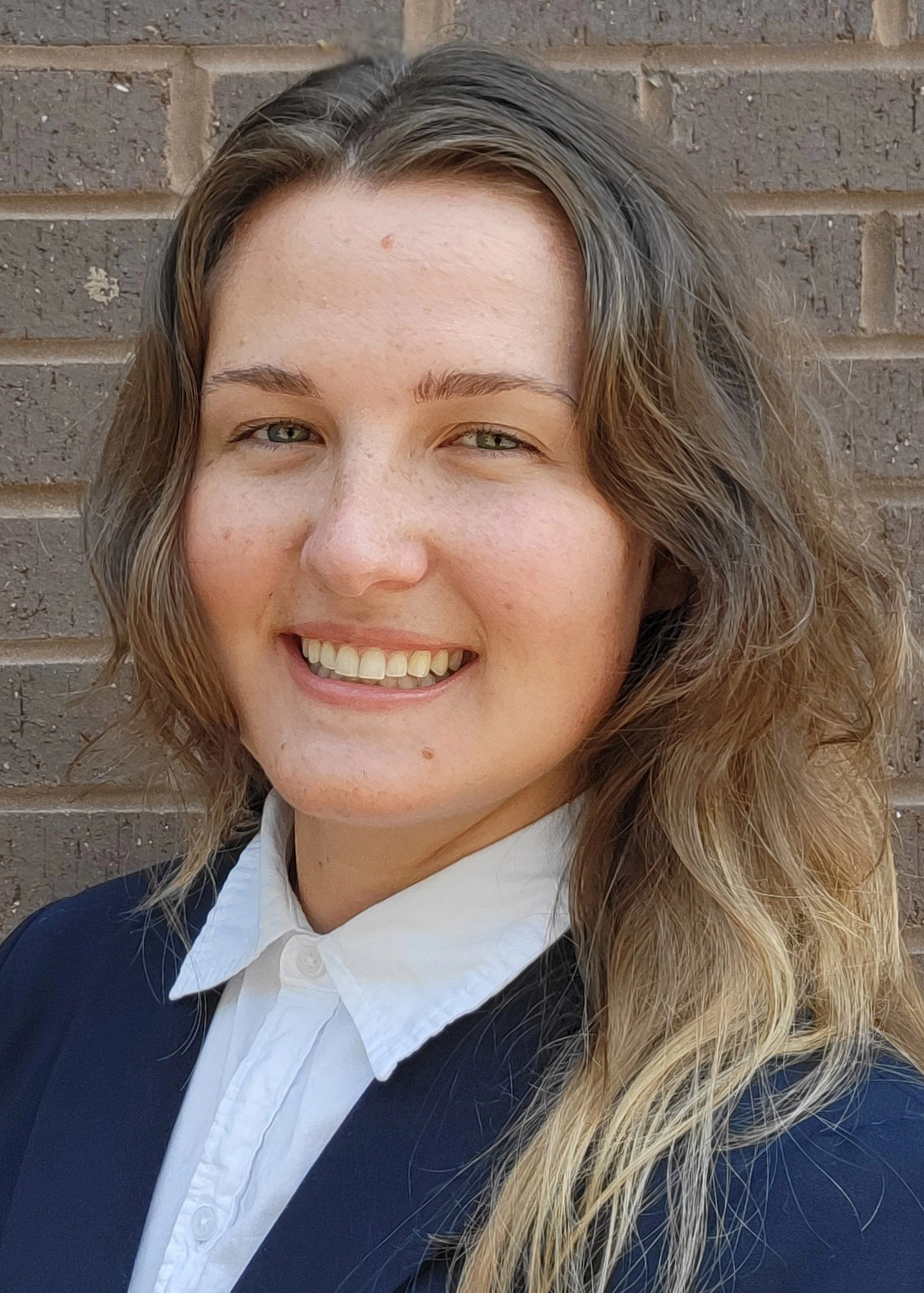
Lawson
Kyra Lawson—ANS member since 2025
Lawson, currently a fifth-year graduate research assistant at the University of Tennessee–Knoxville, was a UNLP fellow when she received her INSC award. After finishing her master’s degree in nuclear engineering from UTK in December 2023, she is now working toward completing her Ph.D.
She earned her B.S. at Texas A&M University, where she was an ANS student section president and treasurer and a student researcher. She then worked as a nuclear design analysis intern at TerraPower in 2021.
Her INSC-winning research is titled “Development of Two-Step Method for Fast Chloride MSR Neutronics.”
“The two-step method is a way to speed up and simplify neutronics modeling of nuclear reactors,” Lawson said. “This method is important for minimizing computational resource requirements during heavy calculations like multiphysics coupling. However, the two-step method has limitations. This paper explores those limitations and proposes optimal conditions for using the two-step method with select small and large molten chloride fast reactor cores. The next step for this work is applying lessons learned from this paper to multiphysics modeling of the fast molten salt cores.”
Lawson first began participating in ANS activities when she was still in high school and carried that relationship into her university studies. “In college with the Texas A&M student section, I really enjoyed the networking and outreach that came with those responsibilities. During graduate school, I presented at the 2022, 2024, and 2025 annual conferences.”
Lawson’s short-term goal is to finish her Ph.D. “I have two more journal papers relating to molten salt reactor modeling that should be finished soon,” she said. “Long-term, I would like to aid in the development and deployment of advanced nuclear reactors, specifically liquid-fueled molten salt reactors. With rising energy demands and underdeveloped/developing countries’ dependence on fossil fuels, I want to help bring clean energy to the world.”
Undergraduate awards

Fox
Nicolas Fox—ANS member since 2025
After graduating with his bachelor’s degree in nuclear engineering from the University of Wisconsin–Madison in May, Fox became an intern at INL, where he performs data analytics and client-contractor communication on postirradiation examination data for fuel development and qualification related to TerraPower’s Natrium sodium fast reactor.
“I am aiming to pursue a Ph.D. I’m currently looking for a project to work on for my graduate research,” he said, adding, “I am currently a student member of ANS and love going to conferences to meet and talk to professionals in our field.”
Fox’s INSC award–winning research is titled “Parametric Study of Quenching Behavior of 316L Stainless Steel and ZIRLO Tubes in Simulated LOCA Reflood Conditions.”
“This study investigates how current nuclear reactor systems respond to a specific, high-risk accident scenario called a loss-of-coolant accident, which is the accident that occurred in Fukushima in 2011,” he said. “In this accident, a reactor has lost the water that keeps the core temperature down. To respond to this, modern reactors are equipped with an emergency core cooling system to reflood the core with water to bring the temperature down. Using an experimental facility that simulates these conditions, my project discovered a new trend in how different combinations of parameters affect how quickly the reactor will cool down, allowing for better predictions of the cooling behavior post-accident.”
Beyond pursuing a Ph.D. in nuclear engineering, Fox’s long-term professional goals are “to contribute to advanced reactor technology and help align public opinion and policy with nuclear energy as a key part of the solution to increasing energy demands and the need for sustainable energy sources.”

Dromey
Jonathan Dromey—ANS member since 2024
Jonathan Dromey earned his bachelor’s degree in mechanical engineering, with a computer science minor, from the University of Utah in May. In June, he began working as a mechanical engineering analysis intern at TerraPower, performing stress analysis for the Natrium sodium fast reactor. He was hired full-time for the analysis position in October. He said that he is considering getting an M.S. while working at some point in the next few years.
Dromey’s research paper, which was developed in collaboration with INL, is titled “Modeling Separation of Actinides from Fission Products in a Zone Refining Process of Metallic Fuel Rods.”
“My research was focused on an alternative way to recycle spent fuel from reactors that use metallic fuel—for example, sodium fast reactors,” he said. “The process we were investigating is travelling molten zone refining. It uses induction heating to melt an initial small band of a spent fuel rod. In the molten state, the fission products separate from the remaining usable fuel. The molten zone is translated along the length of the rod, and the fission products accumulate in the molten zone and end up isolated at one end of the rod. It shows promise as a simple and cost-effective way to recycle metallic nuclear fuel and reduce waste streams from advanced metal-fueled reactors.”
He intends to continue his career as a mechanical engineer in the nuclear industry. “I am enjoying the work and the people at TerraPower, and I was very happy to accept a full-time position there. I want to keep contributing toward advancing nuclear technology that will help put more clean energy on the grid.”
During his nuclear academic and career journey so far, Dromey has been impressed with his ANS experiences. He enjoys attending the webinars and receiving ANS’s Nuclear News Daily email. “The 2024 ANS Winter [Conference] was my first experience at an ANS conference, and I thoroughly enjoyed attending the conference sessions, meeting new people, and catching up with people I have worked with in the past. I could not believe how many people I knew there, despite it being my first ANS conference and only being an undergraduate student.”
Building the future
These young INSC award winners are an inspiration not only for other students pursuing nuclear-related degrees but also for the nuclear industry. The industry should be in capable hands for years to come as advanced reactors come on line and as AI and other technologies grow in importance.
The future of the INSC also looks bright.