
Radium sources yield cancer-fighting Ac-225 in IAEA program
January 14, 2026, 3:15PMNuclear News
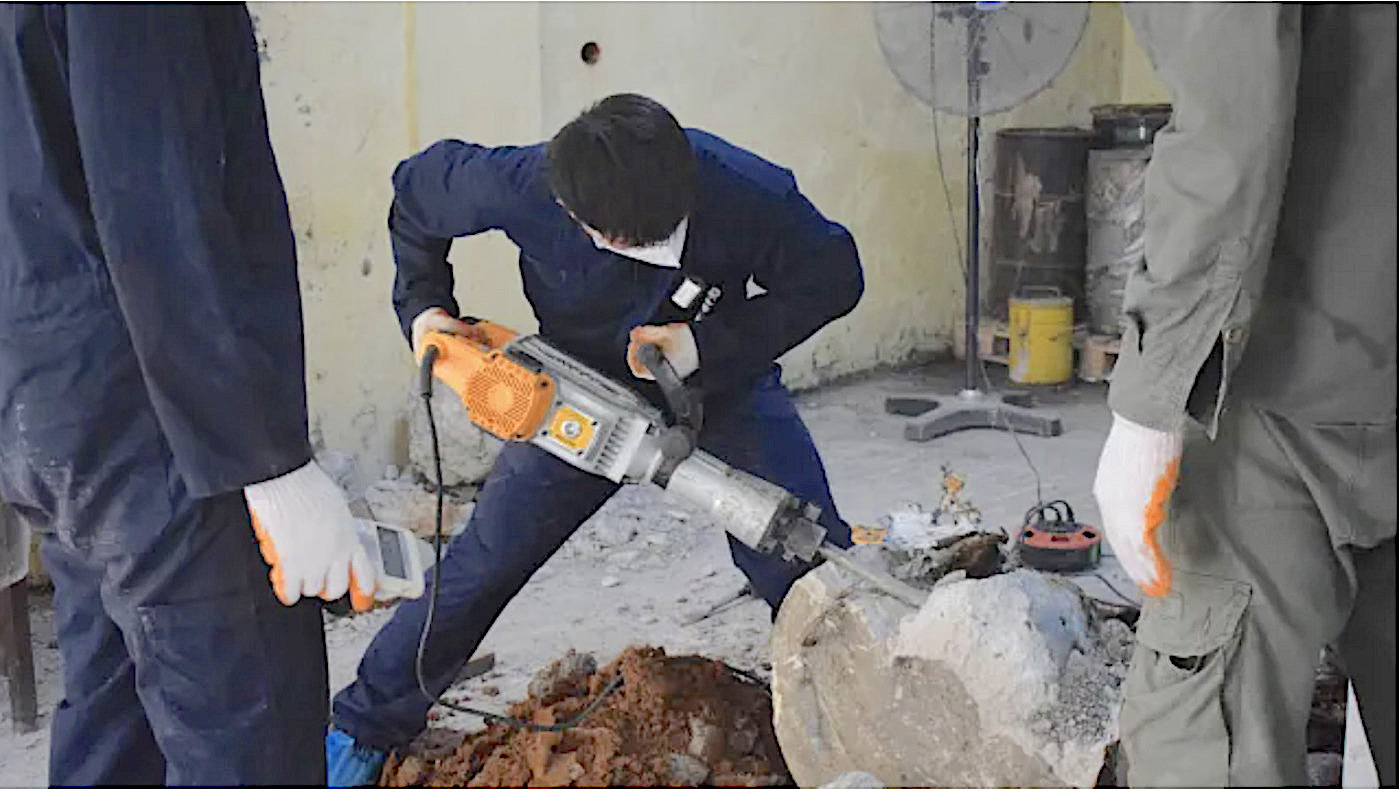
A worker recovers legacy Ra-226 sources that had been conditioned in cement during an IAEA expert mission to the Philippines. (Photo: Philippine Nuclear Research Institute)
The International Atomic Energy Agency has reported that, to date, 14 countries have made 14 transfers of disused radium to be recycled for use in advanced cancer treatments under the agency’s Global Radium-226 Management Initiative. Through this initiative, which was launched in 2021, legacy radium-226 from decades-old medical and industrial sources is used to produce actinium-225 radiopharmaceuticals, which have shown effectiveness in the treatment of patients with breast and prostate cancers and certain other cancers.
Tags:
Share:
 Marie Curie has been quoted as saying, “Nothing in life is to be feared, it is only to be understood.” We can only wish that the creators of Radioactive, a feature-length biopic released on
  The start of Marie Curie's story isn't like most of the other scientists that had made a name for themselves throughout history, mostly because she was a grown woman by the start of the 20th century. But she was the first woman to do a lot of things, including getting a Ph.D. from a university in France, and winning a Nobel Prize. She was also the first person ever to win a Nobel Prize in two different fields of science. To say she pushed the societal and scientific boundaries of her era is an understatement.