Radiation can change polymers in ways that enable their use in many industrial and healthcare applications. A new IAEA coordinated research project will explore how machine learning can improve prediction of structural changes in polymers caused by ionizing radiation. (Image: IAEA)
The International Atomic Energy Agency has launched a new coordinated research project (CRP) aimed at creating a database of polymer-radiation interactions in the next five years with the long-term goal of using the database to enable machine learning–based predictive models.
Radiation-induced modifications are widely applicable across a range of fields including healthcare, agriculture, and environmental applications, and exposure to radiation is a major factor when considering materials used at nuclear power plants.
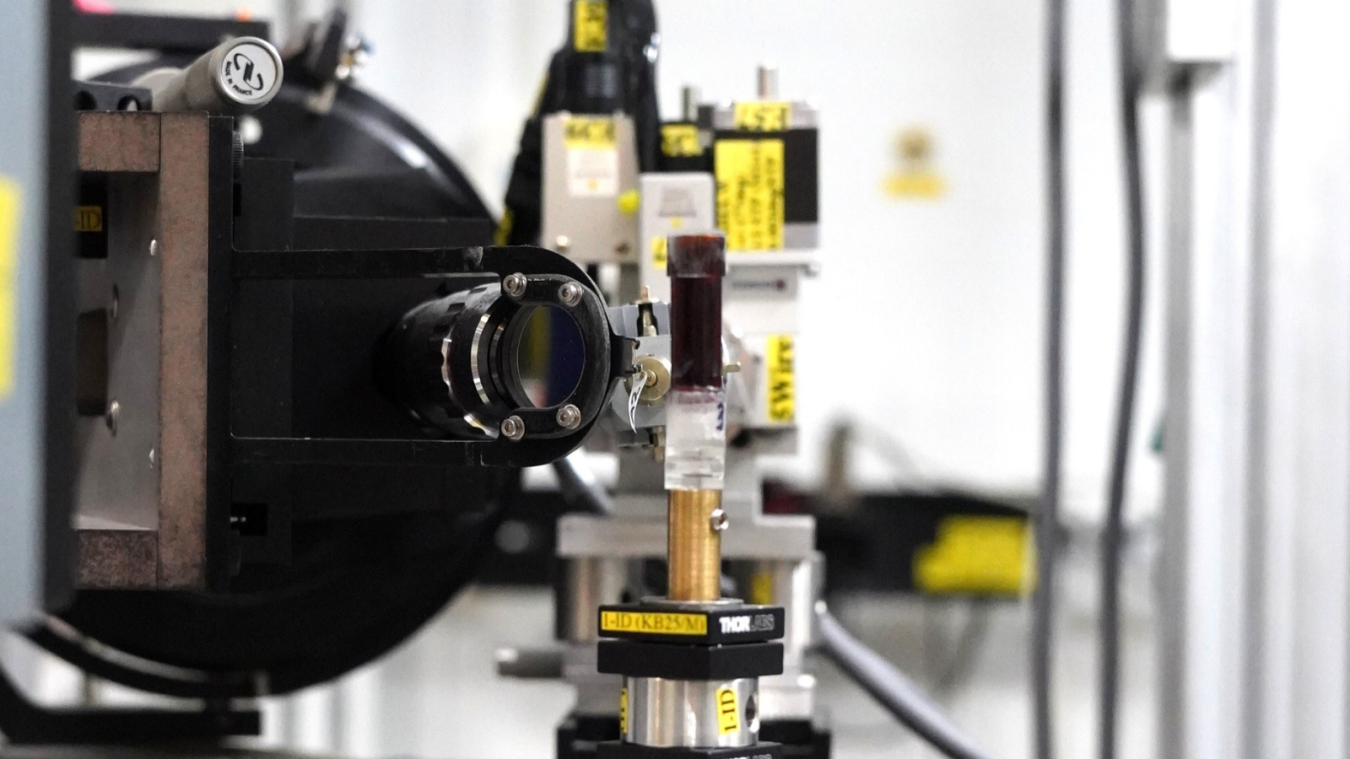
A radioactive sample prepared for X-ray analysis in the Advanced Photon Source. (Photo: Argonne)
Over the past two weeks, Argonne National Laboratory has announced numerous significant advancements being made by its staff to push forward nuclear fuels and materials research. Those announcements include the opening of the new Activated Materials Lab, the development of a new measurement technique, and the application of new artificial intelligence tools.
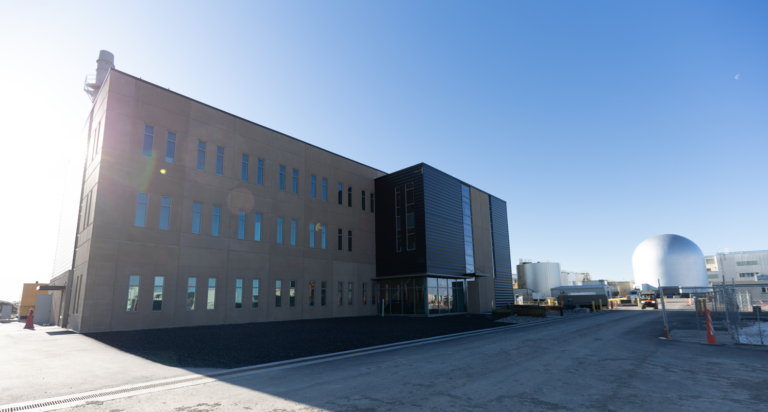
The outside of the Sample Preparation Laboratory at the Materials and Fuels Complex at Idaho National Laboratory. (Photo: INL)
Idaho National Laboratory has completed substantial construction of the first new hot cell facility at the lab site in 49 years—a Sample Preparation Laboratory (SPL) that will accelerate research, development, and qualification of structural nuclear materials for both existing and new nuclear reactors. In an announcement last week of the milestone and the ribbon-cutting ceremony held to mark it, INL said the SPL is expected to be fully operational in 2025.
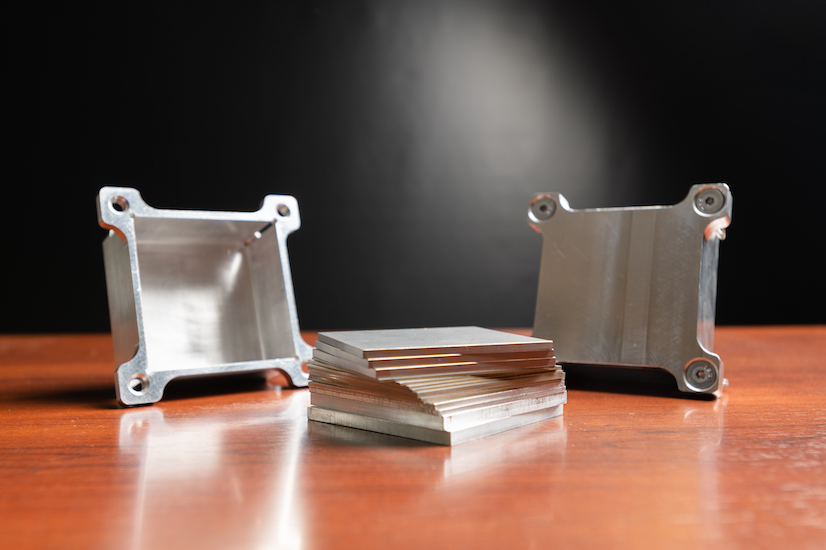
Understanding how several different metals—such as the contents of PNNL’s space-bound cube—react to radiation in space will help scientists understand the potential impact of radiation on space travelers. (Photo: Eddie Pablo/PNNL)
When a SpaceX rocket lifted off from Kennedy Space Center on September 10 (see video here), sending a crewed commercial mission into low Earth orbit, an experiment designed by Pacific Northwest National Laboratory was onboard. Several high-purity metal samples will orbit Earth and absorb cosmic radiation for five days—including that from the Van Allen radiation belt—to help the lab answer questions about the radiation environment for manned space missions, according to a news release from PNNL.
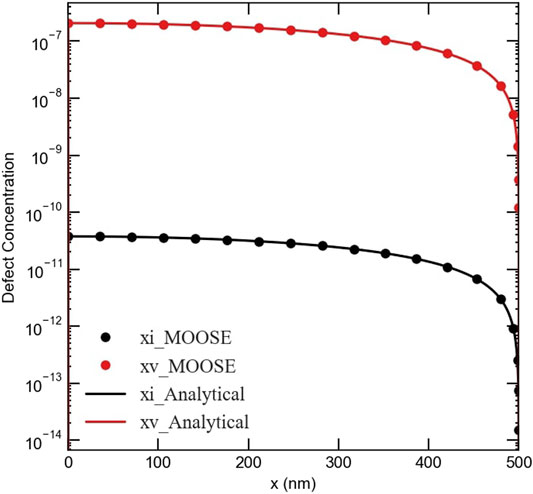
[CLICK IMAGE TO ENLARGE] A comparison between MOOSE results and the analytical solutions for the fractions of point defects in an irradiated spherical Ni grain with a 500 nm radius. The grain boundary/surface at x = 500 nm is assumed perfect and neutral. (Source: From Frontiers in Materials paper "Surface and Size Effects on the Behaviors of Point Defects in Irradiated Crystalline Solids")
By using a combination of physics-based modeling and advanced simulations, Texas A&M University researchers say they have found the key underlying factors that cause radiation damage to nuclear reactors, which could provide insight into designing more radiation-tolerant, high-performance materials.