Fire in glovebox at LANL plutonium facility sparks safety discussion
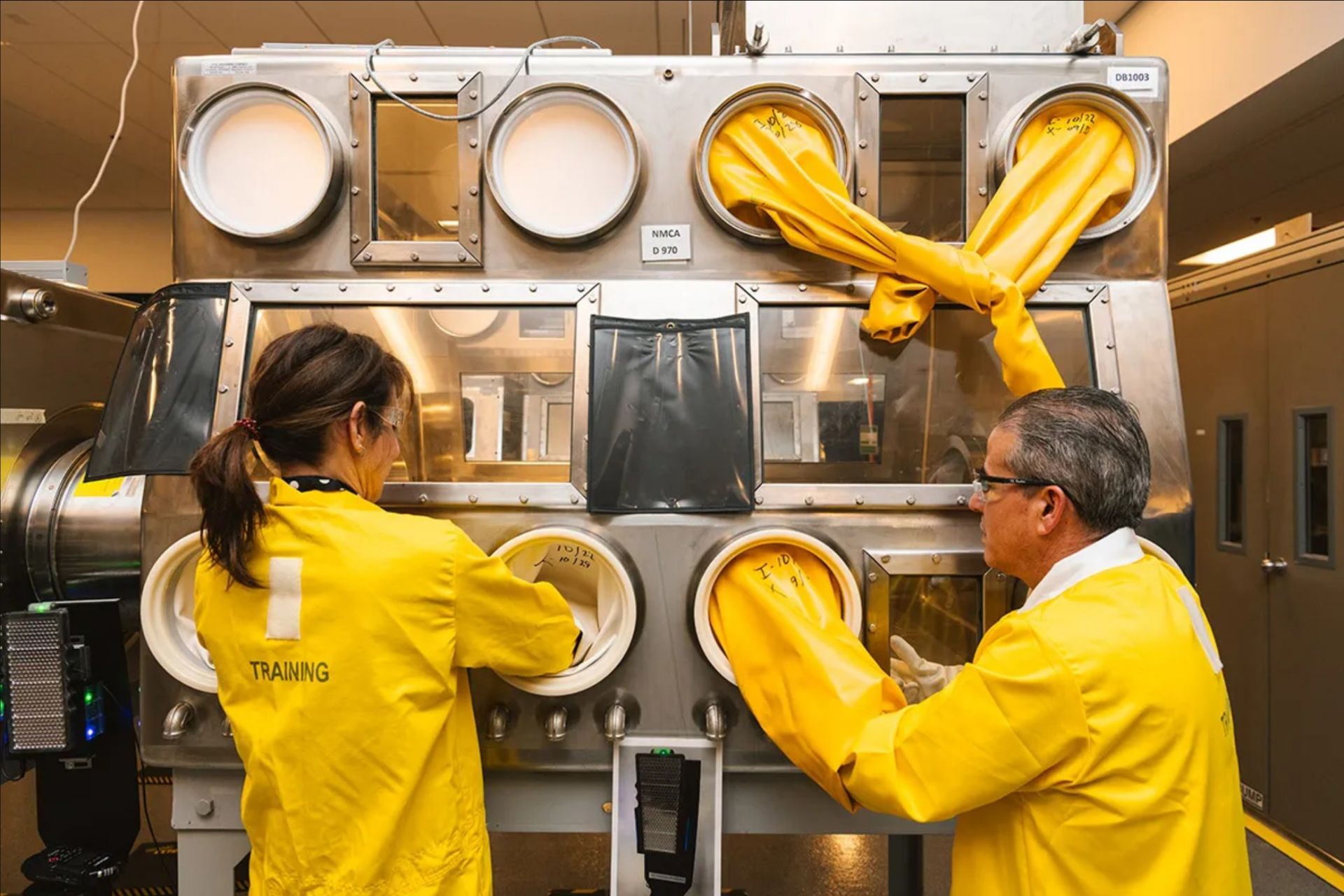
According to a Defense Nuclear Facilities Safety Board (DNFSB) report, a fire occurred in a glovebox in the plutonium facility at Los Alamos National Laboratory on June 15. A test involving nonnuclear material was underway in the furnace inside the glovebox at the time of the incident.
An explanation for the cause of the fire has yet to be released. The incident has incited discussions among laboratory personnel and management regarding fire safety practices at the facility, including concerns raised by resident inspectors that most gloveboxes in the facility lack automatic fire suppression and that multiple similar preventable incidents have occurred at the facility in the past few years.
What we know: The DNFSB report said that on June 15, personnel were conducting a thermal treatment test of an americium recovery resin. The resin, which contained no nuclear material, had been placed in a furnace inside a glovebox. Having received a permit to do so, they left the room unattended, and when they returned they “smelled an unexpected odor and then saw smoke and subsequently flames coming from the furnace.”
The personnel shut down the furnace and activated a fire alarm, leading to a facility evacuation. According to the report, “there were no injuries, contamination spread, or airborne radioactivity alarms,” and the glovebox did not contain any nuclear material beyond “holdup and contamination.”
Pattern of incidents: The DNFSB’s weekly report for LANL in the week following the fire noted that “resident inspectors have observed a trend involving four preventable fire events” in gloveboxes in the plutonium facility, citing dates from January 2023 to this most recent event.
According to the report, “In the 2017 timeframe, site management approved use of detailed FHEs [fire hazard evaluations] to provide technical bases for the use of equivalent alternative measures to automatic fire suppression in most gloveboxes.”
However, it goes on to say that for three of the four incidents cited, including the most recent one, scope changes had been made to glovebox operations without performing an FHE, resulting in unreviewed fire hazards.
“A lack of change review of glovebox activities may result in loss of adequate fire prevention controls, unevaluated fire risks, and can challenge the effectiveness and credibility of the current equivalent approach when compared to providing automatic fire suppression,” the report stated.
Recent similar incidents: The DNFSB report for LANL for the week ending on January 13, 2023, describes two incidents in the plutonium facility on January 9, 2023.
The first was a grit paper disk that autoignited while being transferred between gloveboxes. According to the report, a small flame traveled along the grinding surface and then self-extinguished. The fire department was not notified, leading to conversations with workers about safety protocols.
On the same day, workers observed sparking with no visible flame while “repackaging a legacy item for disposal,” which required pouring material from a can into a tray. The report said personnel were developing a path forward for safely repackaging this material.
According to the DNFSB report for LANL for the week ending on November 10, 2023, on November 6, 2023, “there was a flash and a fire in a glovebox” while workers were pulverizing legacy material in the plutonium facility. “No workers were injured, contaminated, or showed any evidence of a radiological uptake,” it said.
The DNFSB report for LANL for the week ending on March 28, 2025, said that on March 27, 2025, workers observed “sparks and a fire” on a saw blade while cutting samples in a glovebox at the plutonium facility. An operation-specific FHE had not been performed.
Leading up to the most recent fire, a DNFSB report for the week ending on March 20, 2026, noted that the National Nuclear Security Administration field office had issued a letter of nonconcurrence with a recent glovebox fire hazard evaluation in the plutonium facility.
“The field office provided examples of inadequate hazard identification and analyses, among other reasons for nonconcurrence,” said the report.
Moving forward: As of July 30, the most recent DNFSB report posted for LANL is for the week ending in June 26, the week following the fire. At that time, according to the report, work was being done to understand the incident and repair the glovebox, which remained out of commission.
However, the DNFSB has indicated that it is pausing posting technical documents, including the resident inspector weekly reports that have provided public information on this incident.
In a July 10 report to Congress, the DNFSB said that it has experienced increasing difficulties this year in accessing information from the DOE, including repeated delayed responses, describing the challenges as “the most significant in its history.”
According to the letter, the access challenges are inconsistent with a memorandum of understanding that was established in 2021 to ensure the appropriate flow of information from the Department of Energy.
“The Board is concerned that this significant level of access denial and limitation is occurring simultaneously with a considerable increase in production at defense nuclear facilities and regulatory change,” said the report.