NN Asks: What have recent projects taught us about the move from analog to digital plant controls?

July 29, 2026, 9:20AMNuclear NewsThomas Burnelis

Thomas Burnelis

Transitioning in nuclear from the U.S. Navy to the commercial industry was always a goal for me, but stepping directly into a fully digital control room was a paradigm shift. Moving from the tactile, analog world of my military background to the data-rich environment of modern advanced reactors was jarring. Digital systems offer an unprecedented wealth of information, but unlocking that potential requires a fundamental shift in how we approach testing, commissioning, and startup.

Commissioning analog plants meant physical verification, such as lifting leads, injecting signals, and manually tweaking potentiometers to calibrate gains and offsets. Digital instrumentation and control (I&C) completely redefines this landscape. Today, nearly all plant data are available at our fingertips, but this brings the challenge of filtering an immense amount of data and system alarms. Troubleshooting has largely migrated from the field and into software, following digital signals from operator inputs to field devices.
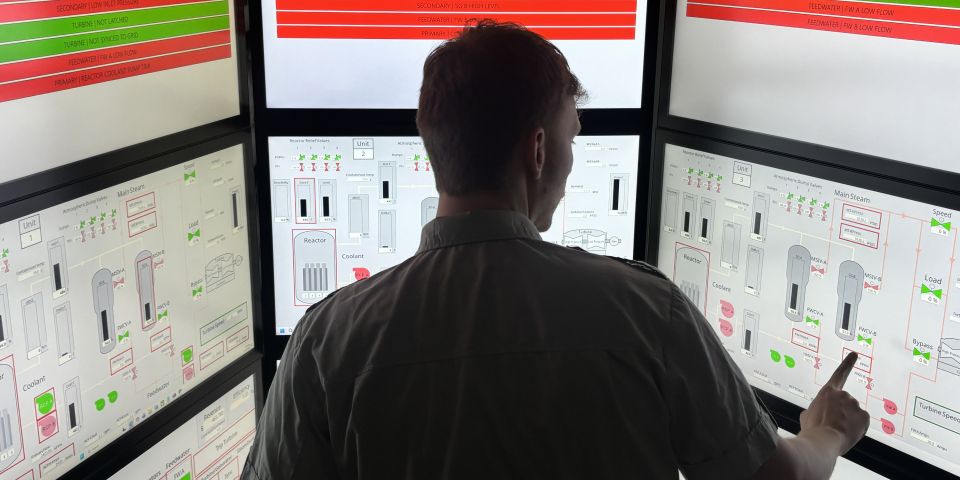

A great example is testing digital distributed control systems in the main control room (MCR) and the remote shutdown room (RSR) of an AP1000 plant, which utilize separate operator workstations digitally tied to the same computer.

Recent projects have taught us that getting digital I&C right requires a complete rewrite of our traditional testing and commissioning programs. Because modern reactor protection systems utilize digital controls, we can shift the risk profile by validating internal signals at the factory during assembly. This reduces the duration of the on-site testing program, focusing on ensuring field connections are correct and then conducting integrated testing.

The biggest pitfall for legacy commissioning teams is adding unnecessary layers of redundancy by treating digital logic like independent analog loops. For example, rather than validating alarms in both the MCR and the RSR, we can validate the software logic once, yielding significant time savings.

Ultimately, successful digital integration requires us to change our mindsets as much as our technologies. Modern I&C streamlines construction schedules and maximizes data clarity, but it still relies on foundational human expertise. Getting I&C right means recognizing that advanced technology is only as reliable as the engineers who bridge the gap between software and hardware.


Thomas Burnelis (burnelta@westinghouse.com) is the manager of electrical and controls integration at Westinghouse Electric Company. His current and previous expertise includes plant integration, AP1000 plant commissioning, and senior reactor operator/I&C training.


Related Articles

Nuclear I&C Modernization: The Future is Digital

June 4, 2021, 9:34AMSponsored ContentRobert Ammon, Technical Director of Digital Safety Systems at Curtiss-Wright Nuclear Division

As the U.S. nuclear industry moves into plant life extension and subsequent license renewals, the modernization of safety instrumentation and control (I&C) systems holds significant...

U.S. NRC approved RadICS Platform

Game changer in addressing I&C common cause failure protection Game changer in addressing I&C common cause failure protection and diversity requirements implementation

March 14, 2020, 9:26AMSponsored ContentRPC Radics LLC

List of authors:Mr. Ievgenii Bakhmach, “RPC Radics” LLC, Chief Executive OfficerMr. Ievgen Brezhniev, “RPC Radics” LLC, Strategic Marketing DirectorMr. Vyacheslav Kharchenko, Director...